From Cork to Kilimanjaro: a decade of partnership in maternal and newborn health


A global challenge, unequally shared

Each year, an estimated 2.3 million newborns die within the first weeks of life. Hundreds of thousands of women also die from complications related to pregnancy and childbirth, the vast majority in low- and middle-income countries. Limited access to specialist care, trained personnel, and reliable health data continues to shape outcomes.

A decade ago, this was a significant challenge in Tanzania, where neonatal mortality was considerably higher than in high-income settings. Early estimates suggested that nearly five out of every hundred babies did not survive the first weeks of life.

Addressing this requires more than medical innovation alone. It depends on strengthening health systems, improving access to timely care, and ensuring that data can support both immediate decisions and longer-term planning. It was within this context that a partnership between University College Cork (UCC) and clinical and research institutions in Tanzania began to take shape.


Where the partnership began

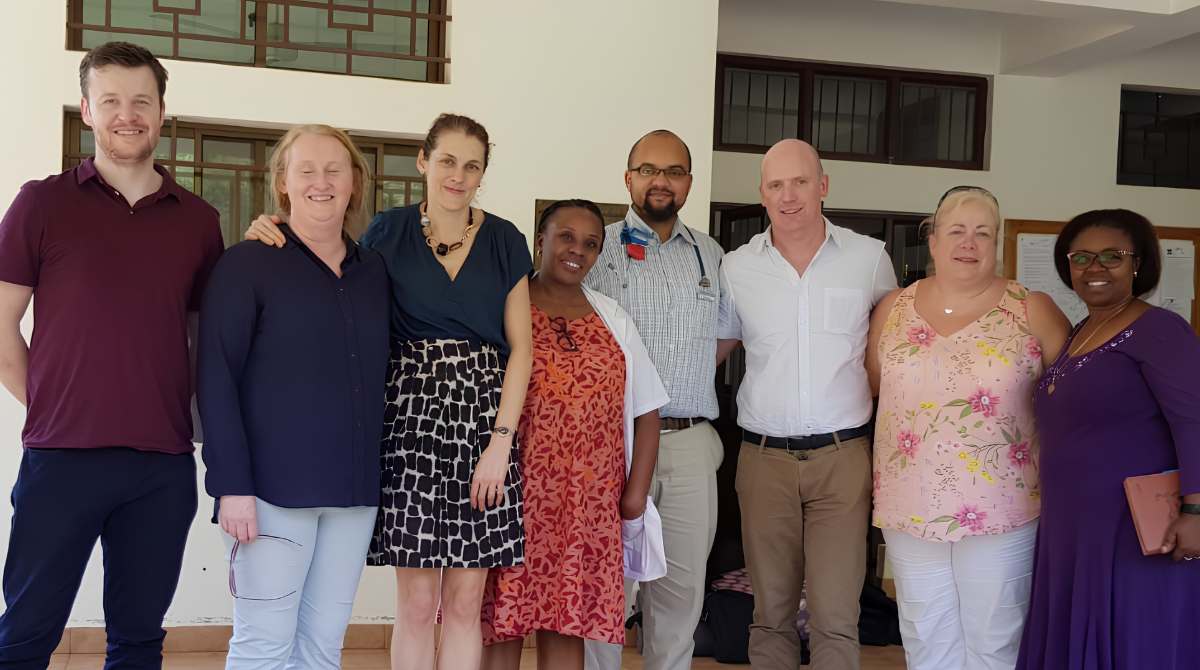
In 2016, researchers and clinicians from the INFANT Research Centre at UCC travelled to Tanzania to explore collaboration in maternal and child health. Over the course of the visit, the team engaged with a number of potential partner sites, with Kilimanjaro Christian Medical Centre (KCMC) and the Kilimanjaro Clinical Research Institute (KCRI) emerging as the best mutual fit for ongoing collaboration.

This led to the establishment of a Memorandum of Understanding between UCC and the Good Samaritan Foundation, encompassing KCMC, KCRI, and Kilimanjaro Christian Medical University College.

From the outset, the partnership was shaped by a shared vision and a commitment to working together over the long term. Reflecting on this, Professor Blandina T. Mmbaga, Director of the Kilimanjaro Clinical Research Institute (KCRI), explains:

“What has made this partnership meaningful is a shared vision of providing the best care for mothers and newborns, and a trust in working together to achieve that.”

This approach focused on adapting advances in neonatal care, diagnostics, and data systems for lower-resource settings through co-development and shared priorities, supported by knowledge exchange, skills development, and collaborative research in areas of greatest need.


Building the foundations

Early collaboration focused on strengthening newborn care at KCMC, where the smallest and most vulnerable infants faced significant challenges to survival.

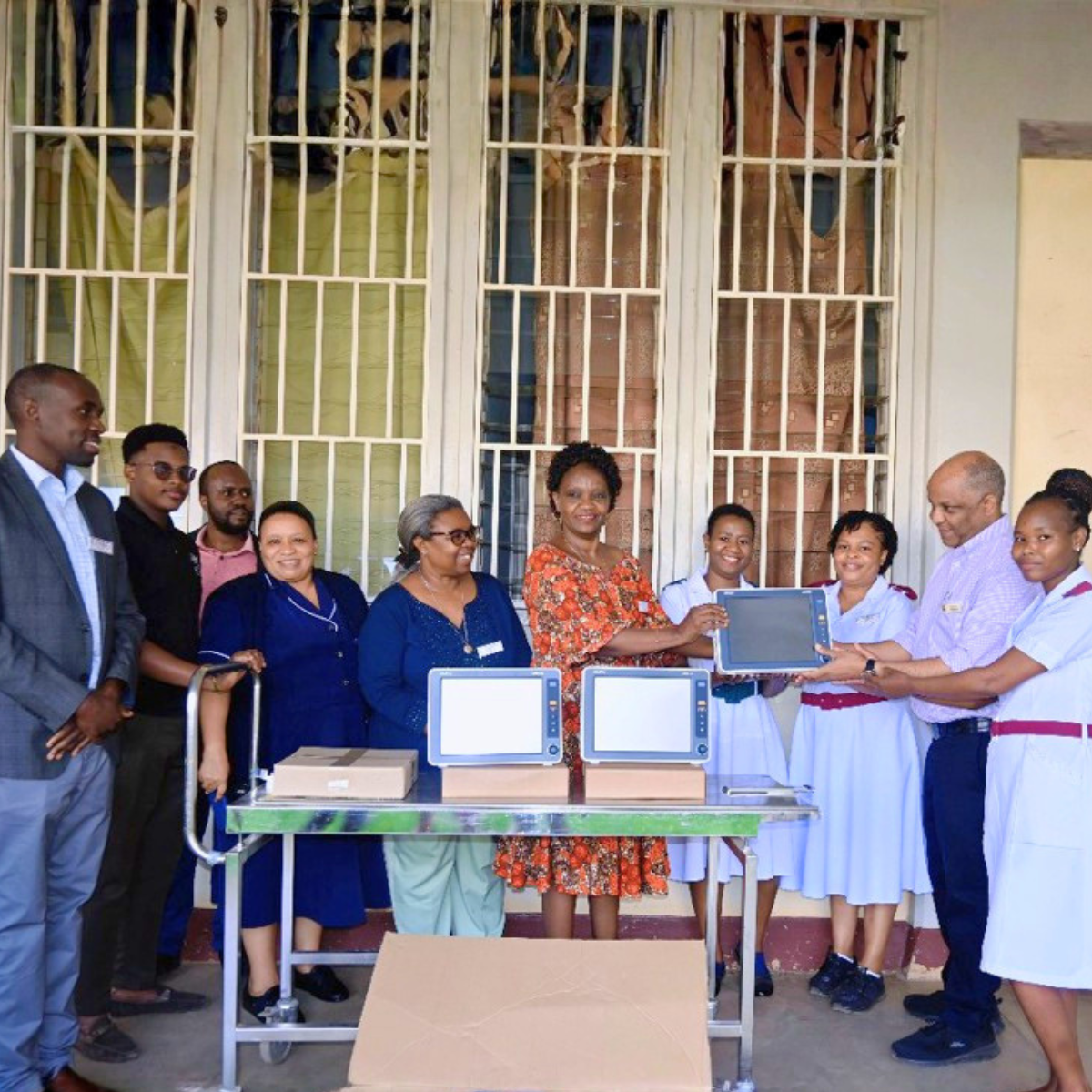
Through a combination of philanthropic support, clinical collaboration, and training, the partnership introduced key improvements in care. These included the establishment and equipping of a neonatal intensive care unit, which opened in 2021, alongside essential equipment to support newborns who needed extra care in their first days of life, and training for staff in emergency and infection care. Ongoing education for nursing and medical staff was also a central part of this work.

In 2023, a dedicated 20-bed Kangaroo Mother Care unit was opened, supported through student fundraising and philanthropic contributions. This simple but effective approach enables mothers to provide continuous skin-to-skin care, improving survival for premature and low birth weight infants.

For mothers, the impact has been immediate and visible. Professor Mmbaga reflects on how this has changed care in practice:

“We have seen real improvements in how care is delivered and in outcomes for preterm babies. Now, more mothers are able to stay with their babies during care, which has helped reduce infection risk and support earlier discharge.”

These changes are felt in very real ways. More babies are surviving those first critical days, and more mothers can stay close to them during care. In the Kangaroo Mother Care unit, mothers hold their babies skin-to-skin, helping them grow stronger each day. It is a simple approach, but one that is changing outcomes and experiences for families.

These efforts have contributed to measurable improvements in outcomes, with perinatal mortality in the region declining over time, reflecting hundreds of additional newborn lives saved each year.
From Cork to Kilimanjaro

Image 1 of 8

Making data visible: the Kilimanjaro Birth Registry

Alongside improvements in care, the partnership identified an opportunity to strengthen how health data was captured and used.

At KCMC, the Medical Birth Registry had been in place since 2000, with information on pregnancy and birth collected on paper and stored locally. This provided a valuable foundation, while also highlighting the potential to make better use of data to support care for mothers and babies.

Through collaboration between clinicia

ns, researchers, and software engineers, the registry was transformed into a web-based system by 2019.

The Birth Registry now captures data on approximately 2,500 births each year, with over 20 years of records, representing more than 60,000 births, brought together in one place.

Clinicians can now access real-time information when it matters most, helping them make more informed decisions for the women and newborns in their care. It also makes it easier to identify risks earlier and plan services to better meet the needs of the community.

The registry has also provided a foundation for further digital health innovation, demonstrating how data systems can be developed collaboratively and adapted to local needs.


From pilot to platform: Kilimanjaro ULTRA

Building on the success of the birth registry, the partnership expanded into a broader digital health platform through the Kilimanjaro ULTRA project.

The platform supports care for mothers and children across the health system, from hospitals to community settings.

Between 2022 and 2024, the system was piloted across a network of healthcare sites, capturing over 5,000 antenatal visits, approximately 4,000 deliveries, and more than 5,500 early childhood visits.

This created a more complete picture of each mother and child’s journey through care, helping to connect services and ensure information is available at every stage. It also makes it easier to identify gaps and improve how care is delivered.


Scaling impact: the LINDA-FAMILIA programme

By 2025, the partnership had evolved into a multi-country collaboration through the LINDA-FAMILIA programme, now active in Tanzania, Ethiopia, Rwanda, and Uganda. The programme focuses on adapting and scaling digital health systems to support care across pregnancy, postpartum, neonatal, and early childhood stages, including infectious diseases and vaccinations.

It supports the move from paper-based records to integrated digital systems, helping to improve how care is delivered for mothers and children.

LINDA-FAMILIA, meaning “protect the family” in Kiswahili, builds on earlier work in Kilimanjaro, extending the approach of co-development and shared learning to a broader regional context.

It brings together academic institutions, public health agencies, and ministries of health, reflecting the growing scale and ambition of the partnership.

As the work has expanded, it has also demonstrated the importance of strong systems underpinning long-term impact. Professor Ali Khashan, Professor of Public Health at University College Cork, explains:

“Kilimanjaro ULTRA and LINDA-FAMILIA have shown that strong governance, local ownership, and high-quality data are not just technical achievements, but the foundations of sustainable and equitable health systems.”


A partnership built on mutual learning

Over the past decade, collaboration between UCC and its Tanzanian partners has extended beyond individual projects to include training, education, and joint research. This has involved the joint supervision of PhD students, undergraduate medical electives, and academic exchange through shared roles across both institutions.

These activities build capacity in both directions, strengthening the ability of researchers and clinicians to address shared challenges in maternal and newborn health. They also reflect a core principle of the partnership: that meaningful progress depends on sustained collaboration and shared expertise.

From Cork to Kilimanjaro

Image 1 of 8

Looking ahead: the next decade

Reflecting on the broader significance of this work, Professor Geraldine Boylan, Director of the INFANT Research Centre at University College Cork, notes:

“Maternal and newborn health remains one of the most significant and under-resourced challenges globally. Partnerships like this demonstrate what can be achieved when research, clinical care, and collaboration come together with a shared purpose. Over the past decade, this work has contributed to meaningful improvements in outcomes for mothers and babies, while also building the foundations for long-term, sustainable change.”

Ten years on from its beginnings, the partnership continues to grow in both scope and ambition. Work is already underway to scale digital health systems across Tanzania and East Africa through the LINDA-FAMILIA programme, alongside plans to expand research in maternal and child nutrition, early brain health, and areas such as neonatal neurology and cerebral palsy.

Despite the progress of the past decade, maternal and newborn health remains significantly under-resourced in many parts of the world. Continued investment in research, innovation and partnership will be essential to ensure more mothers and babies benefit from advances in care.

If you’d like to help accelerate this work, you can support INFANT Research Centre through a donation. Every contribution helps advance research, strengthen international partnerships, and improve outcomes for mothers and children in Ireland and around the world.