By Dr Jacqueline Lyons, Project Manager
When hospitals cannot store and share maternal health data within reliable, electronic systems, clinicians may miss critical information that protects mothers and babies. For women in sub-Saharan Africa, already carrying the global burden of maternal and infant mortality, the stakes of fragmented health data systems are particularly high.
LINDA-FAMILIA (meaning ‘protect the family’ in Swahili) is an EU-funded initiative which aims to support the development and scale-up of digital infrastructure for maternal health data systems in Ethiopia, Rwanda, Tanzania and Uganda. Since the project began in August 2025, the digital health landscape has evolved considerably across all four countries, with national Ministries of Health now leading the way in either implementing new digital health systems or scaling up and strengthening existing ones.
Last month, LINDA-FAMILIA project researchers gathered at the foothills of Mount Kilimanjaro in Tanzania to work together on a key project task: evaluation of the newly implemented digital health systems in each of the four project countries. Much time and discussion was spent refining approaches that will be used to capture meaningful feedback from healthcare workers in various settings on the usability, accessibility and cost-effectiveness of any new digital systems implemented, compared with existing ones. Such feedback is crucial to ensuring digital systems are correctly developed and scaled up from the outset. Successful systems must be practical to use, appropriate for their settings, and acceptable to the healthcare workers collecting the patient data.
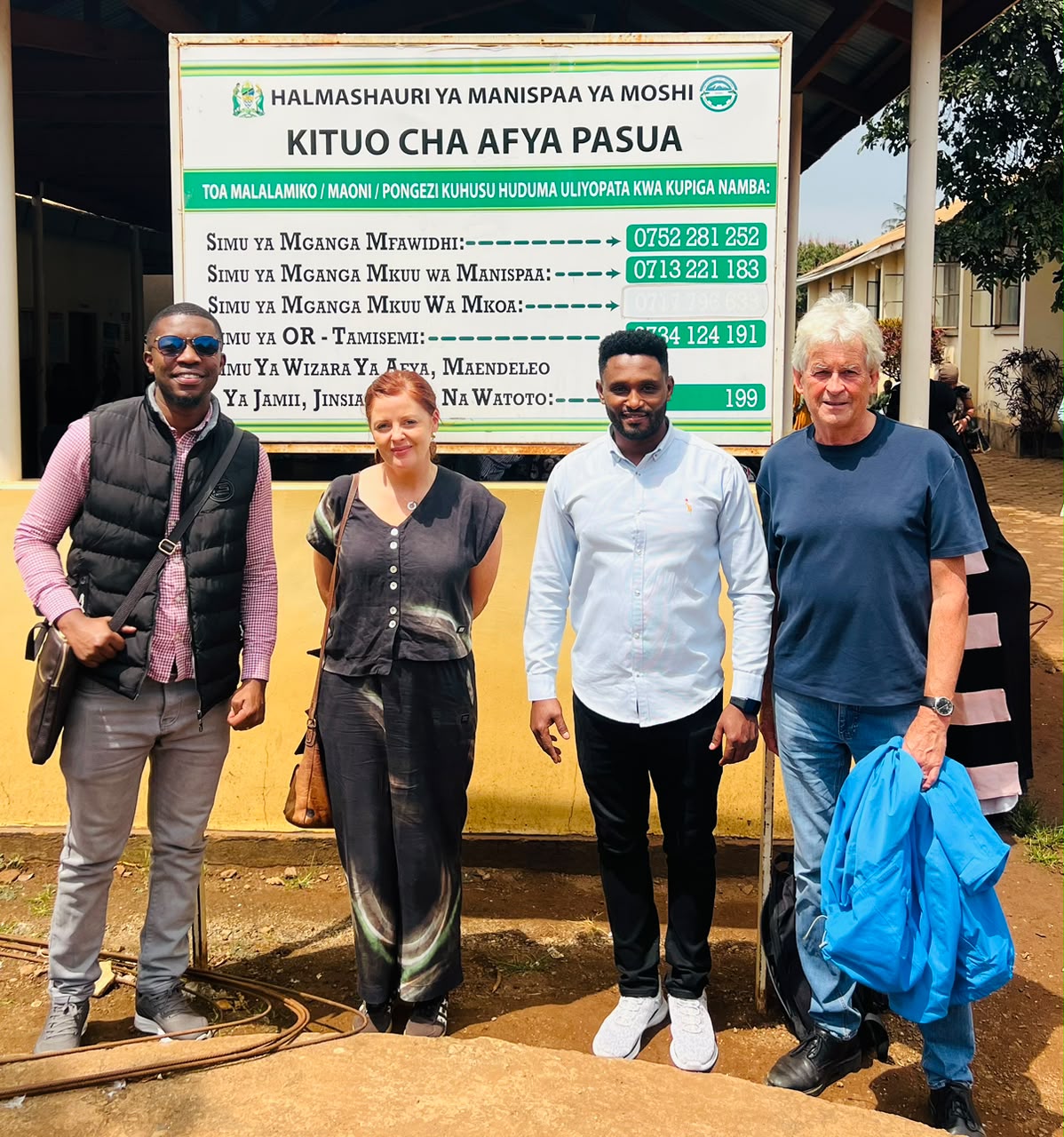
After three days of project collaboration at Kilimanjaro Clinical Research Institute (KCRI) on the Kilimanjaro Christian Medical Centre (KCMC) campus in Moshi, a small group of us crossed the town to visit a local healthcare facility (Pasua Health Centre) to see first-hand how maternal data is currently recorded and stored. At the busy antenatal clinic, pregnant women had routine weight and blood pressure measurements recorded by a nurse on paper. Additional medical information was captured by doctors at the clinic for input into GoTHOMIS, a digital healthcare platform used across public hospitals and health centres in Tanzania. We learned that while each woman has a unique patient identifier, there is currently no integration between the various health data systems used across different clinical departments, meaning antenatal data (including important information on infectious diseases history) is accessed separately to postnatal data, ultrasound data must be obtained from the sonography department, and so on.
Pasua Health Centre
While healthcare staff at Pasua have desktop computers available to enable point-of-care digital health data capture, these were not in use when we visited because of internet connectivity issues. Many of the LINDA-FAMILIA project regions experience regular challenges with internet reliability, adding further complexities to the project’s ambitions.
Joining us on the visit to Pasua Health Centre was Melkamu Tiruneh Alemu, a Public Health Specialist from Ethiopia completing his PhD on the LINDA-FAMILIA project in the area of maternal infectious diseases in East Africa. Melkamu spoke at length with Pasua’s IT Officer to understand more about maternal data capture processes at the facility. The conversation confirmed the fragmented nature of the facility’s health data systems, with paper records less likely to be consulted when making clinical decisions around a patient’s care, potentially increasing risks for mothers and newborns. Melkamu shared his thoughts:
“Integrated nursing, midwifery, and physician care is essential to ensuring continuous, coordinated, and high-quality antenatal care. Complete, accurate, standardised, and readily accessible maternal health information including clinical assessments, screening, laboratory results, medical treatments and outcomes enables healthcare providers to make timely clinical decisions, identify risks early and ensure appropriate follow-up. Effective integration of health information systems is critical to improving the quality and continuity of care, and ultimately to improving maternal and new-born health outcomes.“
There are many complex challenges embedded within maternal and child healthcare in sub-Saharan Africa, with fragmented health data systems representing just one issue. However, the return on investment from successfully strengthening digital health systems could be enormous. Through supporting the implementation, scale-up and evaluation of digital health infrastructure across Ethiopia, Rwanda, Tanzania and Uganda, the LINDA-FAMILIA project is proud to play its part in strengthening clinical data capture into the future, and in supporting clinicians to provide safer care for mothers and babies.