New Kildare clinic expands specialist follow-up for babies in AIM-HIGH Study
A new research clinic in Kildare is expanding access to specialist developmental follow-up for babies participating in the AIM-HIGH Study, led by INFANT Research Centre at University College Cork.
The clinic, based at Enable Ireland in Jigginstown, opened on 4 September, with two families attending the first clinic, and a further eight families are expected to attend the next clinic in November.
AIM-HIGH (Assessing Intellectual and Motor outcomes in High-Risk Infants) follows babies who may be at increased risk of developmental difficulties due to premature delivery, or a complex neonatal course. Through detailed assessments during the first 2 years of life, the study aims to improve support earlier identification of children who may benefit from additional assessment, intervention or support.
The study sits within ELEVATE, a research programme led by INFANT Research Centre that is working to transform the prediction, early detection and treatment of cerebral palsy in Ireland. ELEVATE’s work contributes to the broader Irish Cerebral Palsy Programme, bringing together research, clinical care and new approaches to improve outcomes for children and families.
Expanding follow-up beyond the major maternity centres
AIM-HIGH currently recruits babies through Cork University Maternity Hospital, the Rotunda Hospital and the Coombe Women & Infants University Hospital.
However, some babies who receive specialist care at these hospitals do not live within their usual follow-up catchment areas.
The new Kildare clinic provides an additional location for AIM-HIGH families living outside Dublin and Cork to access the structured developmental follow-up offered through the study.
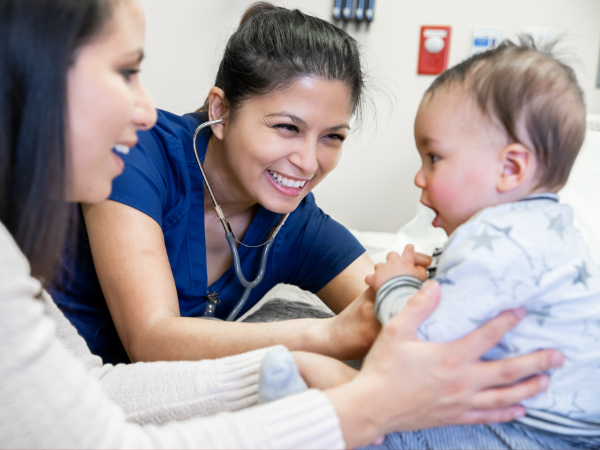
During appointments, babies are assessed by an INFANT team including a trained paediatrician and physiotherapist. The team looks closely at their development, including movement, muscle tone and neurological development, to identify any early signs that a child may benefit from additional assessment or therapeutic support.
Professor Deirdre Murray, Deputy Director of INFANT Research Centre and Chair of the Irish Cerebral Palsy Programme, said the follow-up is designed to identify developmental differences as early as possible.
“In these visits, we are screening for abnormal developmental progress, looking for the first signs of movement difficulties such as cerebral palsy, or delayed development requiring active therapeutic input to improve outcomes.’
Professor Murray said the ambition is to make structured follow-up available to more babies who may be at increased risk of developmental difficulties.
“Until now, high-risk infants were not offered structured early screening for CP. Early structured screening, implemented in the large maternity hospitals in Dublin, Cork and Waterford since 2023, has reduced the average time of CP diagnosis for babies from 2 years to around 7 months. Our hope is that this structured follow up can be offered to all at risk babies so that diagnosis and intervention can start as soon as possible.”
Freya’s Story
Freya was born prematurely at 29 weeks and four days. Lavita had been transferred from Cavan to the Rotunda Hospital ahead of her delivery, where Freya spent her first week in neonatal care before being transferred back to Cavan Hospital for a further six weeks.
While at the Rotunda, the family was invited to participate in AIM-HIGH because Freya had been born prematurely. However, because the family lives in Cavan, Freya falls outside the Rotunda’s usual follow-up catchment area.
Her first AIM-HIGH developmental assessment therefore took place at the newly opened Kildare clinic.
For Lavita, navigating Freya’s development has meant adjusting to a very different experience of early motherhood.
“It has been a totally different experience for me as a mother. My first daughter was born at 41 weeks, and Freya was born at 29 weeks, so you can’t compare their development in the same way.”
One of the biggest adjustments has been learning to consider Freya’s development according to her corrected age, rather than simply her age from birth.
“If I compare Freya using her age from when she was born, she can seem delayed. But when I look at her corrected age, her development is matching where we would expect her to be. As a parent, having someone explain that and reassure you is really important.”
At Freya’s first appointment, the team assessed areas including her muscle tone, reflexes and neurological development.
“It was a lovely experience. The team were very good and Freya was comfortable throughout. They took the time with her and we came away feeling very happy with how she was progressing,” Lavita said.
Freya will continue to be followed through AIM-HIGH, with her next assessment planned for when she is between nine and 12 months corrected age.
Supporting earlier identification
The opening of the Kildare clinic is part of a wider ambition to extend structured developmental follow-up to more babies who may be at increased risk of developmental difficulties.
For the majority of children, these assessments will provide reassurance that their development is progressing as expected. For others, they may help identify developmental differences at an earlier stage, allowing families to be connected with further assessment, intervention or support where needed.
This is particularly important for cerebral palsy, where earlier identification can provide an opportunity to begin appropriate intervention during an important period of a child’s development.
The new Kildare clinic represents a practical step towards widening access to this structured follow-up for families participating in AIM-HIGH, while helping researchers build a clearer picture of how babies at increased risk develop during their first years of life.
The new clinic represents another practical step in expanding access to structured developmental follow-up for participating families, while building knowledge that can help shape better pathways for children at risk of developmental difficulties, and in particular CP in Ireland.
Support cerebral palsy research
This October, INFANT is shining a light on research helping to improve the early detection and intervention of cerebral palsy. All donations made to INFANT during October will support cerebral palsy research, helping our researchers continue work to improve outcomes for children and families.