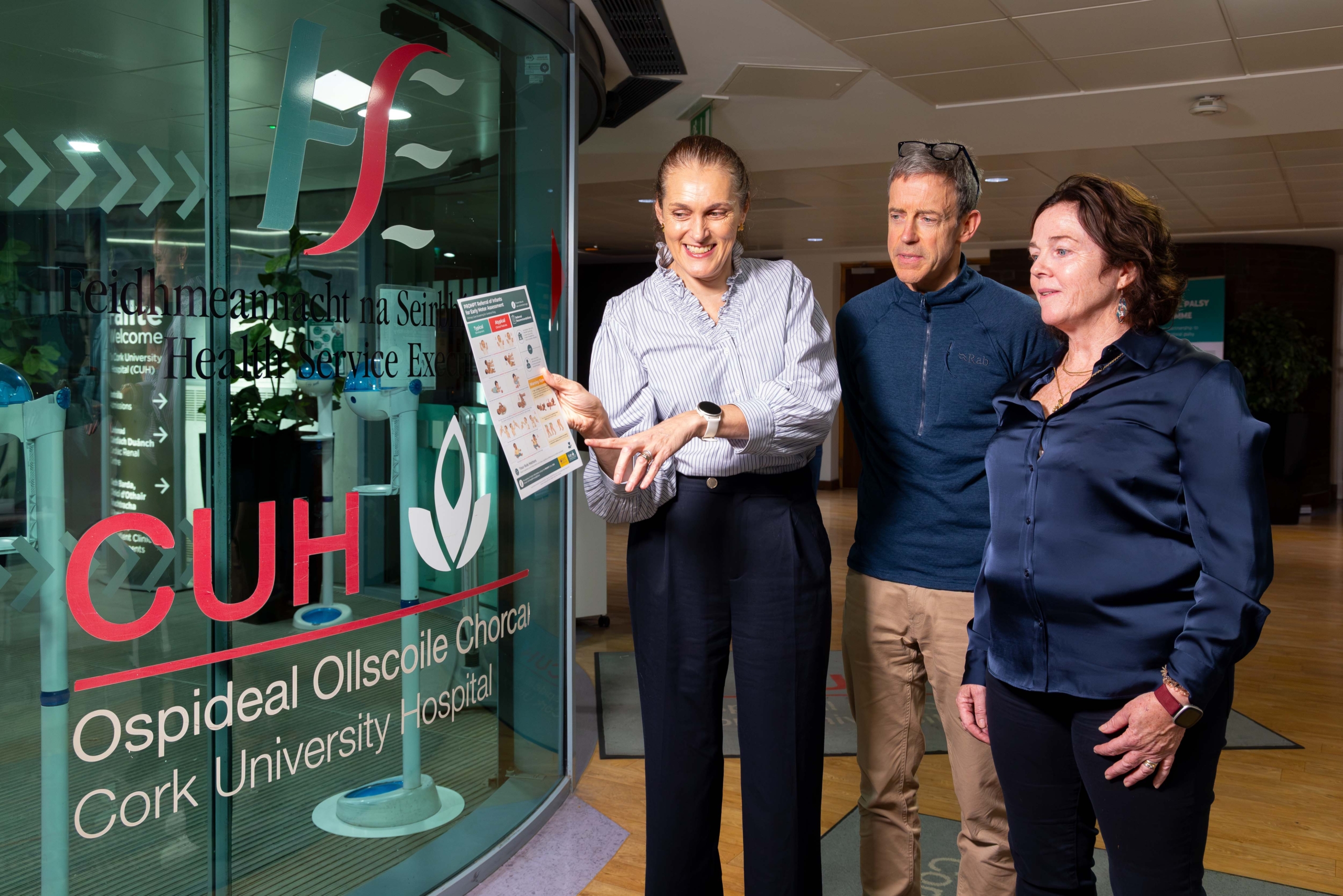
New GP pathway aims to help babies with early signs of cerebral palsy access care sooner
Research into early identification and intervention is helping create a faster route to specialist assessment and support for babies showing early developmental concerns.
A new GP resource and referral pathway launched by the Irish Cerebral Palsy Programme and INFANT Research Centre at University College Cork (UCC) aims to help babies showing early signs of cerebral palsy access specialist care and appropriate therapy sooner.
Known as CP PROMPT, the pathway was introduced to GPs at an educational event at Cork University Hospital (CUH) on 13 October 2026.
The initiative builds on research demonstrating the importance of early identification and targeted intervention, particularly during the first year of life when the developing brain has a remarkable capacity to learn and adapt.
Recognising the early signs
Around half of babies who develop cerebral palsy have no obvious risk factors at birth. As a result, they may not be included in established specialist developmental follow-up programmes.
In some cases, parents are the first to notice differences in their baby’s movements or development.
CP PROMPT provides GPs with illustrated guidance on signs that may warrant further investigation, such as a baby consistently favouring one hand unusually early or showing differences in movement between the two sides of their body.
The resource connects these concerns with a fast-track referral pathway to a specialist service at CUH for babies under one year old.
Babies referred through the pathway will be assessed by a trained paediatrician and physiotherapist, with further investigations arranged where appropriate.
Turning research into earlier support
Research has shown that early, targeted therapy can improve movement and functional skills in children with cerebral palsy. Rather than waiting for every diagnostic investigation to be completed, appropriate interventions can begin while assessments continue.
Professor Deirdre Murray, Chair in Early Brain Injury and Cerebral Palsy at UCC, explains:
“Research is changing how we identify and support babies with cerebral palsy. Earlier recognition gives us the opportunity to begin targeted therapy during an important period of development, helping children practise and build skills through play and everyday activities.
“For families, the practical difference is a clearer route from that first concern to specialist assessment and support. We do not have to wait until all investigations are complete before appropriate therapy can begin.”
These early interventions can involve play-based activities tailored to a child’s individual needs, with parents supported to incorporate practice into everyday routines.
Importantly, not every baby referred through CP PROMPT will have cerebral palsy. Specialist assessment may also identify other developmental difficulties where earlier support could be beneficial.
Plans for national expansion
CP PROMPT is being introduced initially in the Southwest, including Cork, with plans to expand the pathway to all health regions across Ireland by the end of 2027.
The initiative is part of the wider work of the Irish Cerebral Palsy Programme, which brings together research and clinical expertise across UCC, Trinity College Dublin and RCSI to improve cerebral palsy care in Ireland.
By connecting research evidence with practical tools for healthcare professionals, CP PROMPT represents another step towards reducing delays in identifying developmental concerns and helping babies and families access appropriate support earlier.