Early intervention in action: Aidan’s story and the research shaping cerebral palsy care

By |2026-10-01T15:56:45+01:00September 30th, 2026|

Early intervention in action: Aidan’s story and the research shaping cerebral palsy care

When Aidan was born in August 2025, his parents Niamh and John faced enormous uncertainty about what the future might hold.

Late in Niamh’s pregnancy, an antenatal scan identified excessive fluid on Aidan’s brain. He was born safely by Caesarean section three days later. Further assessments were carried out after birth, including an MRI in the neonatal unit, and his parents were given the difficult news that there was significant damage to both sides of his brain.

The initial prognosis was uncertain. Over the months that followed, Aidan was closely monitored and his family threw themselves into supporting his development. He received support through Enable Ireland, while Niamh also took him swimming regularly and sought out additional therapies, including physiotherapy.

At around six months old, a specialist assessment gave his family a clearer understanding of his development. He had significant movement difficulties and was diagnosed with cerebral palsy (CP).

Aidan was already receiving considerable support, but his family continued to look for opportunities to support his development during this important early stage.

One of those opportunities came through research.


Exploring early intervention through research

Following his diagnosis, Aidan was eligible to take part in APPLESTele, a cerebral palsy-focused intervention study led by Emory University and funded in the United States by the National Institutes of Health (NIH). The Irish arm of APPLESTele is being delivered through INFANT Research Centre at University College Cork as part of the ELEVATE programme.

The study is a six-week, home-based early intervention programme for babies with cerebral palsy or at high risk of cerebral palsy. Delivered through telehealth, the programme supports parents to use simple, play-based exercises at home to encourage movement and use of their baby’s weaker arm.

For Niamh and Aidan, that meant incorporating structured activities into everyday life at home, with a particular focus on encouraging Aidan to engage his left arm and hand.

The programme wasn’t always easy. Some weeks were more successful than others, particularly when Aidan was teething. But as it progressed, Niamh began noticing changes in the way he was using his left side.

“He was lifting his arm up really high… he was starting to wiggle his fingers in the beans and the sand and knock over the toy. So that was massive.”

She began noticing changes outside the structured sessions too. Aidan would hold objects in his left hand for longer and use it to help hold his bottle.

Around this period, he also began rolling before his first birthday. While rolling was not an outcome measured as part of APPLESTele, and Aidan was receiving other therapies and support at the same time, it was a hugely significant milestone for his family.

“We never thought he’d be rolling before his first birthday,” Niamh says. “It was like Christmas Day.”

Today, at 13 months old, Niamh describes a little boy doing far more than his family had initially been led to expect.

“He’s babbling, he’s saying Dada… he’s waving and he’s giving kisses and he’s clapping hands. He’s doing far more than any of us anticipated.”

She continues to see changes in how Aidan uses his left side too. When he rolls, he is increasingly able to recognise where his left arm is and reposition it himself. When she asks him to lift the arm, he can.

“Those are all just massive wins. We never take it for granted.”


From research into practice

For Niamh, completing APPLESTele has also raised an important question: what happens when the research ends?

She has looked for ways to continue this type of intervention but says she has struggled to find comparable therapy available in Ireland.

That question goes beyond one family. Studies such as APPLESTele are helping to build our understanding of how early, targeted intervention can support babies with cerebral palsy. The next challenge is ensuring that approaches supported by evidence can move beyond research studies and, where appropriate, become part of the care available to children and families.

Professor Deirdre Murray, Deputy Director of INFANT Research Centre at University College Cork, says the approach to cerebral palsy diagnosis has changed significantly.

“Until relatively recently, there was often a ‘wait and see’ approach for infants at high risk of cerebral palsy. We now have reliable tools that can allow us to diagnose CP much earlier, often within the first six to nine months of life.

“Research is also building our understanding of the difference that CP-specific interventions such as APPLES can make. For suitable babies, starting targeted intervention during the first year of life gives us an important opportunity to support their development as early as possible.”

For Niamh, the importance of continuing this work is much more immediate.

Aidan is now 13 months old, and his family is celebrating every new movement and every new milestone. But having experienced this type of targeted early intervention through research, Niamh would like to see opportunities like it become available to more children and families.

“I’d love to be keeping it going,” she says.


Help shape the future of cerebral palsy care

This October, INFANT is shining a light on research working to improve the early detection and intervention of cerebral palsy.

All donations made to INFANT Research Centre during October will support cerebral palsy research – helping us find better ways to identify CP earlier, support children sooner and improve care for children and families.


New Kildare clinic expands specialist follow-up for babies in AIM-HIGH Study

By |2026-09-30T15:53:12+01:00September 29th, 2026|

New Kildare clinic expands specialist follow-up for babies in AIM-HIGH Study

A new research clinic in Kildare is expanding access to specialist developmental follow-up for babies participating in the AIM-HIGH Study, led by INFANT Research Centre at University College Cork.

The clinic, based at Enable Ireland in Jigginstown, opened on 4 September, with two families attending the first clinic, and a further eight families are expected to attend the next clinic in November.

AIM-HIGH (Assessing Intellectual and Motor outcomes in High-Risk Infants) follows babies who may be at increased risk of developmental difficulties due to premature delivery, or a complex neonatal course. Through detailed assessments during the first 2 years of life, the study aims to improve support earlier identification of children who may benefit from additional assessment, intervention or support.

The study sits within ELEVATE, a research programme led by INFANT Research Centre that is working to transform the prediction, early detection and treatment of cerebral palsy in Ireland. ELEVATE’s work contributes to the broader Irish Cerebral Palsy Programme, bringing together research, clinical care and new approaches to improve outcomes for children and families.


Expanding follow-up beyond the major maternity centres

AIM-HIGH currently recruits babies through Cork University Maternity Hospital, the Rotunda Hospital and the Coombe Women & Infants University Hospital.

However, some babies who receive specialist care at these hospitals do not live within their usual follow-up catchment areas.

The new Kildare clinic provides an additional location for AIM-HIGH families living outside Dublin and Cork to access the structured developmental follow-up offered through the study.

During appointments, babies are assessed by an INFANT team including a trained paediatrician and physiotherapist. The team looks closely at their development, including movement, muscle tone and neurological development, to identify any early signs that a child may benefit from additional assessment or therapeutic support.

Professor Deirdre Murray, Deputy Director of INFANT Research Centre and Chair of the Irish Cerebral Palsy Programme, said the follow-up is designed to identify developmental differences as early as possible.

“In these visits, we are screening for abnormal developmental progress, looking for the first signs of movement difficulties such as cerebral palsy, or delayed development requiring active therapeutic input to improve outcomes.’

Professor Murray said the ambition is to make structured follow-up available to more babies who may be at increased risk of developmental difficulties.

“Until now, high-risk infants were not offered structured early screening for CP. Early structured screening, implemented in the large maternity hospitals in Dublin, Cork and Waterford since 2023, has reduced the average time of CP diagnosis for babies from 2 years to around 7 months. Our hope is that this structured follow up can be offered to all at risk babies so that diagnosis and intervention can start as soon as possible.”


Freya’s Story

Freya was born prematurely at 29 weeks and four days. Lavita had been transferred from Cavan to the Rotunda Hospital ahead of her delivery, where Freya spent her first week in neonatal care before being transferred back to Cavan Hospital for a further six weeks.

While at the Rotunda, the family was invited to participate in AIM-HIGH because Freya had been born prematurely. However, because the family lives in Cavan, Freya falls outside the Rotunda’s usual follow-up catchment area.

Her first AIM-HIGH developmental assessment therefore took place at the newly opened Kildare clinic.

For Lavita, navigating Freya’s development has meant adjusting to a very different experience of early motherhood.

“It has been a totally different experience for me as a mother. My first daughter was born at 41 weeks, and Freya was born at 29 weeks, so you can’t compare their development in the same way.”

One of the biggest adjustments has been learning to consider Freya’s development according to her corrected age, rather than simply her age from birth.

“If I compare Freya using her age from when she was born, she can seem delayed. But when I look at her corrected age, her development is matching where we would expect her to be. As a parent, having someone explain that and reassure you is really important.”

At Freya’s first appointment, the team assessed areas including her muscle tone, reflexes and neurological development.

“It was a lovely experience. The team were very good and Freya was comfortable throughout. They took the time with her and we came away feeling very happy with how she was progressing,” Lavita said.

Freya will continue to be followed through AIM-HIGH, with her next assessment planned for when she is between nine and 12 months corrected age.


Supporting earlier identification

The opening of the Kildare clinic is part of a wider ambition to extend structured developmental follow-up to more babies who may be at increased risk of developmental difficulties.

For the majority of children, these assessments will provide reassurance that their development is progressing as expected. For others, they may help identify developmental differences at an earlier stage, allowing families to be connected with further assessment, intervention or support where needed.

This is particularly important for cerebral palsy, where earlier identification can provide an opportunity to begin appropriate intervention during an important period of a child’s development.

The new Kildare clinic represents a practical step towards widening access to this structured follow-up for families participating in AIM-HIGH, while helping researchers build a clearer picture of how babies at increased risk develop during their first years of life.

The new clinic represents another practical step in expanding access to structured developmental follow-up for participating families, while building knowledge that can help shape better pathways for children at risk of developmental difficulties, and in particular CP in Ireland.


Support cerebral palsy research

This October, INFANT is shining a light on research helping to improve the early detection and intervention of cerebral palsy. All donations made to INFANT during October will support cerebral palsy research, helping our researchers continue work to improve outcomes for children and families.


Parents’ voices helping shape cerebral palsy research

By |2026-03-24T15:45:54+00:00March 24th, 2026|

Parents’ voices helping shape cerebral palsy research


Research is strongest when it reflects the realities of the people it aims to support.

At the INFANT Research Centre at University College Cork (UCC), parents are helping shape cerebral palsy research through the Cerebral Palsy Parent Advisory Group (CP-PAG). The group is part of the wider ELEVATE research programme and the National Cerebral Palsy Programme, which aim to improve early diagnosis, care pathways and long-term outcomes for children with cerebral palsy in Ireland.

The advisory group brings together parents who share their lived experience to help guide research aimed at improving care, support and outcomes for children with cerebral palsy.

For Cerebral Palsy Awareness Day (25 March), INFANT is highlighting the role parents play in ensuring research reflects the priorities and everyday experiences of families.

Parents involved in the group say their perspectives help researchers better understand what life with cerebral palsy looks like beyond clinical settings.

“We are living the reality every day,” says Kirsty, whose four-year-old son Andre has spastic quadriplegic cerebral palsy.

“We can offer perspective into things researchers might not realise are important but matter greatly to families.”


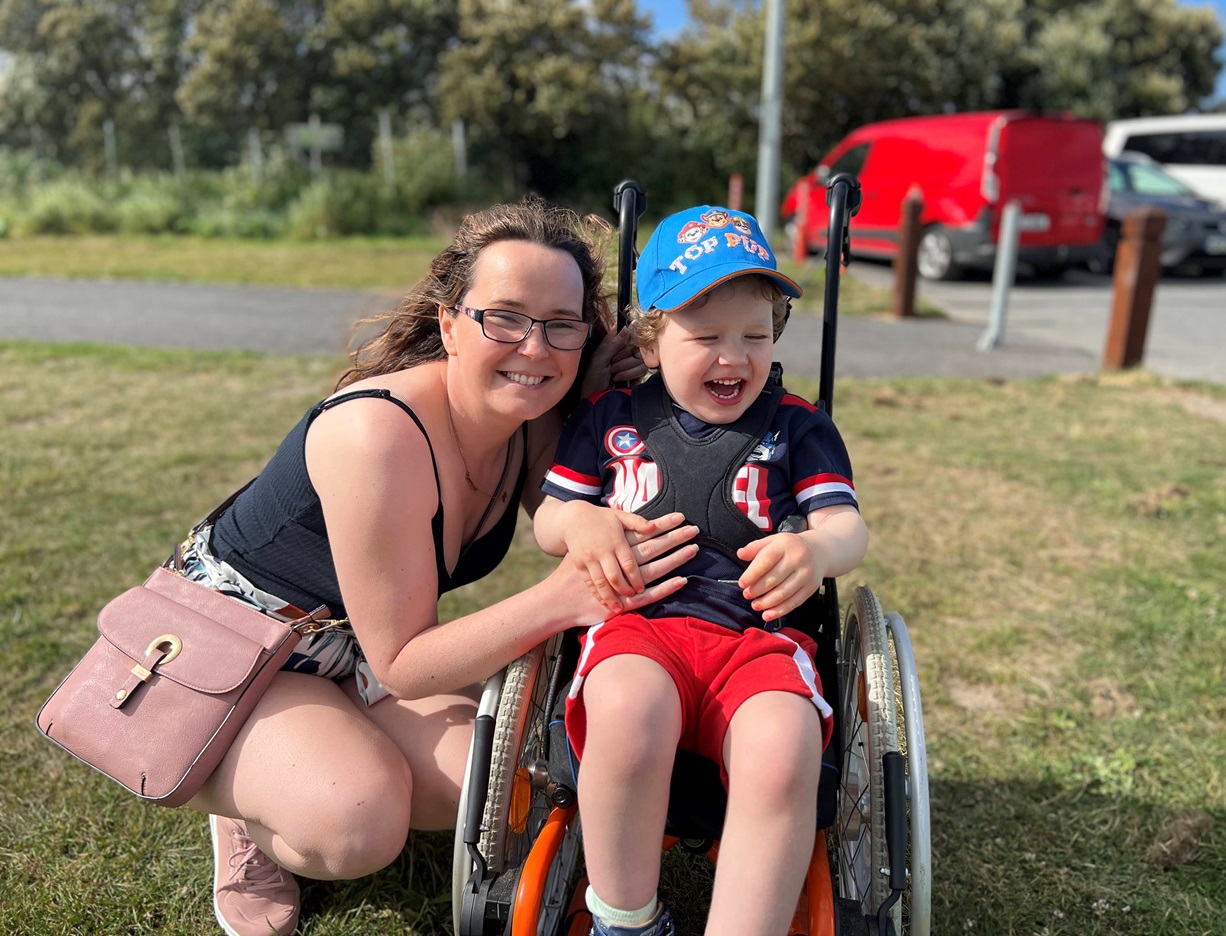
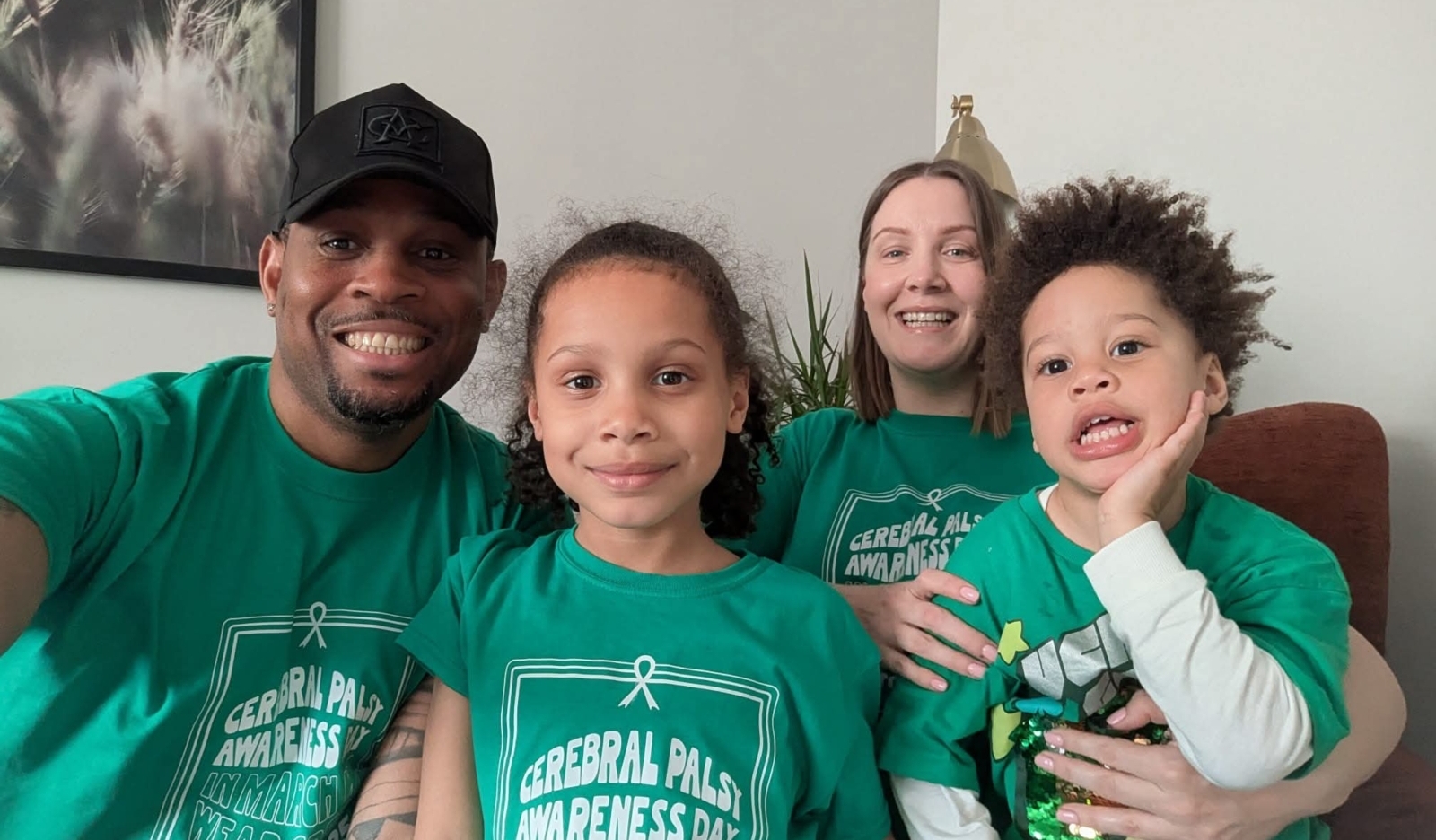
Pictured left, Kirsty Diaso with her husband, daughter, and son Andre, who has spastic quadriplegic cerebral palsy; pictured right, Kirsty and Andre.


Why lived experience matters in research

Cerebral palsy is a lifelong neurological condition that affects movement, posture and coordination. For many families, the journey after diagnosis involves navigating therapies, services and everyday challenges that are not always visible in clinical research.

Cristín, whose six-year-old son Alex was diagnosed shortly after his first birthday, says involving parents helps bring a human perspective to research.

“Involving parents transforms research from a clinical study into a human-centred one,” she explains.

“Parents bring lived experience that can help researchers understand what families are going through, especially during the emotional and uncertain time around diagnosis.”

Parents in the advisory group contribute in a number of ways, including helping shape research questions, reviewing study design and ensuring research priorities reflect what matters most to families. They have also contributed to over 20 research studies and helped develop national resources for families, making research more accessible and relevant to those living with cerebral palsy.


Understanding the realities families face

For many parents, everyday life highlights the barriers that still exist for children with disabilities.

Cristín says some challenges are small but persistent.

“Sometimes it’s things like trying to find adapted shoes that fit over orthotics or checking whether somewhere is accessible before we go out.”

Others highlight wider inequalities in systems designed without disabled children in mind.

She points to the contrast between her children’s school journeys.

“One child can walk ten minutes to school, while the other has to sit on a bus for over an hour to attend a special school that can meet their needs.”

Experiences like these help researchers understand the broader social and practical challenges families face every day.


Challenging assumptions about disability

Parents also hope greater awareness will help challenge assumptions about children with physical disabilities.

Cristín says one of the biggest challenges Alex faces is not always mobility.

“It’s the assumption that because he has a physical disability, he cannot understand what people are saying,” she says.

“I would love to see more people stop talking past Alex to me. Get down to his level and speak directly to him.”
For families, awareness is not only about understanding the condition itself, but also about recognising the abilities, personalities and voices of the children living with it.


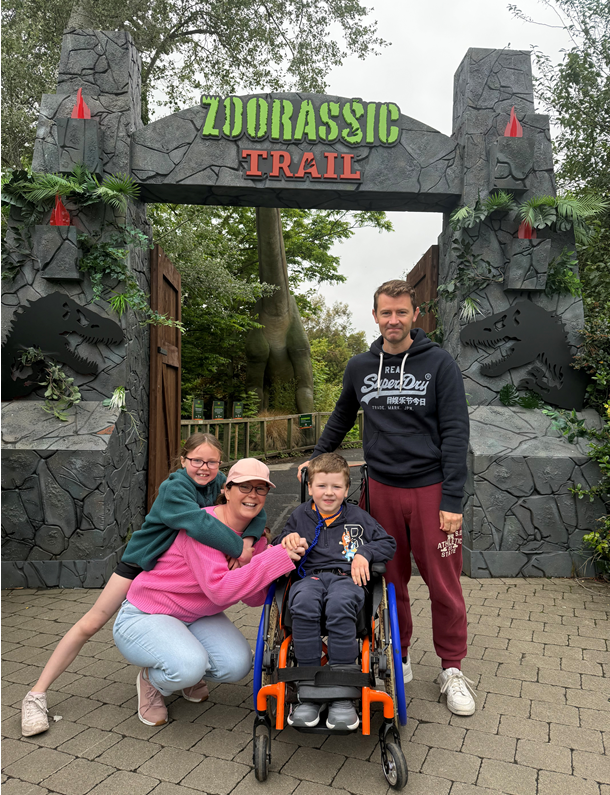
Pictured left: Cristin McCormack, and son Alex, who was diagnosed with cerebral palsy shortly after his first birthday; pictured right, the family enjoying a day out together.


From lived experience to better research

Since her son’s diagnosis, Kirsty has taken a strong interest in cerebral palsy research and how it can improve care and support for families.

She recently launched Cerebral Palsy Social (@cerebralpalsysocial), a support network for parents and caregivers of children with cerebral palsy.

For her, contributing to research is another way parents can help shape a better future.

“Cerebral palsy is not a curable condition,” she says. “But with the right therapies, supports and understanding, people with cerebral palsy can thrive and live full lives.”

She believes involving parents in research focuses on outcomes that truly matter to children and families. Embedding parent voices in research from the outset also means programmes like ELEVATE can drive real-world improvements in care, support and outcomes for children and families across Ireland.


Looking toward a more inclusive future

For parents like Kirsty and Cristín, Cerebral Palsy Awareness Day is an opportunity not only to raise awareness but also to build understanding.

“To me, CP Awareness Day is about bridging the gap between awareness of CP as a label and a true understanding of what a diagnosis means,” says Cristín.

“It’s an opportunity to celebrate our amazing children while also highlighting the challenges families face and working toward a future where every child with cerebral palsy grows up in an inclusive and supportive community.”

Through initiatives such as the Cerebral Palsy Parent Advisory Group, parent voices are helping ensure research reflects the realities of families and contributes to better care and support in the future.


Go to Top