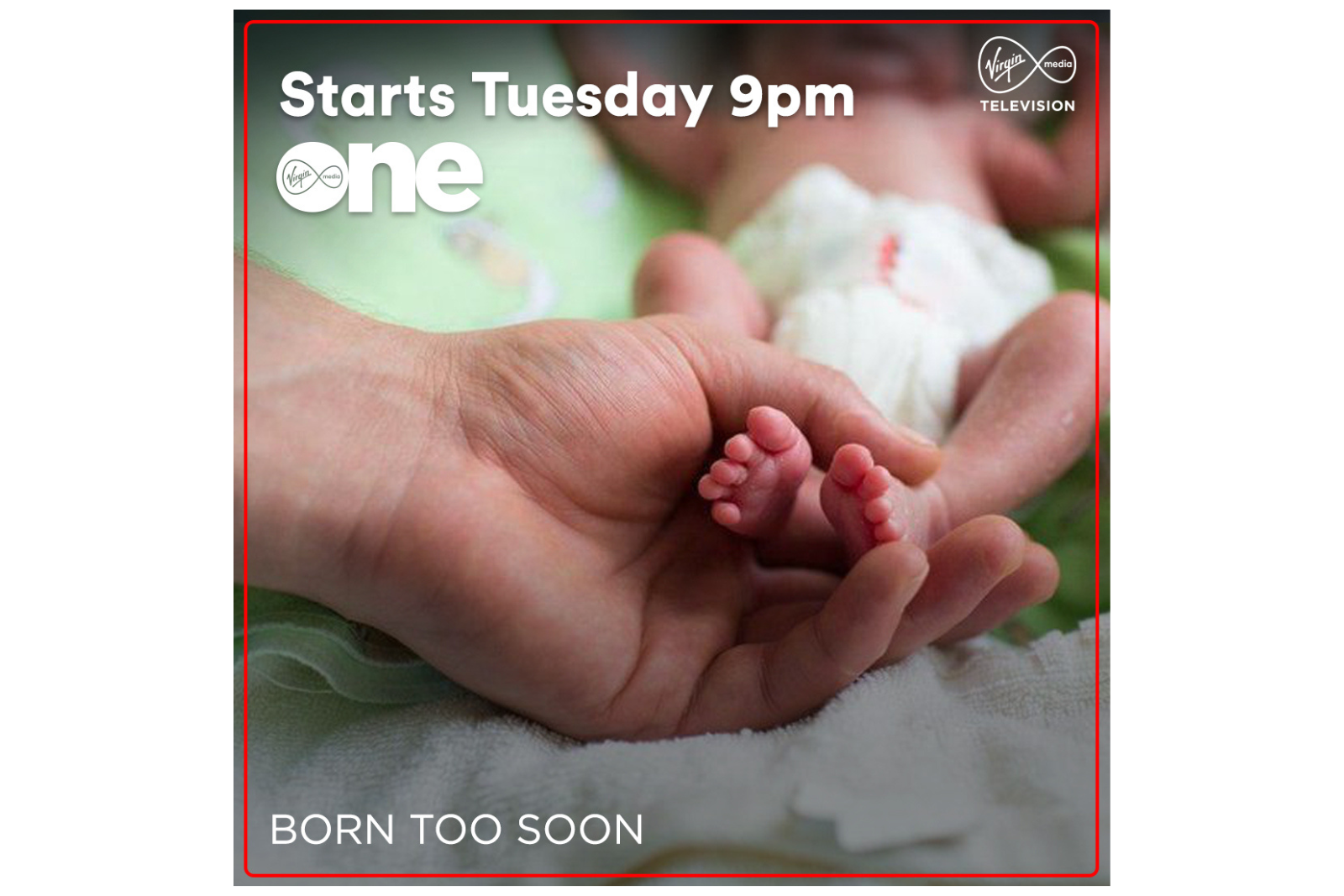
Born Too Soon Airs on Virgin Media One

By |2023-09-04T09:26:20+01:00September 4th, 2023|

Born Too Soon will give an unprecedented look into lives of the hardworking staff who dedicate their lives to caring for vulnerable newborns at CUH’s neonatal unit.

TV crews have been in the hospital all year filming ‘Born Too Soon,’ following the stories of families and medical teams looking after premature babies born at the busy hospital.

At CUH, preemies are given round-the-clock care, with the new series showing the ups and downs of life looking after frail babies – particularly in a time with strict Covid restrictions.

Viewers will get to see the dedication and love put into giving babies born preterm the best chance possible when Born Too Soon starts at 9 pm Tues 5 September on Virgin Media One.

INFANT Seminar Series: Dr Juan Trujillo and The Paediatric Allergy Service and His Research at INFANT

By |2021-11-10T16:45:14+00:00November 9th, 2021|

As part of the INFANT seminar series, Dr Juan Trujillo will discuss the paediatric allergy service at CUH and his research this Friday, November 12th 2021 at 12pm.

Dr Trujillo’s presentation will largely touch on the following areas.

• Brief introduction of the paediatric allergy service and his research at INFANT (5min)
• Allergy awareness involvement in collaboration with several partners (5min)
• Progression in new educational model to cover not only health care population in Ireland but the entire Irish population (10 min)
• Active and pending research (15min)


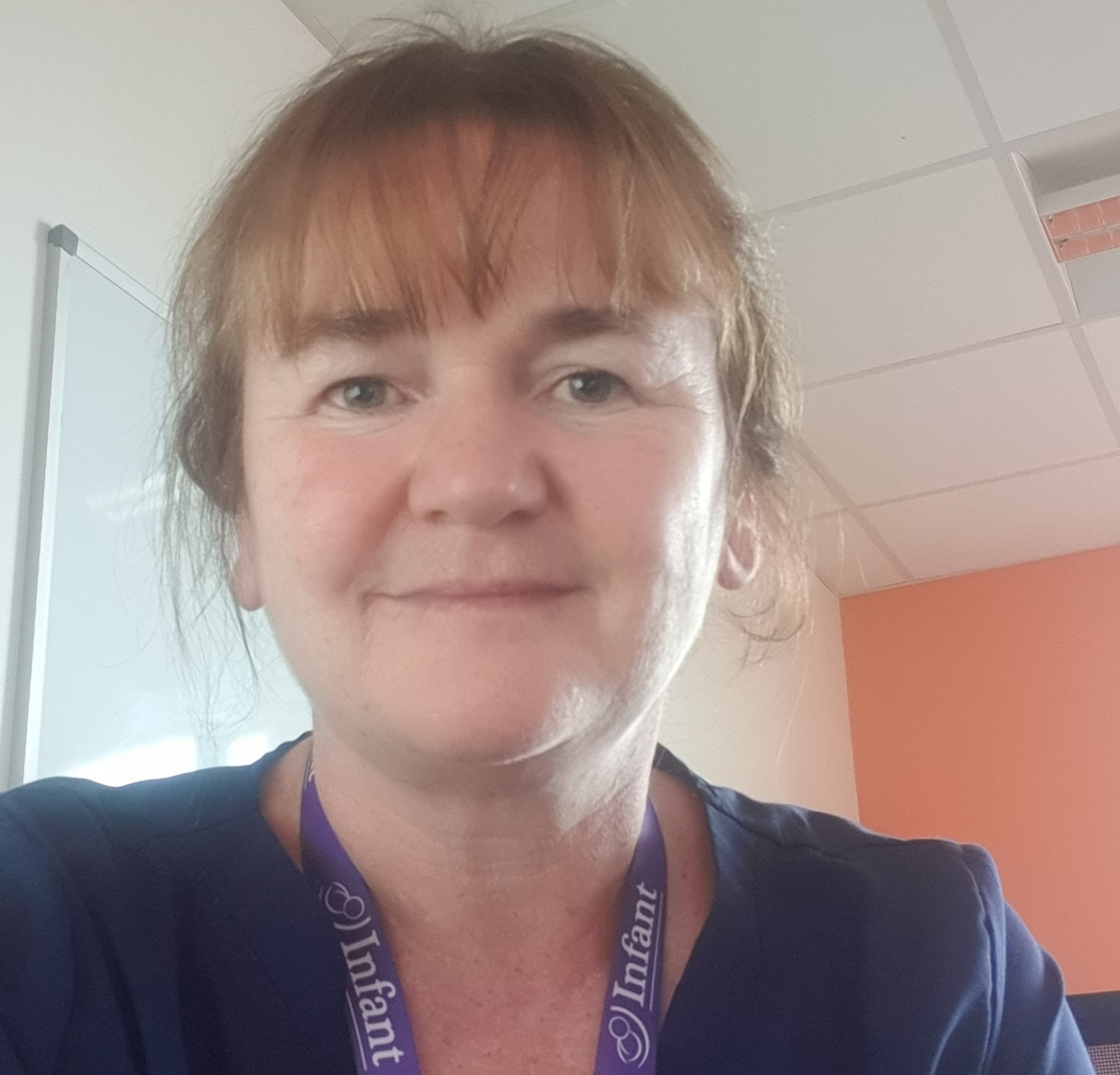
PhD Student Profile: Mary Anne Ryan, General Nurse, Paediatric Nurse and Mid-Wife

By |2021-10-14T10:52:28+01:00October 13th, 2021|

Introducing herself as a registered general nurse, paediatric nurse and a mid-wife, INFANT PhD researcher, Mary Anne Ryan, is fervent in her desire to protect brain development of pre-term babies who pass through the neonatal unit in CUMH.

Mary Anne describes how advances in technology have pushed back the limits of viability, reducing mortality associated with preterm birth. However there has been little change in morbidity amongst the preterm infant group.

A clinical researcher, Mary Anne has a specific interest in the importance of sleep to the developing brain, explaining that sleep is a prerequisite for normal growth and a precondition for the normal development of the infrastructure of the brain.

‘There is a reason why preterm babies may sleep for up to 90% of the day. Whilst it may appear to be physically passive and restful, a high level of brain activity is maintained, which is crucial to a preterm infants’ developing brain’.

‘While we monitor heart rate, respirations, temperature, how well the body is oxygenated and the nutritional intake of preterm infants in the neonatal unit, we do not routinely monitor brain activity’.

Brain activity may be monitored through electroencephalography (EEG). Sleep states (active sleep and quiet sleep) are associated with particular neural activity patterns which change with brain maturation.

‘Knowing what features and patterns are normal for gestational age we can determine if the brain development is on a normal trajectory of development’.

Mary Anne’s research focuses on moderate to late preterm infants (born between 32- and 36+6-weeks GA). A preterm group represent up to 85% of all preterm infants born and are largely underrepresented in the literature.

‘Normally, brain growth and development occur in the womb until term, a place of minimal sensory exposure’.

‘The high sensory environment of the neonatal unit may be home to preterm infants for many weeks with bright lights, high levels of noise, stressful painful procedures, all of which frequently interrupt sleep our natural neuroprotective state during a critical period of development’.

‘What I’m really asking is what does the sleep architecture of the moderate to late preterm infant at 36 weeks in the neonatal unit tell us about their future brain development?’

Mary Anne’s research required her to carry out overnight EEG’s on over 100 preterm infants at 36 weeks in the neonatal unit in CUMH and carry out follow up developmental assessments at four- and 18-months corrected age. Sleep/wake patterns during the preterm period have been found to be related to developmental outcomes. However longitudinal studies relating to sleep state organisation amongst this homogenous group of preterm infants are rare.

‘Secondly, I’m asking, how does brain development of this preterm infant group compare to healthy term born infants at the same gestational age?’

‘Traditionally healthy moderate to late preterm infants have minimal ongoing long-term surveillance’.

‘Whilst the majority of these infants do well a significantly higher percentage of adverse outcomes are evident in the literature in comparison to term born infants’.

Mary Anne’s research will also compare developmental outcome scores of the preterm infant group to a term born group recruited as part of another study.

Motivated by a desire to enhance the care that is already being delivered to pre-term babies, Mary Anne’s focus on the practical application of her research stems from her conviction that nurses bring a unique contribution to neurodevelopmental care.

As a clinical researcher, Mary Anne has a specific interest in the practical application of her research, which could lead to the adoption of new practices that create periods of protected sleep so as to improve the long-term neuro-developmental outcomes for pre-term babies.

Go to Top