Liltoda wins UCC Innovation Award for CogniTOT Application

By |2022-03-24T14:58:48+00:00March 24th, 2022|

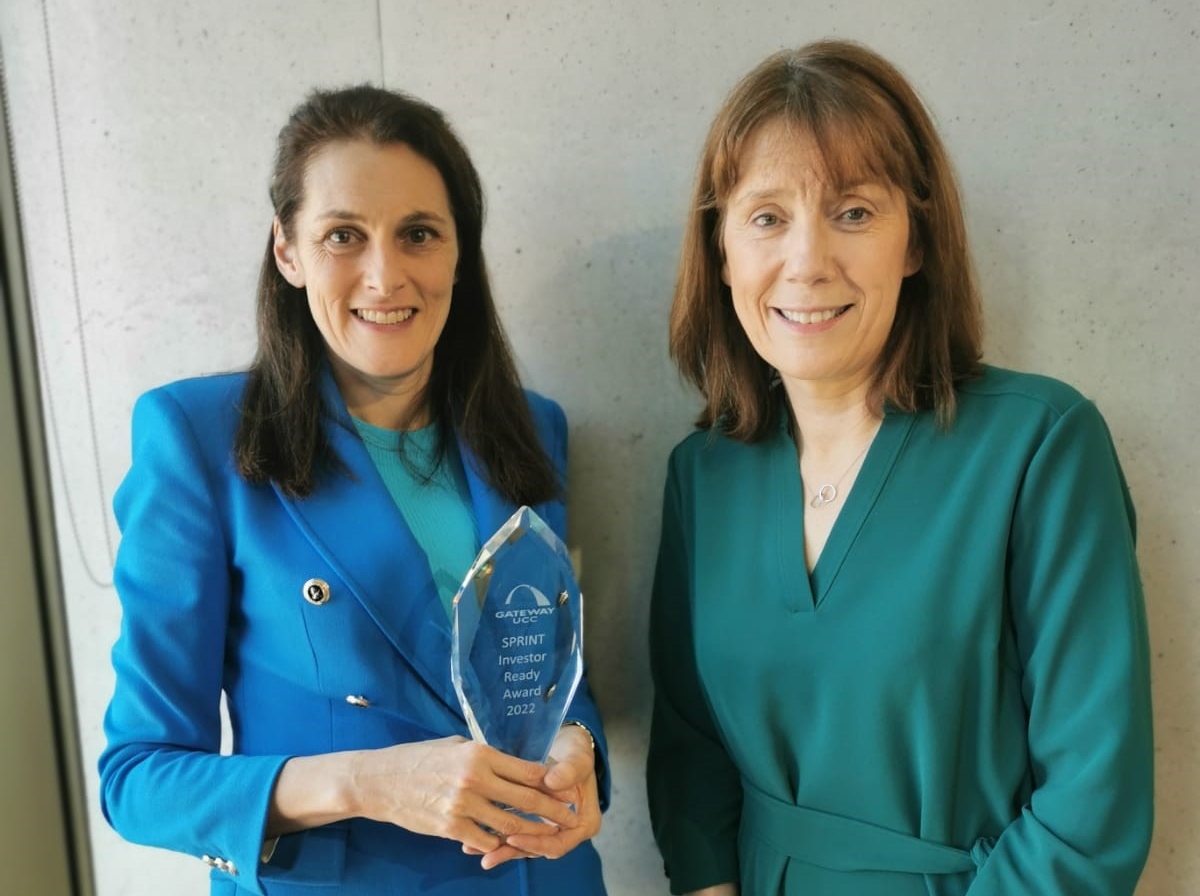
Liltoda Ltd, the first academic spin out to emanate from the INFANT Research Centre at University College Cork, has been awarded a GatewayUCC Sprint Award by Professor John O’Halloran, President of UCC.

Launched in August 2021, Liltoda aims to develop and market novel technology-based solutions to the cognitive assessment of young children.

Its first product, the CogniTOT application, offers touch-screen based cognitive assessment for children aged 18-30 months.

It was developed through six years of research in the INFANT Centre, funded by both the Health Research Board and Science Foundation Ireland. The CogniTOT app is non-verbal and so suitable to use in children with speech delay or for whom English is not their first language.

Now in its sixth year, GatewayUCC Sprint Awards recognises the UCC researchers and entrepreneurs who establish spin-out start-up companies.

The Sprint Programme has been developed to help spin-out start-up companies overcome challenges they may encounter when starting their businesses.

As part of the programme, pre and early-stage start-ups work with successful business mentors who help to bring businesses from the idea stage through to the eventual commercialisation of the product or service.

Dr Elaine McCarthy’s Project to Screen for Iron Deficiency in Pregnant Women and Infants

By |2022-03-01T09:05:03+00:00February 28th, 2022|

INFANT’s Dr Elaine McCarthy is the lead investigator on the IDEA project, a study that aims to develop two screening tools to identify iron deficiency among pregnant women and preterm infants.

Funded by the Health Research Board (HRB), it is anticipated that the project will lead to the creation of screening tools that can be integrated into clinical practice and allow for the early detection of iron deficiency.

Titled Iron Deficiency Assessment for protection of the newborn brain, the project has the potential to identify a condition that is estimated to affect 2 billion people worldwide, according to Dr McCarthy.

In Europe, one in three pregnant women are iron deficient, with even higher rates of up to 85% iron deficiency seen in some countries.

Similarly, high rates of deficiency are widely reported in infants and young children, with evidence suggesting as many as one in two young children are iron depleted or deficient.

If left untreated, iron deficiency will progress into iron deficiency anaemia, which can result in adverse pregnancy outcomes such as preterm birth or the birth of a low-birth-weight infant.

We want to protect women and their children from iron deficiency by creating a tool that will identify the mothers and infants who are at the greatest risk so that they can receive early treatment.

By taking such a preventive approach, Dr McCarthy, a Lecturer in the School of Food and Nutritional Sciences, believes that the IDEA project can lead to improved health and wellbeing outcomes and result in the overall enhancement of educational attainment, job potential and quality of life.

Dr McCarthy’s assertion is based on the fact that iron plays an essential role in brain development, with iron deficiency labelled as one of the leading causes of diminished neurological developmental potential worldwide.

From our earlier research, we know that women’s health and nutritional status both prior to and during pregnancy are critical to the health and development of their child.

Iron deficiency in the prenatal and early postnatal periods can have catastrophic consequences for both mother and infant, including long-lasting, irreversible deficits in cognition, motor function and behaviour.

Therefore, prevention and early detection are critical to protect the developing brain. Unfortunately, we currently don’t have a suitable screening system to enable this early detection of the most vulnerable.

As part of the initial phase of the project, Dr McCarthy and her team are inviting all pregnant women, aged over 18 years, living in Ireland to take part in a 20-minute online survey that seeks to evaluate nutrition knowledge, attitudes and practices.

Once the survey phase of the project is complete, Dr McCarthy will begin assessing the data before beginning the process of developing a set of predictive indicators that can identify iron deficiency in pregnant women and their infants. Field testing will then follow this phase to validate the operability of the screening tools in clinical practice.

PI Profile: Dr Jane English’s Research Into Biomarkers to Support the Early Diagnosis of Autism

By |2021-11-12T12:08:44+00:00November 12th, 2021|

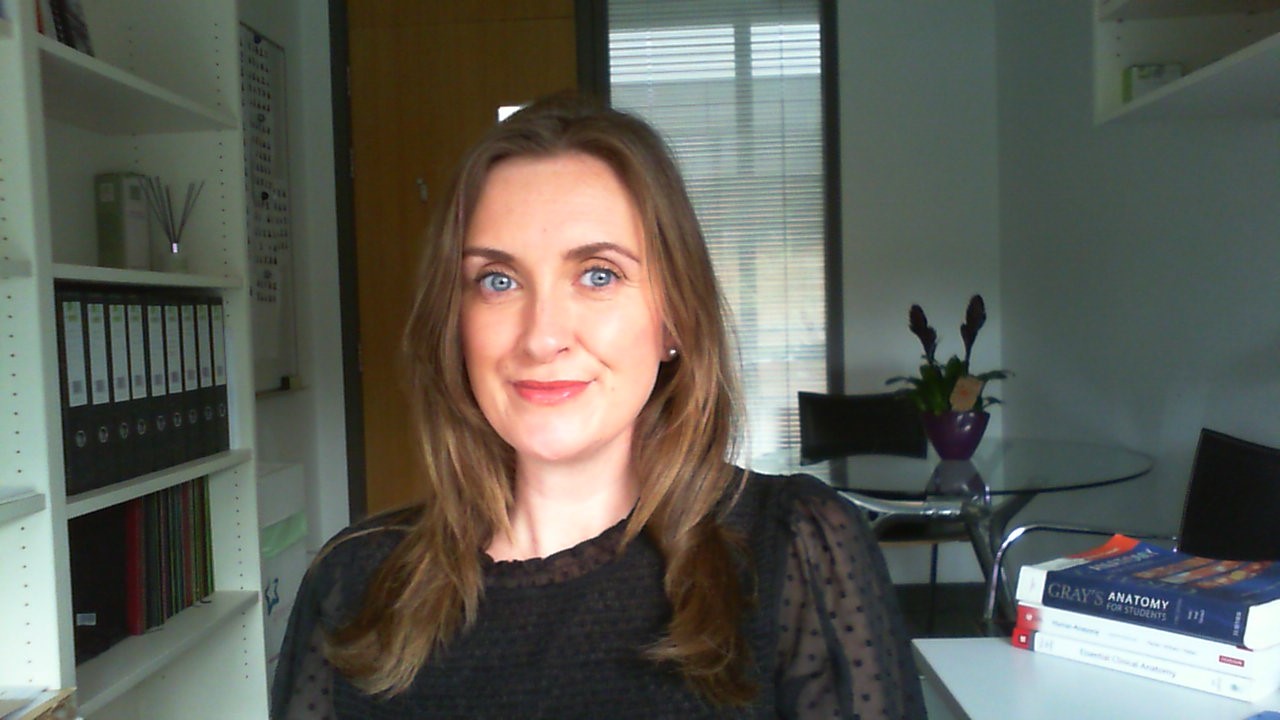
With the support of the Health Research Board, INFANT’s Dr Jane English (Lecturer in the Department of Anatomy and Neuroscience, UCC) is leading a transformative study that could identify biomarkers to predict the onset of severe childhood autism.

The study, which has the potential to be extremely significant, could see the development of a screening system that looks for small molecules in blood (e.g. proteins or metabolites) that indicate the risk of severe autism in children.

If successful, Dr English’s study could enable clinicians to make an early diagnosis and begin the process of putting in place supports that she hopes will lead to a significant improvement in health outcomes and enhance the quality of life of children with severe autism, and their families.

This project has the potential to transform the care of children with severe autism.

On average, one in every 58 children are diagnosed with autism, and diagnosis tends to take place in kids aged between four and eight years old, which means that they are missing out on important supports and interventions in early childhood.

If we can develop a test that allows clinicians to screen newborns, we could identify at risk children and begin the process of providing support and preparing pathways that will help children with autism and their families.

By examining cord blood samples taken from newborns, who were later diagnosed with severe autism, Dr English hopes to create a test that could be administered in a similar way to the heel prick test, which screens for rare newborn metabolic conditions.

To create such a test, Dr English and her team of expert researchers are analysing cord blood samples from The Aarhus Birth Cohort, the Danish National Birth Cohort, and the Cork Baseline Birth Cohort, and without these data rich cohorts this research would not be possible.

Using mass spectrometry, we are measuring proteins and metabolites in children with severe autism and comparing them to levels in neurotypical children.

We are using machine learning algorithms to  interpret these blood based measurements to identify a molecular signature, like a fingerprint that can indicate which children are most at risk and would benefit from early intervention.

This is an international collaborative study with expertise from a multidisciplinary team that includes researchers Professors Bodil Hammer Beck and Tine Henriksen from Aarhus University, Professor Louise Gallagher from Trinity College Dublin, along with Professor Deirdre Murray and Dr Ali Khashan from University College Cork.

Together, they hope to build on the insights Dr English developed during her time at the Royal College of Surgeons in Ireland (RCSI), where she worked on a project that identified the molecular signature in age 11 children that later developed psychotic disorder.

Dr English aims to build on the methodologies that she developed during her time at the RCSI, to allow for the early diagnosis of severe autism, which could in turn set in train a process whereby early intervention and support can be offered to children in their families.

Go to Top