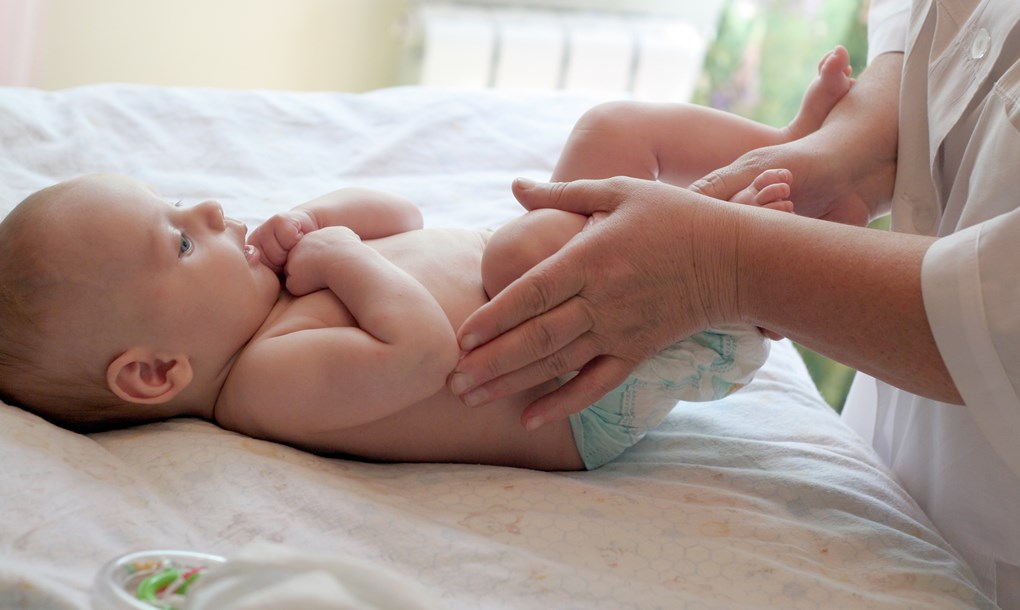
New research programme exploring probiotics and the developing infant microbiome

By |2026-09-17T11:08:21+01:00September 1st, 2026|

Researchers at University College Cork’s APC Microbiome Ireland and INFANT Research Centre, together with Cork University Maternity Hospital (CUMH) and Teagasc, have begun a new research programme exploring how probiotics may influence the developing gut microbiome during the early years of life.

The first clinical trial, the SMILE Study, is focused on very early infancy and will investigate two specific probiotic strains and their potential to support the infant gut microbiome and healthy growth.

The first months of life represent an important window for this research. The infant microbiome is highly dynamic during the first year, developing alongside the gut and immune system.

Professor Paul Ross, Director of APC Microbiome Ireland and research lead for the programme, said:

“The first months of life are a critically important period for the development of the gut microbiome. Our research has shown just how dynamic the microbiome is during the first year of life. SMILE gives us an opportunity to understand how specific probiotic interventions may influence that process.”

The collaboration combines APC’s expertise and technologies in microbiome science with INFANT and CUMH’s clinical and newborn health expertise.

Professor Eugene Dempsey, INFANT Clinical Lead for Neonatal Research and Consultant Neonatologist at CUMH, said:

“By bringing together expertise in newborn health and microbiome science, we have an opportunity to investigate these questions directly with families and build a much better understanding of the role probiotics may play at different stages of early development. This is the kind of research that is only possible through strong collaboration between clinical and scientific teams.”

SMILE is the first of three planned clinical trials examining probiotic interventions at different stages of early childhood, creating an opportunity to understand how the microbiome responds at key points in a child’s development.

PhD Profile: Kaiyu Yu Talks Decision Support Tools for Newborn Brain Protection

By |2021-10-27T14:28:09+01:00October 27th, 2021|

An emerging expert in the field of biomedical engineering, Kaiyu Yu joined INFANT as a PhD researcher in July 2021 to begin working on an SFI Frontiers for the Future project that is developing decision support tools for newborn brain protection at INFANT.

The newborn brain is vulnerable to injury around the time of birth. Decision support systems based on artificial intelligence can turn data from devices that measure vital signals from the brain, heart and circulatory system into information that can help clinicians to treat critically ill infants.

However, these signals are complex and the interaction between them is not completely understood. This project will develop new mathematical and signal processing models that will facilitate the next generation of computer algorithms that will help doctors deliver specific and urgent medical interventions to improve the long-term health and quality of life for these infants.

The ambitious project will lean on Kaiyu’s expertise in developing machine learning algorithms and could help clinicians to monitor, predict and treat low blood pressure among pre-term infants before a serious issue may arise.

Clinicians want to be able to monitor a pre-term baby’s blood pressure. They do this by measuring some physiological signals, such as EEG, ECG and NIRS readings.

I want to be able to develop a system that collates, processes, segments and models EEG, ECG and NIRS data so that clinicians can accurately predict if a pre-term baby’s blood pressure is going to drop to a level that might require medical intervention.

As a master’s student, Kaiyu developed an Android app that collected human activity data while studying biomedical engineering at Dalian University of Technology in China.

Through his expertise in developing machine learning algorithms, Kaiyu could see synergies between his research and the work being undertaken by INFANT’s Dr Gordon Lightbody and Professor Liam Marnane.

After I heard Professor Marnane speak at Dalian University of Technology, I understood that there were synergies between the research that we were both involved in.

As part of my master’s thesis, I was using machine learning models to develop useful tools that could predict health outcomes, which was something that Professor Marnane and INFANT were also engaged with.

So, when I completed my master’s, I email Professor Marnane to see if I could work on a PhD project at INFANT.

Thankfully he said yes, and now I’m applying a lot of what I learned at Dalian in this new project.

Having started the PhD programme, Kaiyu is in the process of surveying data that will eventually help him to design a system that will result in better clinical outcomes for pre-term babies.

That desire drives his ambition to complete the programme so that he can work in the medical industry, where he can help enhance medical devices.


Go to Top