
Dr Aoife Gallagher Awarded The Sir Henry Marsh Medal
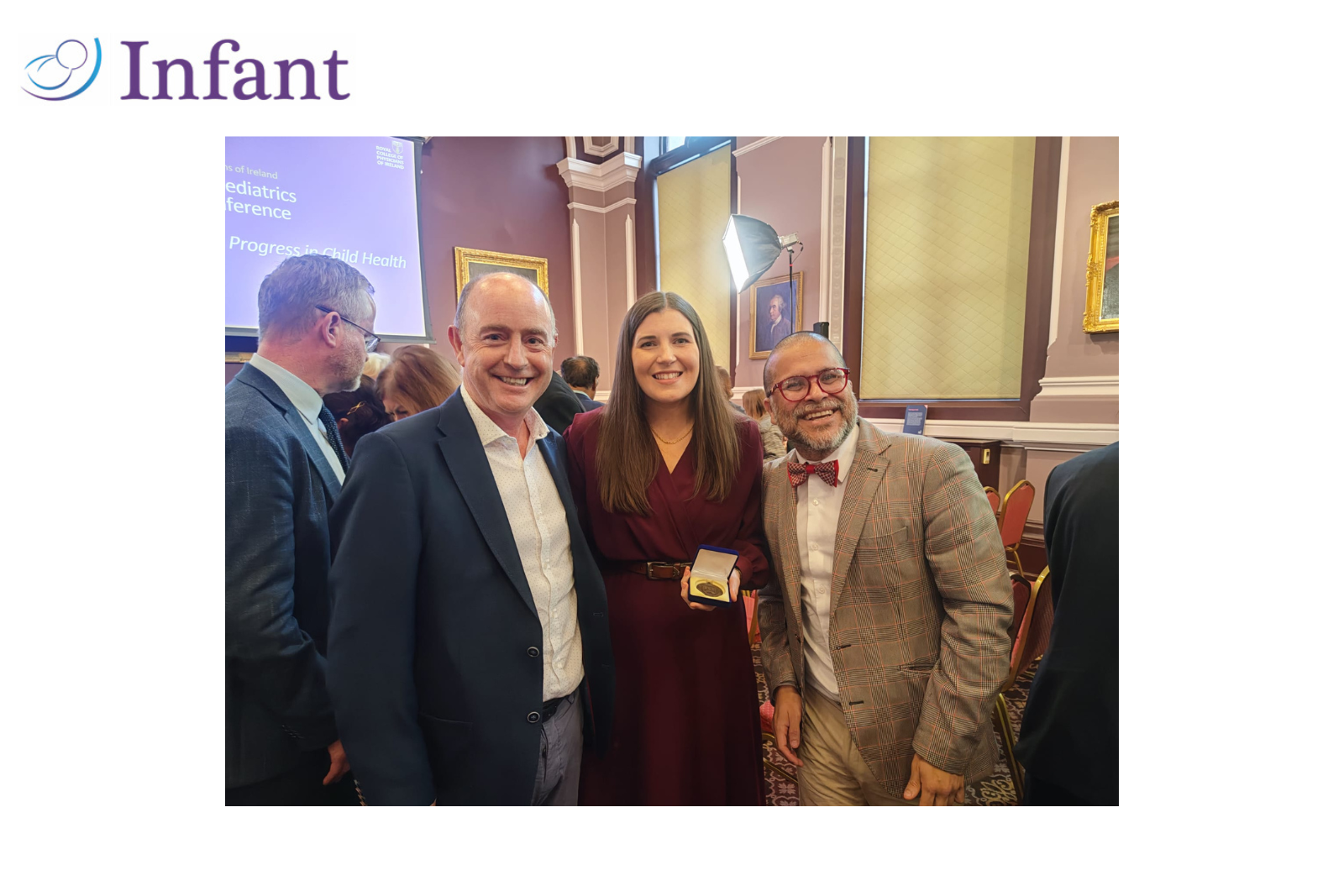
INFANT Clinical Research Fellow Dr Aoife Gallagher won the Sir Henry Marsh medal.
The Sir Henry Marsh medal award is an annual award given by the Faculty of Paediatrics to the lead author of the best paper by a Paediatric Trainee on the topic of child health or the delivery of child healthcare in Ireland published in the preceding calendar year. Aoife was presented with the medal at Faculty of Paediatrics Autumn conference on 11th October.
Her article “Dietary Advancement Therapy using milk and egg ladders among children with a history of anaphylaxis” was recently published in The Journal of Allergy and Clinical Immunology: In Practice and also selected as a “Practice Changer” – one of the for the four most practical and clinically impactful Original Articles published in JACI: In Practice each month.
Read more about the publication here: Dietary Advancement Therapy Using Milk and Egg Ladders Among Children With a History of Anaphylaxis – ScienceDirect
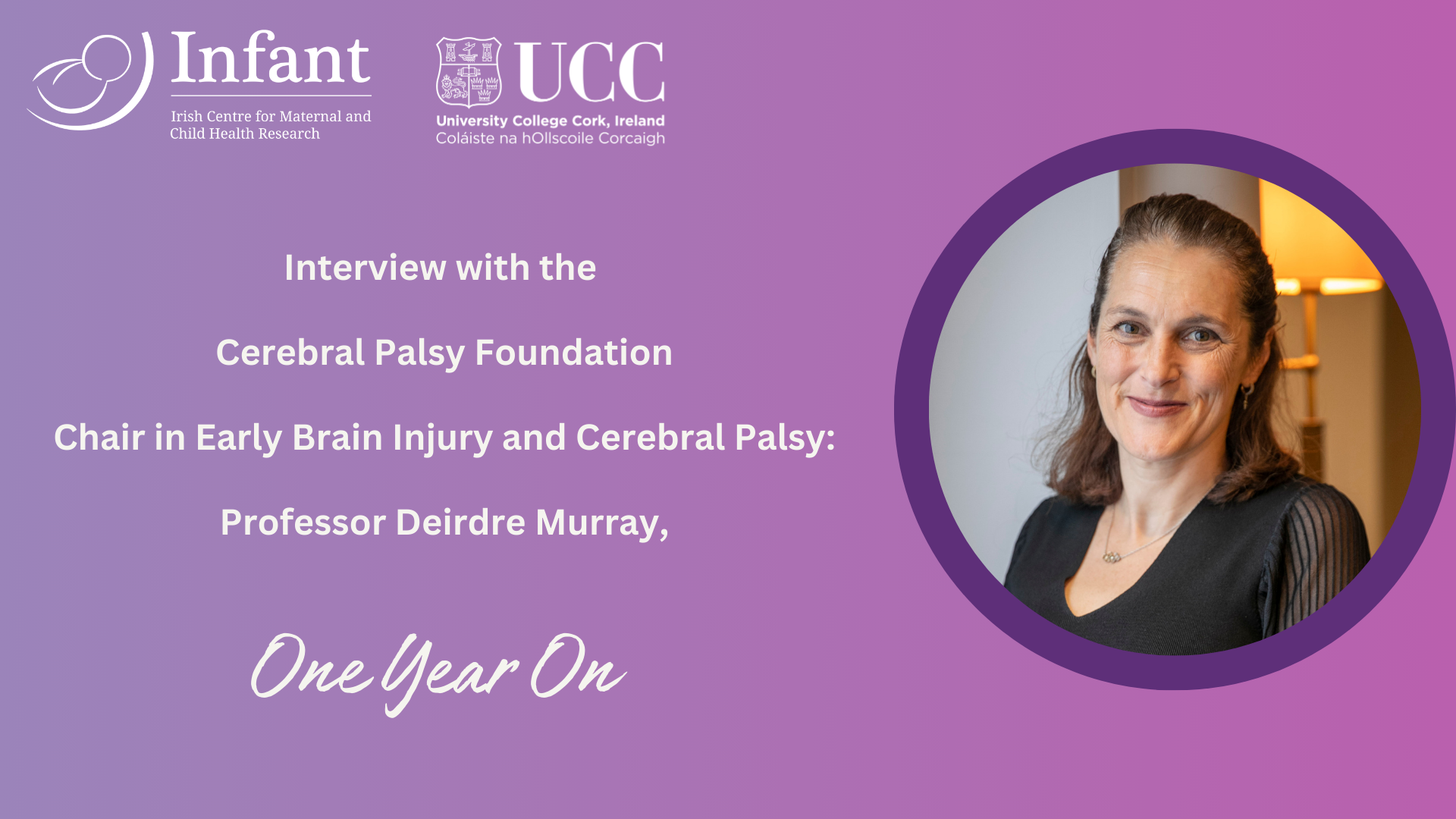
Interview: Cerebral Palsy Foundation Chair in Early Brain Injury and Cerebral Palsy: Professor Deirdre Murray, One Year On
On World Cerebral Palsy Day, October 6th, 2023, University College Cork (UCC) proudly announced the appointment of Professor Deirdre Murray as the Cerebral Palsy Foundation Chair in Early Brain Injury and Cerebral Palsy, marking the start of a transformative programme aimed at revolutionising cerebral palsy care in Ireland.
A UCC alumna, Professor Murray graduated in 1995 before completing paediatric training in Paediatric Intensive Care Medicine at Bristol Royal Hospital for Sick Children. Her journey continued as a Paediatric Intensive Care Fellow at the Royal Children’s Hospital in Melbourne. In 2012, she was awarded the prestigious Health Research Board Clinician Scientist Award for the BiHiVE study, which focuses on discovering biomarkers for neonatal brain injury.
Fast forward to World Cerebral Palsy Day, October 6th, 2024: We sit down with Professor Murray to reflect on her first year as Chair and the progress made.
Can you tell us more about your role as Chair (and your other roles) and the key areas of research you’re currently focusing on?
I am a consultant paediatrician in Cork University Hospital and I am also the Professor of Paediatrics in University College Cork. This means that I have time for research and teaching. My research has always been focused on trying to find better ways to predict and detect early brain injury. One year ago I was lucky enough to be funded by the Cerebral Palsy Foundation(CPF) to take up the role of Chair in Early Brain Injury and Cerebral Palsy. This allows me to really focus on this area of research which is very exciting. I feel privileged to be allowed to work on the area that I am most passionate about as I believe that this will allow us to make major steps forward in the prediction, detection and treatment of Cerebral Palsy (CP).
Looking back on your first year, what are some of the key highlights, milestones, or breakthroughs that stand out?
Last summer myself and the team at the INFANT centre worked on a proposal to Science Foundation Ireland for a Strategic Partnership Programme of research in Cerebral Palsy. This was co-funded by the Cerebral Palsy Foundation. Soon after taking up the post in October last year we heard that the proposal was successful and that SFI had agreed to match the donation that we received from CPF to fund this very ambitious programme of research which we called the ELEVATE programme. Over the next 5 years the team at INFANT, and researchers in TCD and RCSI will work on improving our ability to predict, prevent, detect and treat early brain injury and cerebral palsy.
Another highlight was launching the programme in March 2024, in particular because as part of the launch we held a Townhall meeting here in Cork where we got to meet with many of the parents and families affected by CP. This always gives us motivation to keep going and work hard to try to solve problems for these families.
This research will have a profound impact on children and their families. Can you share how the work is already making a difference?
I am part of a team that is delivering an early detection pathway for high-risk infants. All high risk children born in the four largest maternity hospitals are now examined carefully before they go home from the Neonatal units, and again at 3 months, 9 months and 24 months of age. The aim is to dramatically reduce the age at which children are diagnosed with CP to less than 12 months and ideally 9 months. This will allow us to enroll these children in trials of very early focused interventions which we hope will improve long term mobility and outcome. We will be providing access to expert information and guidance and are currently developing educational materials for the families. We have a parent advisory group, built from all over Ireland with parents of children with CP who have kindly given up their time to help and have guided us every step of the way.
Last year I was invited to take part in a Global consortium called CP360. This alliance involves researchers and families from all over the world who are working together to improve care for people with CP. Within this consortium I am working as part of a group to develop a universal screener for cerebral palsy that can be scaled and used anywhere in the world. We hope that in the near future it will be possible for parents or caregivers to send short videos of their infants to a large and secure database which will anonymously and automatically identify those children at risk of CP to detect and diagnose the 1-2 per 1000 children who have CP as early as possible.
This will be a game-changer for early intervention.
What have been the biggest challenges you’ve faced in this role?
It has to be time. We are so impatient to make progress, but the care for people with CP in Ireland is currently so fragmented that it is hard to know where to start. Our focus is on research from 0-3 years, in particular on prediction and early detection. We need to get this sorted first, and then build on that by building expertise in early intervention. Families are crying out for interventions for older children, but we have to focus on the area where we have expertise and do this one step at a time. That is hard and I wish every day that I could do more.
You work with a multidisciplinary team and collaborate with partners globally. How do these partnerships strengthen progress in early brain injury and cerebral palsy research?
As part of the ELEVATE programme we will work with collaborators in Sweden, Italy, USA as well as our co-investigators in Dublin. We have long established collaborations with many researchers all over the world, all with the focus of improving the care of the newborn brain and preventing, detecting and treating early brain injury. This helps us to ensure that our research is cutting edge and that we are bringing the latest methods and ideas back to our centre to keep pushing things forward to improve care.
How important is the input from patients and families, and how have you integrated their perspectives into the research over the past year?
It is integral. We are very aware that parents are the ones that know the most important research questions. Our Parent Advisory Group give their time to review all of our documents, our protocols and plans to ensure that the aims make sense for families.
They have also helped to guide us on our parent educational materials. We asked them “What do you wish someone had told you when you first received the diagnosis of CP for your child?” “What way would you have liked the material delivered to you and by who?” “What topics, how detailed, etc?”. This information is vital for us as we need to get this right.
Looking ahead, what are your key priorities for the coming year and beyond as you continue in this role?
I am working with the CPF and my colleagues in Dublin, Dr Jennifer Ryan and Prof Denise McDonald to bring attention to the needs of children and adults with CP in Ireland; pushing to try to develop clinical care pathways for the time beyond the first 3 years of life. The injury that causes CP occurs once but the ongoing difficulties faced by these children progress as they get older, and their needs often become greater.
Unfortunately, at the moment in Ireland the support needed for many of these steps is missing or fragmented and care depends on where you live and what the local team can offer. Access to high quality care should be equitable for all children no matter where they live. A national clinical programme of care for CP would help us move towards that goal.
In the INFANT centre we are building the ELEVATE team and hope to start recruiting infants to the study within the next few weeks. We are working with our Swedish collaborators to access large amounts of pregnancy and birth data from Sweden to develop automated risk algorithms using this data to identify babies most at risk of CP at the time of birth. We are looking at what proteins might be measurable in blood tests soon after birth to detect brain injury. We will also be looking at brain waves measured using EEG at 3-4 months of age to see what clues they can give us about brain insults and outcome.
Next we will be looking at better ways of assessing young children with brain injury to predict co-existing learning difficulties. Standard ways of assessing children with brain injury are very difficult it they have visual problems, or movement difficulties. We are developing ways to work around this to give us a true picture of the child’s learning potential.
I am impatient to get started and looking forward to what the next four years will bring.
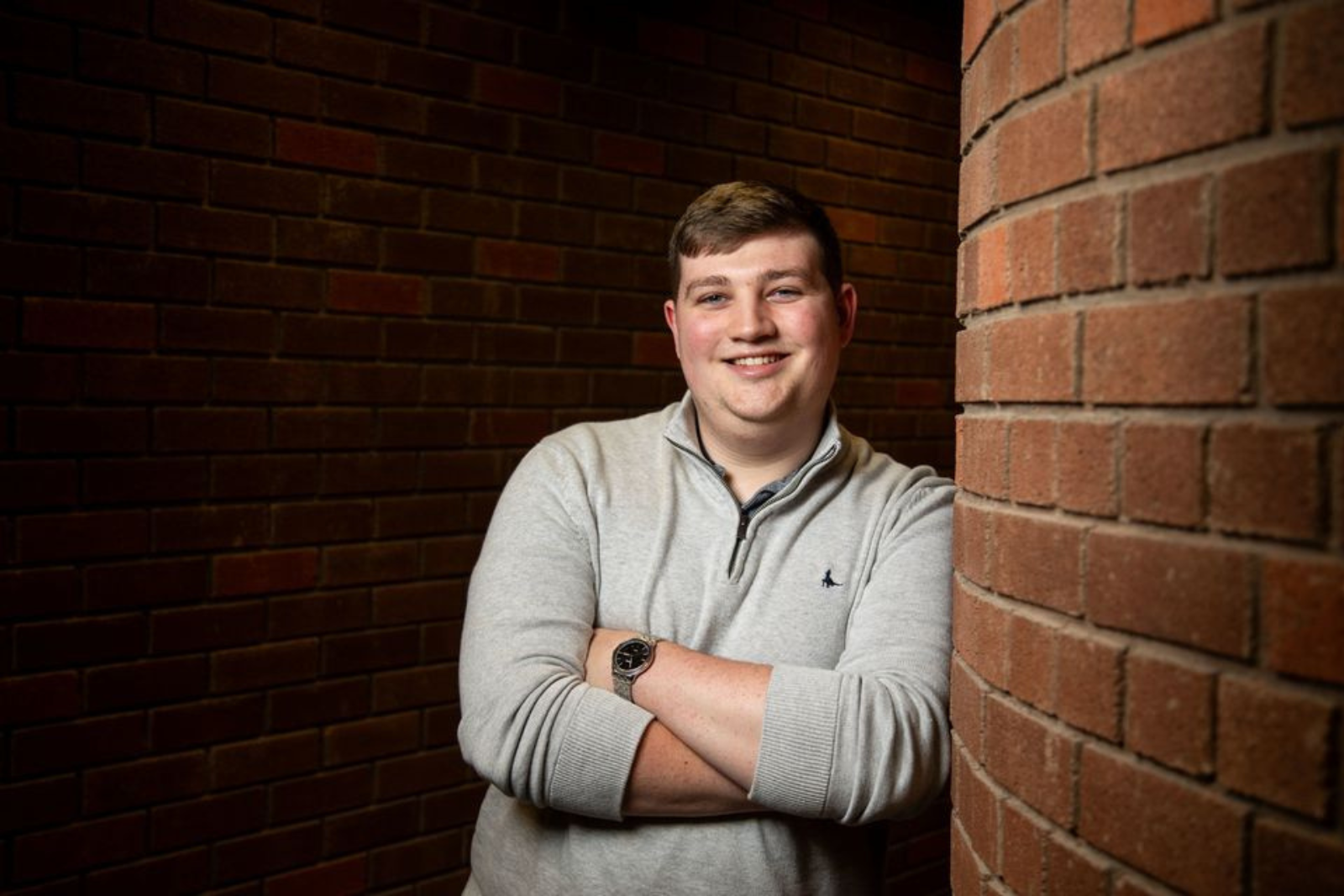
Machine learning meets medicine: student’s groundbreaking work on cerebral palsy detection
A software engineering student at University of Limerick is working on a project that could help to revolutionise the early detection of cerebral palsy.
Aaron Roche, a 20-year-old student on the Immersive Software Engineering (ISE) programme at UL, is working on the ELEVATE project, which is a ground-breaking five-year research programme that aims to improve the prevention, detection and treatment of early brain injury and cerebral palsy in Ireland.
He selected the ELEVATE project for his residency as part of ISE, a transformational teaching and research initiative that aims to rethink and disrupt computer science education. ELEVATE is led by the INFANT Research Centre at University College Cork and partnered with RCSI University of Medicine and Health Sciences, Trinity College Dublin and the tertiary-level maternity hospitals in Ireland.
The team at INFANT Research Centre are focussed on 3 key areas to improve care pathways: prevention, early detection, and intervention. Leveraging the latest advancements in AI will help them identify risk factors in pregnancy, labour and the early neonatal period that increase the likelihood of CP. This may help them to prevent CP from occurring in the first place and to reduce its severity when it does occur. ISE students learn by doing, working on projects and in paid residencies at some of ISE’s more than fifty partner organisations. They will also achieve a Masters’ qualification in four years.
When Aaron was selecting the residency, the opportunity was more than just a mix of research, machine learning, and healthcare, it connected to something personal, finding that his interests matched with the project’s goals.
“We had modules on research and machine learning in ISE that really caught my attention. Then, when it came time to pick our placements, the ELEVATE project ticked all the boxes. It had research and machine learning, and it was in the medical industry, and it seemed like something that was going to have a genuine impact on the line. Plus, the project had just launched, so it was a chance to get in at the start of something meaningful.
“One of the biggest issues with cerebral palsy is that it can’t be diagnosed early enough. It’s usually after two years when the child is diagnosed and that’s too late for early intervention. So, the aim of the project is to create screening algorithms to assess the risk of cerebral palsy in children from soon after birth.”
Aaron, who is from Wexford, took inspiration from his secondary school days in selecting the residency.
“I went to St Peter’s College Secondary School in Wexford and there was a boy in our year who had cerebral palsy that affected his entire body. Our school motto was ‘Disce Prodesse’ which means ‘learn to be useful’ and there was a Disce Prodesse school award every year. He was nominated for this award because he was so inspiring to the rest of us. He was an inspiration for me to go this route.”
Part of the ELEVATE project aims to develop a screening process that could identify potential risks even before birth.
The UL ISE student’s role on the project is vital. He is working with a small team to build algorithms that will analyse large amounts of data.
“We’re looking at hundreds of variables. Everything from the mother’s lifestyle, background, ethnicity, to any complications during pregnancy. Then, after birth, we monitor babies in neonatal intensive care units and track their development over a five-year period, recording things like their general intelligence, speech, and physical development. My job is to build the software that can sift through all this data and help predict the risk of cerebral palsy.”
For Aaron, the personal motivations to use his skills and knowledge for good and his passion for software engineering make this an exciting challenge.
“It’s amazing to think that the work we’re doing could eventually lead to cerebral palsy being diagnosed much earlier, to give a better chance for early intervention.”
As for his time in UL’s ISE programme, Aaron feels that it has prepared him well for his career plans.
“ISE was always my first choice. The idea of getting a masters degree and two years of industry experience by the time you’re 22 or 23 is such a huge advantage. And it’s so immersive, we have our own building, and all our lecturers are experts in their field. They’re not just teaching us how to work in a company, but how to start our own businesses.”
While Aaron is deeply committed to his current work on the ELEVATE project, his future ambitions are clear.
“I’d like to start my own company someday. I’m not sure exactly what that will look like yet, but I see myself in a leadership role.”
The ELEVATE project itself is still in its early stages.
“Right now, we’re setting up the tools to collect data from pregnancies, working with Karolinska Institute in Sweden to gather that information. We hope to create algorithms that will assess the risk of cerebral palsy while the child is still in the womb. If the risk is high, the next step will be further screening with another algorithm, and so on. It’s a multi-step process.”
Funded under the Science Foundation Ireland (SFI) Strategic Partnership Programme, with co-funding partner The Cerebral Palsy Foundation (CPF), ELEVATE aims to revolutionise the delivery of CP care in Ireland. The project was officially launched by Tánaiste, Minister for Foreign Affairs and Minister for Defence, Micheál Martin TD in March 2024.
For Aaron, though, the impact is personal.
“I think of my classmate from school sometimes, and it reminds me why I wanted to work on something like this. To be part of a project that could change lives for the better – that’s really what it’s all about.”
News Coverage:
We Are Hiring! Postdoctoral Researcher
INFANT is now accepting applications for a Postdoctoral Researcher to join the team and help advance research in early brain injury and cerebral palsy. The Postdoctoral Researcher will focus on developing new diagnostic and predictive biomarkers for early detection of brain injury in newborns and high risk children.
Project Title: Cerebral Palsy Foundation Funding
Post Duration: 24 months
Salary: €44,347 – €50,805 per annum (IUA PD1 Salary Scale)
For an information package including further details of the post see https://ore.ucc.ie/.
Informal enquiries can be made in confidence to Prof. Deirdre Murray, Dept. of Paediatrics and Child Health and the INFANT centre, UCC, Email: d.murray@ucc.ie
Applications must be submitted online via the University College Cork vacancy portal (https://ore.ucc.ie/). Queries relating to the online application process should be referred to recruitment@ucc.ie, quoting the job-title and project name.
Candidates should apply, in confidence, before 12 noon (Irish Local Time) on Friday, 11th October 2024.
No late applications will be accepted.
Please note that an appointment to posts advertised will be dependent on University approval, together with the terms of the employment control framework for the higher education sector.
UCC is committed to creating and fully embracing an inclusive environment where diversity is celebrated. As a University we strive to create a workplace that reflects the diversity of our student population where people from a wide variety of backgrounds learn from one another, share ideas, and work collaboratively. UCC is committed to being an employer that recognises the value of diversity amongst its staff. We encourage applicants to consult our policies at https://www.ucc.ie/en/edi/policies/ and initiatives at https://www.ucc.ie/en/edi/implementation/ and we welcome applications from everyone, including those who are underrepresented in the protected characteristics set out in our Equal Opportunities & Diversity Policy.
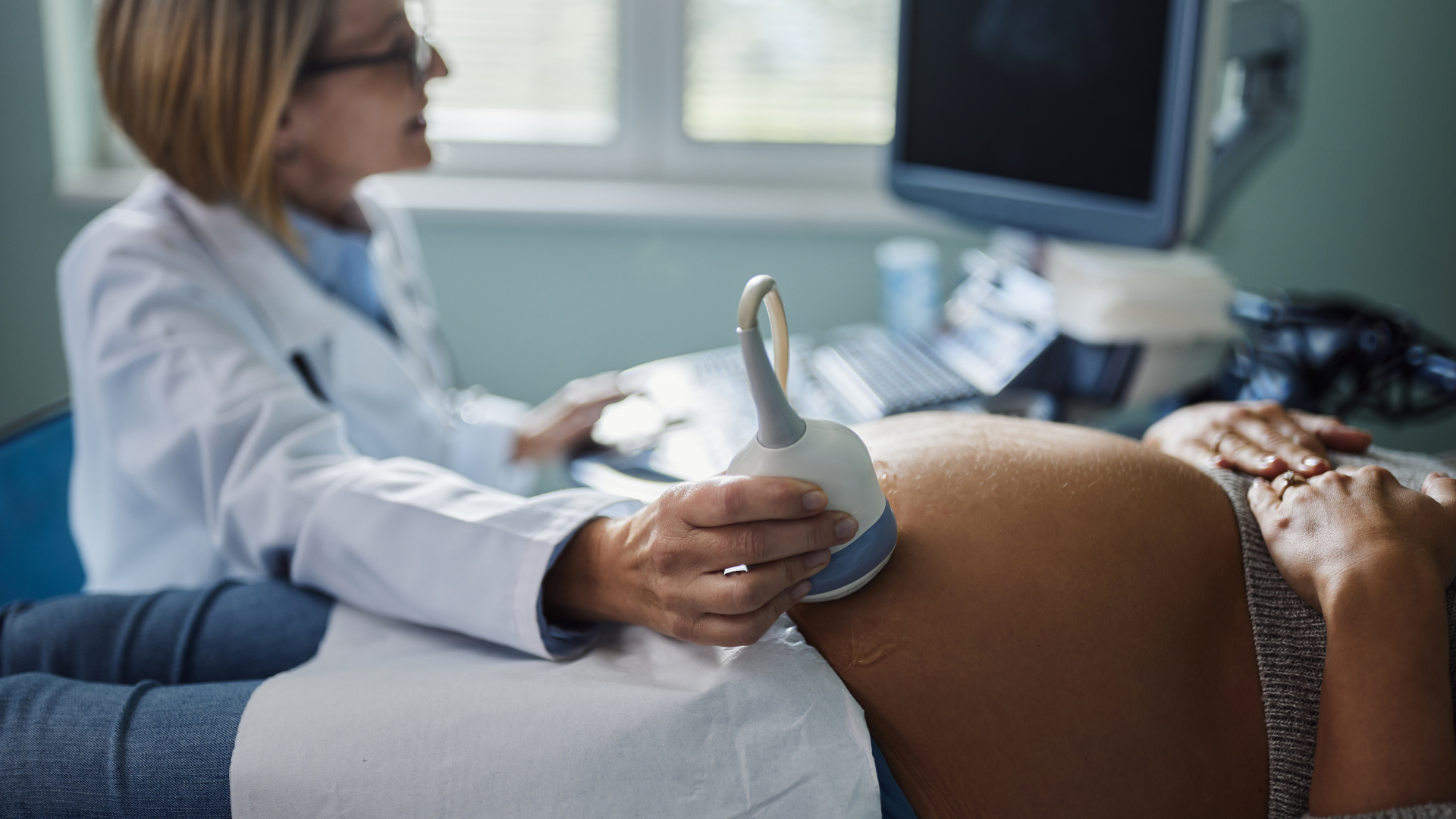
4 in 5 Pregnant Women in Ireland are Iron Deficient by Third Trimester, a research study reveals
4 in 5 Pregnant Women in Ireland are Iron Deficient by Third Trimester, a research study reveals
Worrying findings sparking call for action
Four out of five pregnant women in Ireland are iron deficient by their third trimester, a University College Cork (UCC) study reveals. Researchers at the Irish Centre for Maternal and Child Health Research (INFANT) and School of Food and Nutritional Sciences in UCC have shown that over 80% of women are iron deficient by their third trimester.
The findings raise concerns as the participants in the study were a low-risk and generally healthy cohort. Iron deficiency during pregnancy is linked to increased risks of complications for both mother and child, including neurodevelopmental challenges for the baby.
This study is the largest of its kind globally and was conducted in collaboration with the University of Minnesota and the Masonic Institute of the Developing Brain. Led by UCC’s Dr Elaine McCarthy, the study was published in the prestigious American Journal of Clinical Nutrition.
The study analysed data collected from 641 women in Ireland who were pregnant with their first baby and had a successful delivery. Blood samples were taken from the women throughout pregnancy, at 15, 20 and 33 weeks to determine iron status. “In Cork, which is a high-resource setting,” the authors found that “iron deficiency defined by a variety of markers was very common during pregnancy, despite the mothers being generally healthy.” Interestingly, despite these high rates of iron deficiency, none of the study participants were anemic in the first trimester. In particular, the authors noted that “our cohort had higher rates of deficiency in the third trimester than even some low-resource settings.”
In this study, almost three-quarters of the participants took an iron-containing supplement that contained the Irish/European recommended daily iron allowance of 15-17mg. The authors did note that “iron-containing supplements (mainly multivitamins) taken pre/early pregnancy were associated with a reduced risk of iron deficiency throughout pregnancy, including the third trimester.” The study did not have information on maternal diet, so it was not possible to investigate other dietary or lifestyle practices that were protective.
Lead researcher, Dr Elaine McCarthy from UCC’s INFANT Research Centre and the School of Food and Nutritional Sciences, explains the significance of the results:
“Iron deficiency is the most common micronutrient deficiency in the world, but it has often been thought of as mainly a problem in low-resource settings. Our research clearly illustrates that iron deficiency is extremely common amongst pregnant women, even in a generally healthy population, such as this cohort in Ireland, with greater than 80% of women iron deficient in their third trimester.”
A National Health Concern
Routine screening for iron deficiency during pregnancy is not common in Ireland or further afield and Dr McCarthy emphasises the need for a shift in healthcare practices:
“Our findings highlight the importance of screening to identify the women at the greatest risk of iron deficiency early in their pregnancy. In addition to this, we need to support and educate pregnant women around the importance of iron in their diets, something which we at UCC and colleagues in Cork University Maternity Hospital and the Ireland South Women and Infants Directorate are working on. We have a patient resource on iron during pregnancy launching in the coming months.”
Impact on Irish Families
Iron deficiency is associated with a higher risk of complications for both mother and child and can have long-term consequences on the child’s brain development, affecting cognition, behaviour and motor skills. Previous research from the team at UCC has shown that iron deficiency in early life is associated with behavioural problems at 5 years of age. This research highlights the value and urgent need for strategies to identify women at risk of iron deficiency during pregnancy. Such strategies can play a crucial role in reducing these health risks, benefiting families for generations to come, the researchers state.
Call for Policy Changes
Co-author Prof Michael Georgieff of the University of Minnesota echoes the call for urgent action:
“This data strongly supports a global policy that includes a systematic method of screening all women for iron status in early pregnancy with the goal of treating those that are frankly deficient or are below a threshold of sufficiency that will lead to deficiency during pregnancy. Part of medical practice has always been identifying nutritional deficiencies and addressing them. This study illustrates how incredibly common iron deficiency is in pregnant women even in the healthiest of populations and it is well documented that the rates are higher in less-well-resourced and unhealthier populations.”
With iron needs increasing nearly tenfold during pregnancy, expectant mothers are urged to focus on increasing the amount of iron in their diets. Iron is found in different foods including red meats like beef and lamb, green leafy vegetables, beans, nuts and dried fruit. However, while reminding women that the heme iron from animal sources is more easily absorbed than the non-heme iron found in plant-based sources, a wide-range of iron-rich food from both sources is important, when possible.
This research was funded through the European Union FP7 Framework and supported by the Health Research Board, link to the publication can be found: https://doi.org/10.1016/j.ajcnut.2024.08.010
News Coverage
- Examiner: https://www.irishexaminer.com/news/arid-41483410.html
- Journal.ie: https://www.thejournal.ie/iron-deficient-pregnancy-ireland-6497189-Sep2024/
- Newsweek: https://www.newsweek.com/pregnant-women-become-iron-deficient-staggering-says-doctor-1959294

New approach to milk allergies promises breakthrough
- Study shows that using a novel advancement therapy called the “Milk Ladder”, was almost four times more likely to be successful in safely reintroducing cow’s milk to children with milk allergies in comparison to other classic approaches used in other countries.
- Research conducted at the Irish Centre for Maternal and Child Health Research (INFANT) at University College Cork and Cork University Hospital.
- This discovery marks a significant breakthrough in allergy management and opens the door for parents to play an active role in successfully re-introducing milk to children with milk allergies.
Researchers have demonstrated how a novel approach to managing cow’s milk allergy could transform how food allergies are treated.
Food allergies occur when the immune system reacts abnormally to otherwise harmless food proteins, which can cause immediate symptoms such as vomiting, diarrhoea, hives, and respiratory issues. Severe reactions can lead to anaphylaxis, a life-threatening condition requiring emergency medical attention.
Now researchers at the Irish Centre for Maternal and Child Health Research (INFANT) at University College Cork and Cork University Hospital have shown that cow’s milk can be safely and effectively reintroduced to children with milk allergies which affects 2-3% of infants, marking a significant breakthrough in allergy management.
Traditionally, IgE-mediated cow’s milk allergy is managed through strict avoidance of milk in all forms, followed by a series of outpatient appointments and allergy tests, often culminating in a hospital-based milk reintroduction between the ages of 3 to 5 years. This process can be lengthy and stressful for both the patient and their family, requiring extensive time and medical resources.
However, INFANT, UCC researchers have demonstrated that using the “Milk Ladder” method as a step-by-step approach, allows for a home-based reintroduction of milk under the careful supervision of caregivers. This method significantly reduces the need for hospital visits and enables the immune system to gradually become less reactive to milk proteins. Most notably, the children managed with the Milk Ladder were almost 4 times more likely to successfully reintroduce milk compared to those who followed the traditional avoidance approach.
The findings from the study are published in the Journal of Paediatric Allergy and Immunology.
Earlier this year, CUH and UCC were designated a World Allergy Organisation Center of Excellence.
Dr. Juan Trujillo, Consultant Paediatric Allergist at Cork University Hospital, University College Cork and the lead researcher on the study, highlighted the impact of food allergies on Irish families, stating, “The diagnosis of food allergy can be life-changing, bringing significant challenges to households, including psychological stress. In Ireland, the three most common food allergies in children under 3 years old are eggs, cow’s milk, and peanuts. Our research aims to support these families, enabling more successful and quicker recoveries.”
Dr. Trujillo also emphasised the importance of Ireland’s role in advancing food allergy management, saying, “Ireland should be proud of being at the forefront of this novel therapy. The Milk Ladder has been used for over a decade and is now the first choice of management for milk allergy across Ireland, thanks to the efforts of my colleague Prof. Jonathan Hourihane at the Royal College of Surgeons of Ireland who introduced this method and supported us in the research. The National Dairy Council and Dairy Research Ireland played a key role in making this research possible”
Dr. Trujillo cautioned against the unnecessary avoidance of certain foods, particularly in young children, as this avoidance of certain food types at the wrong time in their lives can negatively impact their growth and increase the risk of developing food allergies. He advised, “We strongly recommend consulting with a GP for an appropriate referral and diagnosis and avoid unregulated allergy testing methods”

Volunteers Needed For Research Study: Long-term follow up after preeclampsia in Ireland: patient perspectives
We would like to invite women from diverse backgrounds around Ireland, who have had a previous diagnosis of preeclampsia, to take part in one-to-one interviews with a researcher to understand their experiences of follow-up care after preeclampsia, and their preferences regarding future follow-up care.
What is the Study?
This study aims to explore women’s awareness of the potential impacts of preeclampsia on long-term health outcomes, as well as investigating attitudes towards follow-up care after pregnancy. Women’s preferences regarding the structure, timing, and location of follow-up care after pregnancy will be explored through interviews with the research team.
The overall purpose of the research is to improve the long-term follow-up care of women affected by preeclampsia in Ireland. Should you choose to participate, you will be asked to take part in a one-to-one interview with a researcher. This interview will be recorded and is expected to take approximately 30 minutes to complete.
Who is it for?
Adult women of any age who live in the Republic of Ireland who have had preeclampsia more than one year ago. There is no limit on the number of times a participant may have had preeclampsia. We hope to include women from a broad range of locations around Ireland.
What do I need to do?
If you are interested in participating, please fill in the enquiry form below. The research team will contact you, and an interview will be arranged with you, either online or in-person depending on your preference. Interviews will be scheduled at a time which is convenient to you either during working hours, or in the evenings.
What are the benefits and risks of participating in this study?
The main benefits of participating include the following:
- You will have an opportunity to share your personal experience of preeclampsia, and any follow-up care you received.
- You will have an opportunity to express your preferences regarding follow-up from a patient’s perspective.
- You will have an opportunity to inform and shape future recommendations for follow-up care of women in Ireland.
The risks associated with this study are believed to be minimal. Due to the sensitive nature of this topic, one possible consideration is that women who have a history of preeclampsia may become upset when recalling their experience of preeclampsia. If you express concerns at any stage, you will be provided with information about available healthcare supports. Participation in interviews will be entirely voluntary and you will have the option to withdraw from the study at any time.
What is the time commitment?
Once-off interview online for about 30 minutes.
What will happen to the results of this study?
The results of this study will be published in academic journals and presented at scientific meetings. You will never be identified individually during these presentations or any reports or publications.
University College Cork (UCC) is the study’s Sponsor and will act as the data controller for this study. Any personal data which you provide to the University will be treated with the highest standards of security and confidentiality, in accordance with Irish and European Data Protection legislation.
Where can I get more information?
If you have any further questions regarding this study, please contact Dr Peter Barrett: peter.barrett@ucc.ie
Interested in taking part in the study?
Fill out the enquiry form and a member of the research team will contact you: https://forms.office.com/e/51wMPgMtH2