About mikecunneen

This author has not yet filled in any details.
So far mikecunneen has created 8 blog entries.

INFANT Student Secures IRC Scholarship 

By |2021-10-06T12:49:13+01:00September 1st, 2021|

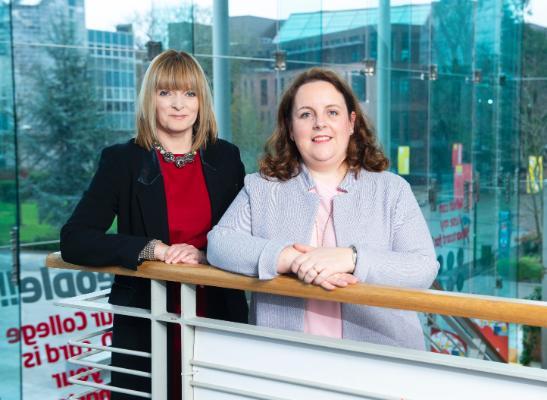
INFANT centre and UCC Departments of Biochemistry and Obstetrics & Gynaecology PhD student Caroline Joyce was awarded an Employment-Based Programme Postgraduate award by the Irish Research Council on 25th August 2021.  


Caroline, who is a Principal Clinical Biochemist in Cork University Hospital, received the prestigious scholarship for her research into biomarker discovery for the diagnosis, management and treatment of women with Gestational Trophoblastic Disease (GTD). She was one of 28 awardees under this scheme and the only recipient in Cork.  


Molar pregnancy (MP) is the commonest form of GTD with an incidence of one per 600 pregnancies. First trimester ultrasound and levels of the pregnancy hormone, human chorionic gonadotrophin (hCG) can diagnose a MP with histological confirmation of trophoblastic tissue in the placenta. After a molar pregnancy, hCG levels are monitored closely until levels return to normal and most women have a good outcome.  


However, some patients with GTD develop persistent disease or gestational trophoblastic neoplasia (GTN) and may require surgery and/or chemotherapy. Plateauing or rising hCG levels can indicate disease recurrence but alternative more sensitive biomarkers are needed to ensure early detection and treatment of this largely curative disease.  


Caroline’s research will examine the molecular mechanisms underlying this rare disease under the supervision of INFANT’s Professor Keelin O’Donoghue, Professor Tommie McCarthy from UCC’s School of Biochemistry and Cell Biology, and Dr John Coulter, Consultant Gynaecologist and Clinical Lead at the National Gestational Trophoblastic Disease Centre. 
 

Professor Keelin O’Donoghue Co-authors Report on Implementation of National Bereavement Standards across all 19 Maternity Units

By |2021-08-18T09:48:14+01:00August 18th, 2021|

Infant’s Professor Keelin O’Donoghue – https://www.ucc.ie/en/obsgyn/staff/keelin/  – has co-authored a report that aims to develop and improve perinatal bereavement care across all of Ireland’s Maternity units.

Read/Download the report (PDF) here –  https://www.infantcentre.ie/2021/08/18/hse-national-standards-for-bereavement-care-report/

Compiled by Prof O’Donoghue, Clinical lead for Implementation, and Riona Cotter National Programme Manager,  the report highlights the dedication and hard work of healthcare professionals, support groups and voluntary organisations who work with parents bereaved through pregnancy loss and perinatal death.


Titled, The Implementation of the National Standards for Bereavement Care Following Pregnancy Loss and Perinatal Death – link: https://www.infantcentre.ie/2021/08/18/hse-national-standards-for-bereavement-care-report/ , the report also acknowledges the work and commitment in each Maternity Unit to implement the standards, as well as outlining the work still to be done.

Speaking following the launch of the report, Professor O’Donoghue said that she was grateful to all of those who contributed to the implementation programme.

“This report shows that progress has been made in the implementation of the Bereavement Standards nationally..”

“We are grateful to all the families and volunteers who shared their experiences of pregnancy loss and perinatal death with us”.

“Their experiences helped inform us of what is necessary to provide high quality bereavement care in our Maternity services”.

The final recommendations of the report are based on audit findings, expert opinion, best practice and the learning from experiences of bereaved parents and families, which should be a priority for every Maternity Unit.

Read the report here – https://www.infantcentre.ie/2021/08/18/hse-national-standards-for-bereavement-care-report/

HSE National Standards for Bereavement Care – Report

By |2021-08-18T09:14:25+01:00August 18th, 2021|

The Implementation of the National Standards for Bereavement Care Following Pregnancy Loss and Perinatal Death

VIEW or DOWNLOAD the Report (PDF) here: HSE National Standards for Bereavement Care

Between 2017 and 2021, experts in perinatal bereavement care, bereaved parents and members of support organisations and voluntary groups came together to develop and improve perinatal bereavement care through the implementation of the Standards in all Maternity units.  The enclosed report was prepared to present the programmes of work undertaken to implement the Standards.

The content of this report shows the dedication and hard work of both the healthcare professionals and the support groups and voluntary organisations who work with parents bereaved through pregnancy loss and perinatal death. We acknowledge the work and commitment in each Maternity Unit to implement the Standards.

Finally, we present further recommendations based on audit findings, expert opinion, best practice and the learning from experiences of bereaved parents and families, which should be a priority for every Maternity Unit.

The report was compiled by Professor Keelin O’Donoghue – https://www.ucc.ie/en/obsgyn/staff/keelin/ – Clinical lead for Implementation, and Riona Cotter National Programme Manager,  the report highlights the dedication and hard work of healthcare professionals, support groups and voluntary organisations who work with parents bereaved through pregnancy loss and perinatal death.

VIEW or DOWNLOAD the Report (PDF) here: HSE National Standards for Bereavement Care

Results of PARROT Ireland Trial Published in British Medical Journal

By |2021-08-14T09:50:51+01:00August 13th, 2021|

Results of PARROT Ireland Trial Published in British Medical Journal

Research funded by the Health Research Board Mother and Baby Clinical Trial Network Collaborative Ireland and published by Professor Keelin O’Donoghue in the British Medical Journal, has found that using the Placental Growth Factor test in clinical practice does not improve or worsen outcomes for women and their babies.

A clinical trial involving 2,313 pregnant women has found that using the Placental Growth Factor (PlGF) test does not help Clinicians improve or worsen outcomes for women and their babies.

The potentially dangerous condition pre-eclampsia, which affects between 4-7% of pregnant women, causes high blood pressure and protein in urine, and may in severe cases even lead to the fatality of a mother or baby.

Published in the British Medical Journal  [https://www.bmj.com/content/374/bmj.n1857 ], the findings of the trial do not support the addition of PlGF testing, which had previously in other studies shown promising results in helping to diagnose pre-eclampsia or manage pregnancy complicated by pre-eclampsia.

The results of the national multi-centre trial, which was led by Professor Keelin O’Donoghue [https://www.ucc.ie/en/obsgyn/staff/keelin/], along with investigators from 7 maternity units across Ireland,  from UCC’s world renowned Infant Centre, leaves clinicians without an effective test that can differentiate between women presenting with high blood pressure and those affected by pre-eclampsia.

“At present, we do not have an effective test to tell the difference between women with symptoms of pre-eclampsia, and those that can be managed as an out-patient”.

“High blood pressure is a common problem in pregnancy, affecting about 10-15% of women”.

“Whilst most cases of raised blood pressure are not serious, about 4-7% of pregnant women develop pre-eclampsia”.

Funded by the Health Research Board Mother and Baby Clinical Trial Network Collaborative Ireland, the PARROT Ireland trial was conducted in the seven largest maternity units in Ireland between June 2017 and April 2019.

The trial, which was the largest randomised control trial of PlGF to date, invited women, pregnant with a single baby between 20-36+6 weeks gestation, who had signs or symptoms of pre-eclampsia to take part.

Of the 2,313 women who took part, 1,202 underwent standard hospital tests for suspected pre-eclampsia, while 1,017 had the additional PlGF test performed.

The PlGF test result was given to pregnant women and their clinical teams to help them make decisions on further care and investigations.

Serious complications in mothers, such as; brain, kidney, liver, heart or lung compromise, placental abruption, severe high blood pressure or intensive care admission were recorded, and the results compared between the group that had the test and the group that did not.

Similarly, serious complications in their babies such as lack of oxygen at birth, admission to the neonatal unit, low birth weight, brain, bowel, lung disease or death were also recorded and compared.

The research team continued to engage with the women who took part in the study until both mother and baby were discharged from hospital.

The results of the trial showed that using the PlGF test did not improve or worsen outcomes for women and their babies.

In the end, the results of the 22-month long study did not support the addition of PlGF testing into routine clinical investigations for women presenting with suspected pre-eclampsia.

Funding was provided by the Health Research Board Mother and Baby Clinical Trial Network Collaborative Ireland (HRB-MBCTNI) Grant Number CTN-2014-10.

Link to BMJ Article: https://www.bmj.com/content/374/bmj.n1857

C4C – Press Release: First site open for patient recruitment into ‘Kawasaki Disease Coronary Artery Aneurysm Prevention trial (KD-CAAP)’ study

By |2021-08-06T10:49:39+01:00August 6th, 2021|

The IMI conect4children (c4c) consortium are pleased to announce that the first site is now open for the ‘Kawasaki Disease Coronary Artery Aneurysm Prevention trial (KD-CAAP)’ study as of 28 September 2020 at Great Ormond Street Hospital NHS Foundation Trust. Kawasaki disease is a disease where arteries, particularly the coronary arteries in the heart, become inflamed, sometimes causing irreversible heart damage, heart attacks or even death. To prevent heart damage, Kawasaki disease in children and young people must be recognised by clinicians early, and promptly treated with anti-inflammatory medicines. This study will assess the effectiveness of adding steroids to standard treatment in children with Kawasaki Disease, and aims to recruit 262 children as part of the study. The study will continue to open in approximately 60 sites in 15 countries across Europe.

In April 2019, c4c announced the selection of its first portfolio of pan-European paediatric studies, aimed at advancing the understanding of high priority medicines commonly used in babies, children and young people in Europe. The KD-CAAP study is the first of the proof of viability studies, to begin recruitment. The other academic studies, shown below, plan to begin recruitment later this year, despite initial delays due to the COVID-19 pandemic.

View Full Press Release Here: Conect4Children – PRESS RELEASE

Downloads: Conect4Children (C4C) – PRESS RELEASE

Related Links: https://conect4children.org/

Press Release for: BABY LOSS AWARENESS WEEK

By |2021-09-23T10:55:48+01:00October 14th, 2020|

Wednesday 14 October 2020

RESEARCHERS FROM PREGNANCY LOSS RESEARCH GROUP AND INFANT CENTRE UCC/CUMH ARE WORKING TOGETHER TO HELP IMPROVE SERVICES FOR THOSE WH0 EXPERIENCE RECURRENT MISCARRIAGE

October 13th 2020: Baby Loss Awareness Week, which runs from October 9 – 15, is an international event which seeks to raise awareness of the issues affecting families who have experienced a loss of a pregnancy or baby. Researchers from the Pregnancy Loss Research Group and Infant Research Centre at Cork University Maternity Hospital (CUMH)/ University College Cork share some of the work that they are doing with those who have experienced the loss of a pregnancy or baby, particularly in the area of recurrent miscarriage, as part of efforts to standardise and improve services across the country.


Miscarriage affects one in four couples, while at least 1-2% will experience at least two or more first-trimester miscarriages in a row, known as recurrent miscarriage. The loss of a baby at any stage of pregnancy can have a devastating impact on a woman, her partner, and their family, even more so if this loss occurs several times.


Rachel Rice, a Parent Advocate said


“Despite having had a first miscarriage, nothing prepared me for the reality that it could happen again and again and again. It is a truly devastating experience and women must be assured that the services they require from diagnosis and treatment, to follow up care and investigation, are evidenced based, informed by best practice clinical guidelines and delivered in a standardised way across all maternity services in Ireland. Parents’ loss does not need to be compounded by inadequate service provision. Improving the quality of recurrent miscarriage care needs to become a priority in our maternity services nationally. The RE:CURRENT Project is unique in its commitment to involving women and men who have experienced recurrent miscarriage on its advisory group, ensuring that the research is informed by the lived experience of parents at each stage of the process. The importance of this work cannot be emphasised enough.”


Led by Dr Keelin O’Donoghue, Consultant Obstetrician at Cork University Maternity Hospital and Principal Investigator at INFANT,  the Health Research Board-funded RE:CURRENT (Recurrent miscarriage: Evaluating CURRENT services) Project aims to evaluate recurrent miscarriage services in the Republic of Ireland. The Team is collaborating with key stakeholders across the country, including: healthcare and allied health professionals, representatives from advocacy and support organisations, those involved in the administration, governance and management of maternity services, academics, and women and men who have experienced recurrent miscarriage.


Speaking about the Project, Dr Peter McKenna, Clinical Director of the National Women and Infants Health Programme said


“Recurrent miscarriage impacts a significant number of the population, affecting physical and psychological wellbeing. Part of the anguish caused to women and their families is our inability to offer an explanation as to why this happens. Thorough clinical assessment and greater support to women who experience recurrent miscarriage may be important for successful outcomes in future pregnancy. A key strength of this project is the involvement of a wide range of stakeholders, including women and men who have experienced miscarriage, to inform developments in maternity services in Ireland.”


Over a two-year period, the research team will examine the provision of clinical and supportive care to those who experience recurrent miscarriage with a view to informing service optimisation. As part of this work, the Team has reviewed guidelines for recurrent miscarriage care in different countries, and conducted interviews with health professionals to elicit their views on current care. In the coming months they will also speak to women and men who have experienced recurrent miscarriage to obtain insight into their experiences of the existing services.


The risk of miscarriage depends on a number of factors, including maternal age and number of previous miscarriages. While there are several causes of recurrent miscarriage, no cause is identified in half of cases following investigations and are ‘unexplained’. Many couples are unprepared for a miscarriage, and are often dependent on healthcare professionals to guide them around management and investigations.


According to Dr Keelin O’Donoghue, Consultant Obstetrician at Cork University Maternity Hospital and Principal Investigator at INFANT, “individualised care, appropriate clinical information, and respect for the experiences, views, and wishes of those who experience recurrent miscarriage are important. However, there is currently no national standard for the provision of services and supports. Findings from this project will inform efforts to standardise and improve the quality of services for those who experience recurrent miscarriage”.


Notes for editors:


The RE:CURRENT Project Team comprises Dr Keelin O’Donoghue (PI), Dr Sarah Meaney (Co-Applicant), and Dr Rebecca Dennehy and Marita Hennessy PhD (Postdoctoral Researchers).


Pregnancy Loss Research Group: The Pregnancy Loss Research Group was established in Cork University Maternity Hospital in 2012 and is led by Dr Keelin O’Donoghue, Senior Lecturer and Consultant Obstetrician and Gynaecologist. The research group includes obstetricians, midwives, nurses, social workers, social scientists, epidemiologists, service users, perinatal pathologists, chaplains, educators, researchers, PhD, postgraduate and undergraduate students. The Group studies the lived experiences of men and women who have experienced all aspects of pregnancy loss including miscarriage. Its aim is to advance the services offered to these parents, by improving the understanding and awareness of the consequences of pregnancy loss amongst healthcare professionals and among the general population.


INFANT: The Irish Centre for Maternal and Child Health Research (INFANT) at University College Cork is Ireland’s first translational research centre focused entirely on pregnancy, birth and early childhood. Co-located at UCC, CUH and CUMH, INFANT has a local impact with a global reach. The centre is answering the international need for research and innovation to improve health outcomes for mothers and babies.

Resources for parents, families, health professionals, and anyone who needs information and support about pregnancy and/or infant loss:

Pregnancy and Infant Loss Website: www.pregnancyandinfantloss.ie


Cork Miscarriage Website: www.CorkMiscarriage.com. This is a valuable resource for parents who experience pregnancy loss or perinatal death. The website provides accurate and accessible information on a sensitive and often stigmatised subject, shares the latest research into the causes of baby loss, promotes emotional well-being, and offers details on how to access the appropriate support services.

Féileacáin (Stillbirth and Neonatal Death Association of Ireland – SANDAI) was formed by a group of bereaved parents to offer support to anyone affected by the death of a baby around the time of birth, and the organisation is now the national charity supporting families affected by perinatal loss. Website: https://feileacain.ie/


The Miscarriage Association of Ireland, a charitable body set up by, and with the support of women and men who themselves have been experienced the loss of a baby through miscarriage. Website: http://www.miscarriage.ie/

A Little Lifetime Foundation’s aim is to provide information, services and support based on other bereaved parents’ and families’ experiences. Website: https://alittlelifetime.ie/


Baby Loss Awareness Week, which runs from October 9 – 15, is an international event which seeks to raise awareness of the issues affecting families who have experienced a loss of a pregnancy or baby.


For interviews contact: Tara O’Leary, Communications Infant Research Centre, UCC on 0858077849 or email tara.oleary@ucc.ie

INFANT student wins Student Entrepreneur Award

By |2020-11-22T13:26:11+00:00June 12th, 2020|

Friday 12 June 2020

INFANT PhD student Mark O’Sullivan has won the top prize at Enterprise Ireland’s Student Entrepreneur Awards 2020 for his Neurobell medical device. Mark was one of 10 finalists participating in the virtual final of the third-level Student Entrepreneur Awards.

Mark developed Neurobell to support early detection and monitoring of brain injuries in newborns and has being working on the project since 2016. With the device, he aims to help clinicians diagnose abnormal brain activity faster and with greater accuracy.

“This award will help Neurobell on the road to commercialisation and help me excel as an entrepreneur,” 

“Sincere thanks to my academic advisors and colleagues, and to the entrepreneurship ecosystem in UCC which has provided me with the support and resources to achieve this.”

He will now receive a €10,000 cash prize fund and have the opportunity to avail of specialist advice and assistance from Enterprise Ireland to help turn his enterprise idea into a business reality.

Well done Mark!

What INFANT is doing in response to COVID-19

By |2020-11-22T12:29:52+00:00April 22nd, 2020|

Thursday 23 April 2020

COVID-19 is the most significant public health crisis in 100 years. Its impact will be felt for decades and it is already changing in unprecedented ways how we live, work and carry out our lives.

INFANT, as a Maternal and Child Health Research Centre, is particularly conscious of the impact of COVID-19 with many of our colleagues and collaborators working directly in the health system in Cork, in Ireland and across the world, especially colleagues in Cork University Maternity Hospital and Cork University Hospital.

The safety and wellbeing of all our staff, students, colleagues and stakeholders, including the many families and children participating in our research studies is our main priority in this uncertain time.

So what is INFANT doing?
  • Many INFANT staff remain in or have redeployed to the frontline whilst others have made the transition to working from home and continuing our vital research to improve outcomes for mums, babies and children.
  • INFANT has accelerated research and innovation projects that can immediately impact staff, patients and families.

For example, we led the implementation of a novel “Virtual Visitation” solution for parents and extended families of babies in the neonatal ICU to alleviate separation anxiety and to practically support the necessary social distancing measures to protect vulnerable patients from COVID-19.

For privacy reasons YouTube needs your permission to be loaded.
  • Many of our other researchers are redeploying INFANT skills, expertise and research towards COVID-19 focused outcomes such as remote vital sign monitoring, rapid blood tests, infant, maternal and paternal mental health and the long-term impacts caused by COVID-19 stresses and anxieties on developmental and behavioural outcomes. We have also donated research space and infrastructure to facilitate COVID-19 displaced clinical activity and are collaborating with clinical colleagues to develop data registries e.g.the NPEC register and in paediatric pneumonia – both will be valuable clinical and research tools for the future.
  • INFANT clinicians, allied health staff and their colleagues have led the creation of national guidelines for best practices in maternity and neonatal care under COVID-19 and INFANT staff have led the way on educating and communicating with the public on how COVID-19 is impacting maternal, newborn and child health.

– COVID-19 infection Guidance for Maternity Services National Guidelines

– The BJOG COVID-19 Resource Centre

– Neonatal Clinical Advisory Group

  • We have created a dedicated COVID-19 Hub for families, researchers and healthcare professionals to collate all the emerging scientific literature and clinical guidelines that relate to COVID-19 during pregnancy, birth, newborns and early childhood and to keep you updated about what we are doing here at INFANT.

We acknowledge the tremendous efforts of our INFANT and HSE colleagues in the health service and the generous support of corporate and individual donors who have helped fund some of our COVID-19 response to date.

We welcome any other donations or supports that can help us through research, public and patient involvement, and clinical practice.

Please contact us at infantcovidresponse@ucc.ie if you wish to help, seek information, or discuss opportunities to collaborate.

Go to Top