PhD Profile: Tamara Escañuela Sánchez’s Study to Raise Awareness of and Reduce the Risk Factors Connected with Stillbirth

By |2022-03-30T15:09:53+01:00March 30th, 2022|

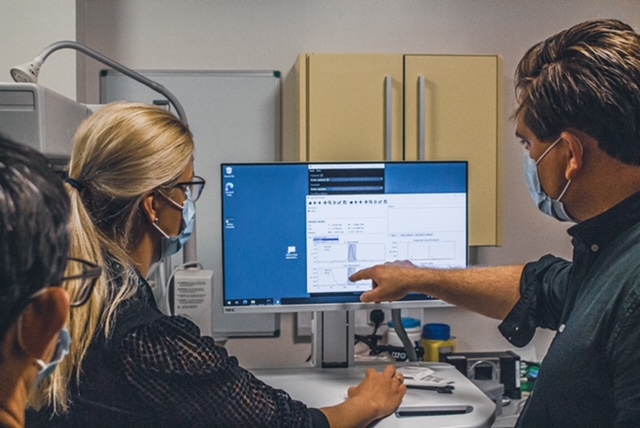
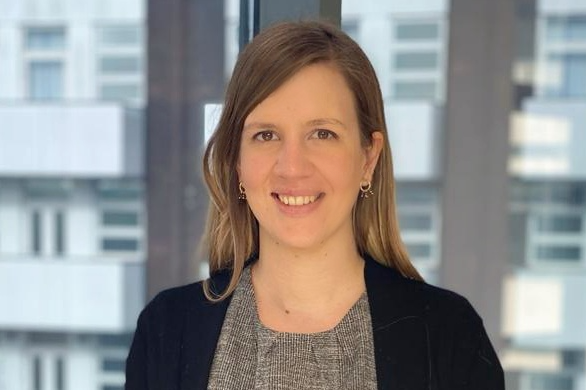
A graduate of the Universitat Autònoma de Barcelona, INFANT PhD candidate, Tamara Escañuela Sánchez came to University College Cork to study under Professor Keelin O’Donoghue and develop a behaviour change intervention model that will raise awareness of and reduce the risk factors associated with stillbirth in Ireland.

Tamara’s multidisciplinary supervisory team is composed by Dr. Karen Matvienko-Sikar from the School of Public Health in UCC; Dr. Sarah Meaney, from the National Perinatal Epidemiology Centre; Professor Molly Byrne lead of the Health Behaviour Change Research Group, School of Psychology at NUI Galway and Professor Keelin O’Donoghue lead of the Pregnancy Loss Research Group at Cork University Maternity Hospital.

Funded by Science Foundation Ireland, Tamara’s research, titled The Relevant Study, examines the risk factors connected with stillbirth and ill health in babies such as substance abuse, sleep position, weight management and engagement with antenatal care.

Ultimately, Tamara hopes that her study might one day lead to the introduction of an initiative, similar to the Saving Babies’ Lives Care Bundle introduced by the NHS in the UK, that targets the modifiable risk factors for stillbirth in Ireland.

I have been looking at various studies that examine the different risk factors associated with still births.

The factors that I’m focussing on are substance abuse, sleep position, weight management and engagement with antenatal care services.

Changing behaviours associated with those factors could have a very real impact for women and their children.

My research looks at ways in which we might change those behaviours, the idea would be that we’d eventually create a care bundle like they have in the UK and Australia.

As part of her study, Tamara also reviewed pregnancy-related websites to assess the reliability of information connecting risk factors to stillbirths or ill health in babies.

Her findings, published in the Journal of Communication in Healthcare, highlighted the scarcity of information online and the need for greater communication so that women can identify the risk factors associated with stillbirths.

We looked at pregnancy related websites in the UK and Ireland and found that only one contained information relevant to the risk factors connected with stillbirths.

We also found that websites hosted by charities were more likely to contain basic information related to stillbirth, whereas commercial sites were more likely to contain information about modifiable risk factors.

It really illustrated the need for reliable sources of information so that women can make informed decisions.

As Tamara comes to the end of her study, she hopes to conclude her PhD research by summarising the challenges facing women who are looking to access relevant information on the risk factors associated with stillbirth.

By developing a list of recommendations, she also hopes that future researchers will be able to build on her study and develop a pilot intervention strategy that allows health authorities to target behaviours that contribute to stillbirth.
Liltoda wins UCC Innovation Award for CogniTOT Application

By |2022-03-24T14:58:48+00:00March 24th, 2022|

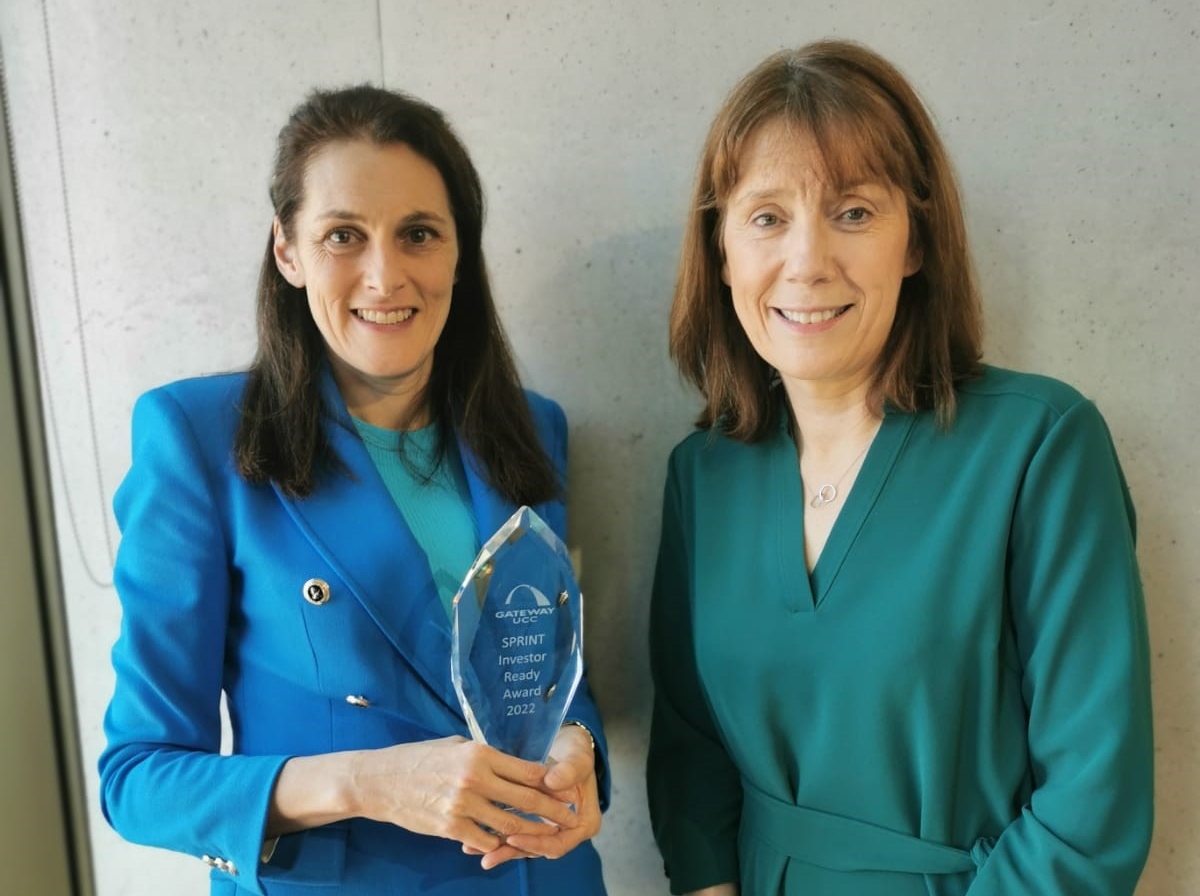
Liltoda Ltd, the first academic spin out to emanate from the INFANT Research Centre at University College Cork, has been awarded a GatewayUCC Sprint Award by Professor John O’Halloran, President of UCC.

Launched in August 2021, Liltoda aims to develop and market novel technology-based solutions to the cognitive assessment of young children.

Its first product, the CogniTOT application, offers touch-screen based cognitive assessment for children aged 18-30 months.

It was developed through six years of research in the INFANT Centre, funded by both the Health Research Board and Science Foundation Ireland. The CogniTOT app is non-verbal and so suitable to use in children with speech delay or for whom English is not their first language.

Now in its sixth year, GatewayUCC Sprint Awards recognises the UCC researchers and entrepreneurs who establish spin-out start-up companies.

The Sprint Programme has been developed to help spin-out start-up companies overcome challenges they may encounter when starting their businesses.

As part of the programme, pre and early-stage start-ups work with successful business mentors who help to bring businesses from the idea stage through to the eventual commercialisation of the product or service.

INFANT Researchers Assess Novel Optical System to Monitor Lung Function in Babies

By |2022-01-20T10:55:09+00:00January 19th, 2022|

Researchers at University College Cork’s INFANT Centre recently commenced a study of a new non-invasive optical device that may provide real-time information on the lung function of newborn babies.

By using light-emitting technology, this novel system incorporates sensors placed on a baby’s chest to detect oxygen levels in different regions of the baby’s lungs.

‘This system has the potential to significantly alter the way we monitor babies in the neonatal intensive care unit, especially preterm infants and term babies on mechanical ventilation’, according to Professor Eugene Dempsey, the Horgan Chair in Neonatology at UCC, Clinical Lead for Neonatal Research and Principal Investigator with the INFANT Research Centre. ‘Not only can we potentially monitor them more closely in real-time, but we can reduce X-ray exposure and limit blood tests being performed’ he added.

One month old, Elodie Fitton, was the first baby to take part in the study after her parents, Cora Shorten and Kieran Fitton, were approached to take part in the project called NIOMI (Non-Invasive lung Oxygen Monitoring of Infants).

‘We agreed to have Elodie take part as the first baby in this study. We believe as parents this study could help many of those sick and vulnerable babies in a situation where they need more care and monitoring’.

‘As this was a non-invasive study it made sense for Elodie and us to be able to give help by letting them monitor her for 30 minutes using light sensors. It’s great to see this research take place in our hospitals and Colleges to give the medical professionals the information they may need to treat these young infants’.

The technology called GASMAS or Gas in Scattering Media Absorption Spectroscopy, is based on diode laser measurements of oxygen content inside the lungs of babies. This study, which will be the first of its kind, is based on a sophisticated measurement scheme to enable measurements despite the high scattering of light in tissue.

In collaboration with the Biophotonics team at IPIC – the SFI Research Centre for Photonics hosted at Tyndall National Institute, and GPX Medical in Sweden, the INFANT Research Centre recently took delivery of the NEOnatal Lung Analyzer (NEOLA) and have trained staff on how to use it in a hospital setting.

Commenting on the technology, Professor Geraldine Boylan, Director of the INFANT Research Centre and Professor of Neonatal Physiology at UCC, said that “the NEOLA research system is an exciting development with the potential to have a huge impact on how preterm infants are managed in the neonatal intensive care unit in the future.  We have an excellent clinical team at INFANT who embrace innovation and we are delighted to work with Tyndall National Institute and GPX Medical on this breakthrough technology”.

SFI Professor Stefan Andersson-Engels, Head of Biophotonics at Tyndall National Institute and Professor of Physics at UCC, explains “this novel technology is central to our research within the Biophotonics team at IPIC and is now entering the clinical study phase. We are very excited to collaborate in this tri-helix study with clinicians, industry and academia to assess the potential and further advance this technology. It is an excellent example of how multi-disciplinary research supported by Science Foundation Ireland can lead to ground-breaking Medtech innovations that can deliver real societal and economic impact”.

Parents of healthy newborn babies at CUMH will be invited to get involved in the research project called NIOMI (Non-Invasive lung Oxygen Monitoring of Infants). The research study aims to get more insights into this particular technology which has promising potential to benefit sick babies in the future.

Clinical Research Fellow, Jurate Panaviene, INFANT Research Centre

Phone: +353 85 132 4758

Email: jurate.panaviene@ucc.ie

PhD Profile: Cathal Dorgan’s Fascinating Project That Connects Maths and Neuroscience

By |2021-12-16T15:15:08+00:00December 16th, 2021|

An emerging expert in the field of non-linear dynamics, Cathal Dorgan joined INFANT as a PhD researcher in October, bringing with him cutting edge knowledge and ideas.

An ambitious researcher, Cathal aspired to enrol in a postgraduate programme that offered him the opportunity to delve deeper into areas that specifically interested him after completing a Bachelor of Science at University College Cork.

As part of my final year project, I focussed on nonlinear dynamics. It was a field that I became increasingly interested in as I progressed through my undergraduate degree.

So, when I saw how nonlinear dynamics were at the core of the project INFANT were recruiting PhD students for, I jumped at the chance to apply for it.

Thankfully, I was successful in my application and received the opportunity to begin working at INFANT in October.

Studying under the supervision of Professor Sebastian Wieczorek, Cathal will be working on an SFI Frontiers for the Future project that is developing decision support tools for newborn brain protection at INFANT.

Specifically, Cathal will be applying mathematical techniques, models and theories so that the project team can accurately depict the behaviour of the neonatal brain.

Using various mathematical techniques like tipping point theory, transitions and bifurcation theory, we hope to model instabilities in the neonatal brain.

At the moment, I’m learning more about the mathematical theories that we’re planning to employ and the neurosciences that are at the heart of the project.

Ultimately, we want to identify abnormalities so that we can create a system that can predict seizures.

Curious by nature, Cathal is embracing the challenge of learning about neurosciences and breaking into an unfamiliar discipline.

Helped by the team of researchers that Professor Liam Marnane and Dr Gordon Lightbody have assembled to undertake the project, Cathal is already picking up on the nuances and intricacies associated with neurosciences.

Even though I’m only two months into the project, I’m already seeing how neuroscience and maths can interact and overlap.

There are five PhD students working on the project and we’re all working toward a solution from different angles. It’s hugely collaborative and really fascinating.

The multidisciplinary insights that Cathal is already gaining from the project are broadening his horizons and inspiring him to look at the possibility of working in a career that straddles industry and academia after he graduates.

Go to Top