About Comms

This author has not yet filled in any details.
So far Comms has created 393 blog entries.

INFANT PI and Pregnancy Loss Research Group Lead, Professor Keelin O’Donoghue, wins Irish Research Council Research Ally Prize

By |2021-12-03T14:14:41+00:00December 3rd, 2021|

Professor Keelin O’Donoghue, has been awarded a Research Ally Prize as part of the Irish Research Council Researcher of the Year 2021 awards for the positive impact that she has made as a mentor.

Announcing this year’s winners, Director of the Irish Research Council, Peter Brown, said: “I would like to congratulate the awardees on their awards. The standard of nominations this year was extremely high, and each of the winners should be immensely proud of their achievements. It is great to see this year’s winners representing a diverse range of research interests, which reflects the creativity and dynamism of the research community here in Ireland.”

Professor O’ Donoghue is a Consultant Obstetrician and Maternal-Fetal Medicine Sub-Specialist at Cork University Maternity Hospital and is actively engaged in impactful research, teaching and clinical practice. She leads the multi-disciplinary Pregnancy Loss Research Group, which comprises over 30 members, at all career stages. She has extensive supervisory/mentorship experience, with numerous researchers having completed/ongoing studies with her support, under a variety of programmes: PhD, Masters by research, MSc Public Health, MD, MSc Obstetrics & Gynaecology, Diploma Obstetrics & Gynaecology, and postdoctoral.

Professor O’Donoghue is one of ten 10 UCC winners of the Irish Research Council Research Ally Prizes. The Research Ally Prizes celebrate the role of supervisors, mentors, and research officers in supporting and sustaining the Irish research community, and how they help to foster a positive academic culture based on equality, inclusivity, and respect.

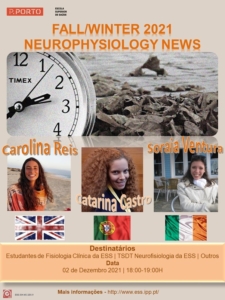
INFANT PhD Researcher, Soraia Ventura, to Speak at Escola Superior de Saúde – Porto

By |2021-11-29T13:04:48+00:00November 29th, 2021|

INFANT PhD researcher, Soraia Ventura, will speak at an event aimed at students of clinical physiology and neurophysiology at the Escola Superior de Saúde in Porto, on Thursday 2 December.

Soraia will be speaking about her academic career to date, what it means to be a researcher and the INFANT Research Centre.

The event is the first of a series of seminars organised by Professor Diana Tavares, coordinator of the undergraduate degree in Clinical Physiology and coordinator of the Neurophysiology department at the School of Health at the Escola Superior de Saúde.

The overall objective of the series is to demystify and open perspectives on research to health students. The event will also see Soraia return to her alma mater, where she completed a B.Sc (Hons) Neurophysiology in 2011.

Soraia joined INFANT in 2017 after working in the Clinical Neurophysiology Department at Cork University Hospital as a Clinical Physiologist in Neurophysiology.

Her PhD project, titled Electroencephalographic Study of Sleep Architecture in Infants at Four Months, aims to understand infant Neurodevelopment through sleep markers and falls within the scope of INFANT’s BabySMART study.

Other speakers at the event include:

Dr. Carolina Reis, researcher at University of Oxford.

Catarina Castro, PhD candidate at Faculty of Medicine at the University of Porto.

INFANT Research Centre wins “Best application of AI in an Academic Research Body” in the National AI Awards 2021

By |2021-11-29T13:06:12+00:00November 26th, 2021|

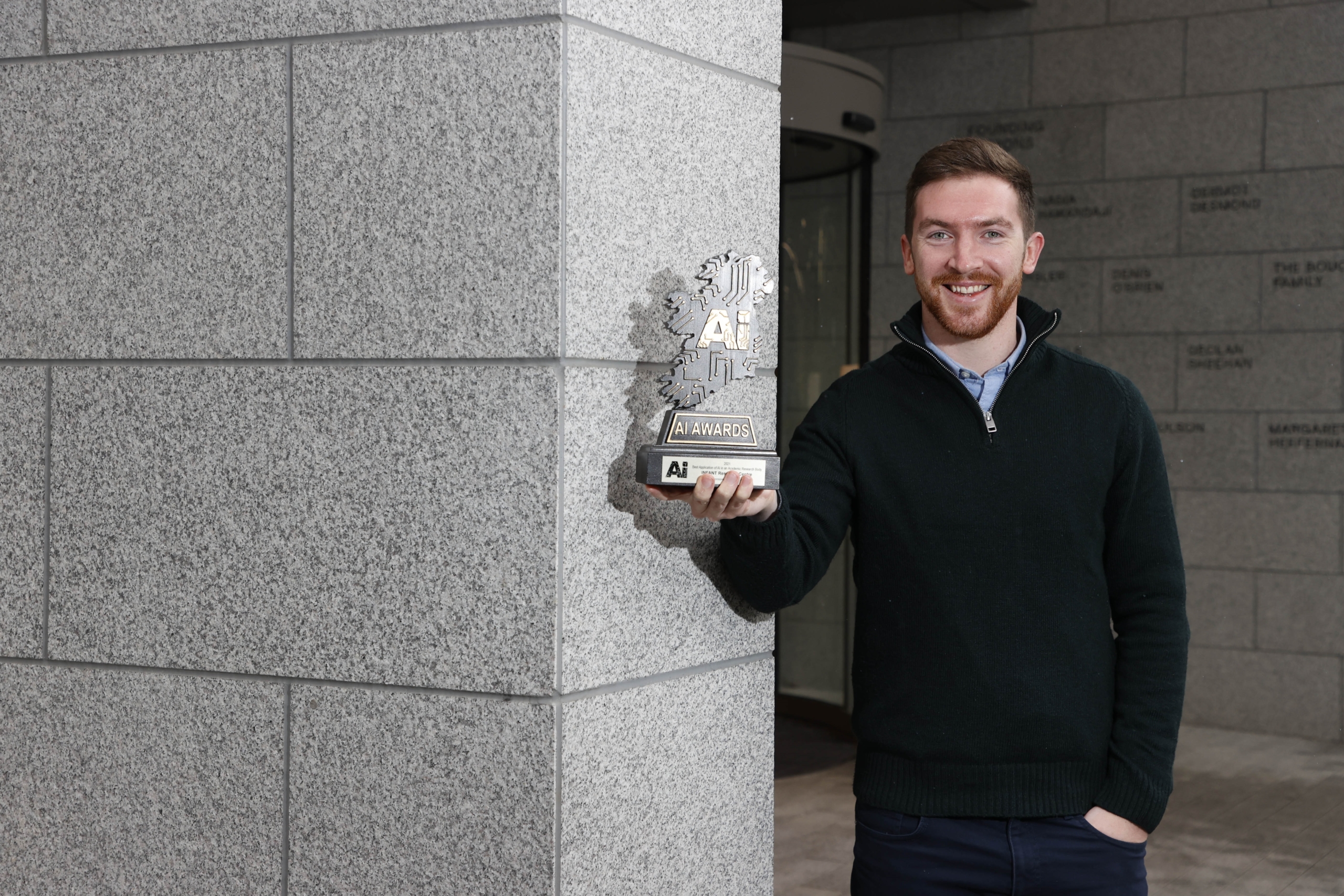
The INFANT Research Centre at University College Cork has won the prestigious “Best application of AI in an Academic Research Body” award at this year’s National AI Awards.

The AI Awards, hosted by AI Ireland and main sponsor Microsoft, are devoted to promoting AI in Ireland, with this year’s “Best application of AI in an Academic Research Body” sponsored by the RDI Hub.

The INFANT Research Centre secured a nomination based on its cutting-edge research and pioneering breakthroughs in using AI technology to detect neurological problems in newborn infants.

Recent advances on the Neurobell project, led by Dr. Mark O’Sullivan, are focused on bringing this disruptive technology toward everyday clinical use.

The project is developing an end‑to-end diagnostics solution, which integrates portable and wireless monitoring with on-board AI, to ensure that it can be rolled out across multiple hospital settings.

EEG monitoring is the gold standard for neurological monitoring, however, it requires specialised expertise to both set up the monitoring systems and to interpret the EEG traces.

According to Dr. O’Sullivan, “by developing a portable monitor with on-board decision support, we’re aiming to increase the number of hospitals capable of providing EEG monitoring for high-risk newborns.

“The cot side technology that we’re building is designed to allow for the neurological monitoring of newborns, across all hospital settings, helping those in need to be diagnosed and treated in a timely manner.

“Given that brain injuries in newborns account for 23% of all infant deaths and over 1 million cases of permanent disability globally each year, the timely and accurate diagnosis of potential issues are essential to provide treatment and help improve patient outcomes.”

The UCC based research centre has now won the award for three consecutive years, demonstrating INFANT’s appetite to constantly innovate and advance this state-of-the-art field.

The award also shines a spotlight on the innovative research being conducted at UCC and reinforces INFANT’s position as leader at the cutting edge of AI.

According to INFANT Director, Prof Geraldine Boylan, “this award highlights how INFANT is constantly striving to innovate in maternal and child healthcare, an area where there is huge potential and great clinical need. The multidisciplinary team approach championed by INFANT has been a key enabler to successful application of our AI solutions. We are very grateful to AI Ireland for this strong endorsement of our work and to Microsoft and EDI Hub for their sponsorship.”

The research being undertaken at the INFANT Research Centre leverages the power of AI and inter-disciplinary research, combining engineering, computer science and clinical expertise to develop a solution that meets the clinical need for a robust neonatal brain monitoring system.

INFANT Nominated as Finalist at AI Awards

By |2021-11-22T09:38:09+00:00November 22nd, 2021|

The INFANT Research Centre at University College Cork has been nominated as a finalist in this year’s AI Awards 2021 for “Best application of AI in an Academic Research Body”.

INFANT’s nomination is based on the work of researchers who are developing AI-based technologies for automated detection of brain injuries in newborns.

Newborn brain injuries account 23% of all infant deaths and over 1 million cases of permanent disability each year. Timely and accurate diagnosis of these injuries are essential to provide treatment and help improve patient outcomes. EEG monitoring is the gold standard for neurological monitoring, however it requires specialised expertise to both set up the monitoring systems and to interpret the EEG traces.

The team at INFANT have previously developed machine learning algorithms for neonatal EEG interpretation, achieving state-of-the-art performance.

Recent advances on the Neurobell project, led by Dr. Mark O’Sullivan, are focused on bringing this disruptive technology toward everyday clinical use. The project is developing an end‑to-end diagnostics solution, which integrates portable and wireless monitoring with on-board AI.

EEG monitoring is currently limited to tertiary-care hospitals. By developing a portable monitor with on‑board decision support, the team aim to widen the demographic of hospitals capable of providing EEG monitoring for high-risk newborns.

The impact of this means that neurological monitoring of newborns can be performed accurately and routinely at the cot side, across all hospital settings, helping those in need to be diagnosed and treated in a timely manner.

This research leverages the power of AI and inter-disciplinary research, combining engineering, computer science and clinical expertise to develop a solution that meets the clinical need for a robust neonatal brain monitoring system.

The Virtual Awards Ceremony will take place on Thursday 25th November with tickets available at: https://aiawards.ie/eventbrite-event/2021-ai-awards-virtual-event/

INFANT Welcomes Three New Principal Investigators

By |2021-11-19T14:58:15+00:00November 19th, 2021|

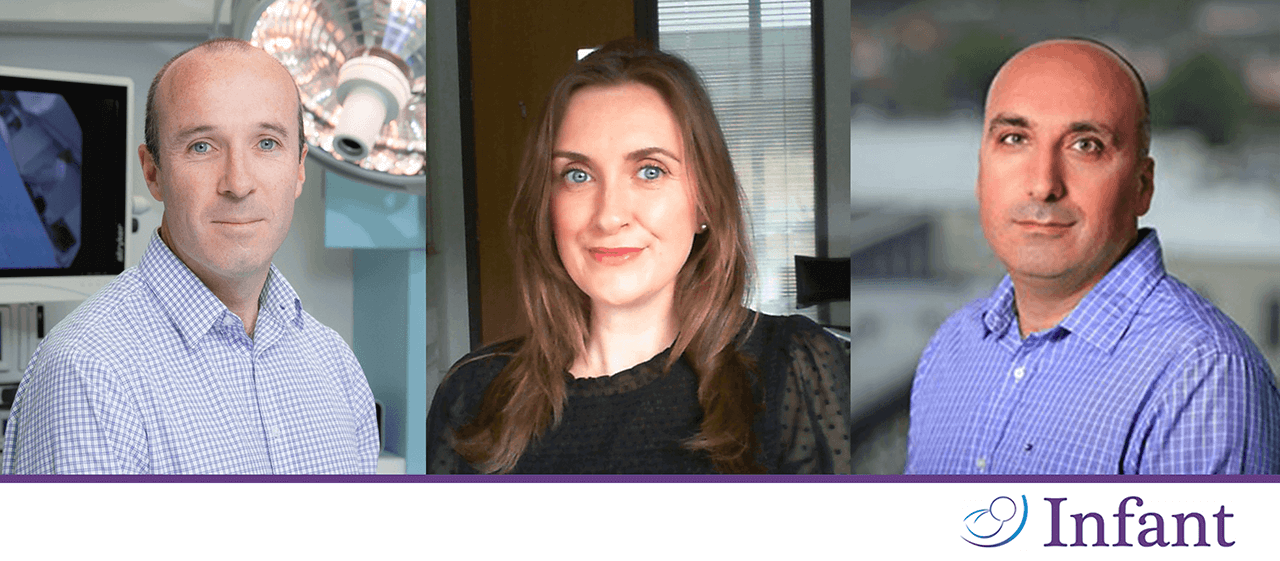
Three outstanding UCC researchers have joined the INFANT Principal Investigator team.

Dr Jane English, Lecturer in Anatomy and Neuroscience, brings invaluable expertise to INFANT in the application of proteomics, metabolomics and bioinformatics to improve our understanding of the molecular pathways implicated in maternal and child health and disease.

Dr Ali Khashan, Senior Lecturer in Epidemiology at the School of Public Health, brings 15 years research experience in Perinatal and Psychiatric Epidemiology and considerable expertise in interrogation of complex and large population-based datasets and advanced statistical methods.

Dr Fergus McCarthy, Consultant Obstetrician and Gynaecologist at Cork University Maternity Hospital and Senior Lecturer in Obstetrics and Gynaecology brings his expertise to further strengthen INFANT’s research in fetal and maternal health, especially in improving pregnancy outcomes and women’s experiences during pregnancy.

 “I am absolutely delighted to welcome our three new Principal Investigators to INFANT. They represent excellent additions to, and a significant expansion of, our Principal Investigator team and further strengthen the centre’s research leadership”

Prof Geraldine Boylan, Director INFANT

INFANT Seminar Series: Jerry Deasy and Jackie O’Leary to Focus on IT and Data Access

By |2021-11-25T10:57:54+00:00November 17th, 2021|

Our next INFANT seminar will take place at 12pm on Friday, November 26th, with a focus on IT and data access.

Jerry Deasy will provide a summary of IT facilities available to INFANT researchers, data management and security.

Jackie O’Leary will discuss the new data request and approval process being rolled out in INFANT. Anyone who wishes to get access to data from any of the INFANT studies or any data that is stored securely by INFANT must follow this process which will be become effective on 26 NOV 2021.

PI Profile: Dr Jane English’s Research Into Biomarkers to Support the Early Diagnosis of Autism

By |2021-11-12T12:08:44+00:00November 12th, 2021|

With the support of the Health Research Board, INFANT’s Dr Jane English (Lecturer in the Department of Anatomy and Neuroscience, UCC) is leading a transformative study that could identify biomarkers to predict the onset of severe childhood autism.

The study, which has the potential to be extremely significant, could see the development of a screening system that looks for small molecules in blood (e.g. proteins or metabolites) that indicate the risk of severe autism in children.

If successful, Dr English’s study could enable clinicians to make an early diagnosis and begin the process of putting in place supports that she hopes will lead to a significant improvement in health outcomes and enhance the quality of life of children with severe autism, and their families.

This project has the potential to transform the care of children with severe autism.

On average, one in every 58 children are diagnosed with autism, and diagnosis tends to take place in kids aged between four and eight years old, which means that they are missing out on important supports and interventions in early childhood.

If we can develop a test that allows clinicians to screen newborns, we could identify at risk children and begin the process of providing support and preparing pathways that will help children with autism and their families.

By examining cord blood samples taken from newborns, who were later diagnosed with severe autism, Dr English hopes to create a test that could be administered in a similar way to the heel prick test, which screens for rare newborn metabolic conditions.

To create such a test, Dr English and her team of expert researchers are analysing cord blood samples from The Aarhus Birth Cohort, the Danish National Birth Cohort, and the Cork Baseline Birth Cohort, and without these data rich cohorts this research would not be possible.

Using mass spectrometry, we are measuring proteins and metabolites in children with severe autism and comparing them to levels in neurotypical children.

We are using machine learning algorithms to  interpret these blood based measurements to identify a molecular signature, like a fingerprint that can indicate which children are most at risk and would benefit from early intervention.

This is an international collaborative study with expertise from a multidisciplinary team that includes researchers Professors Bodil Hammer Beck and Tine Henriksen from Aarhus University, Professor Louise Gallagher from Trinity College Dublin, along with Professor Deirdre Murray and Dr Ali Khashan from University College Cork.

Together, they hope to build on the insights Dr English developed during her time at the Royal College of Surgeons in Ireland (RCSI), where she worked on a project that identified the molecular signature in age 11 children that later developed psychotic disorder.

Dr English aims to build on the methodologies that she developed during her time at the RCSI, to allow for the early diagnosis of severe autism, which could in turn set in train a process whereby early intervention and support can be offered to children in their families.

INFANT Leads European Study on Neonatal Seizure Management

By |2021-11-12T16:03:12+00:00November 12th, 2021|

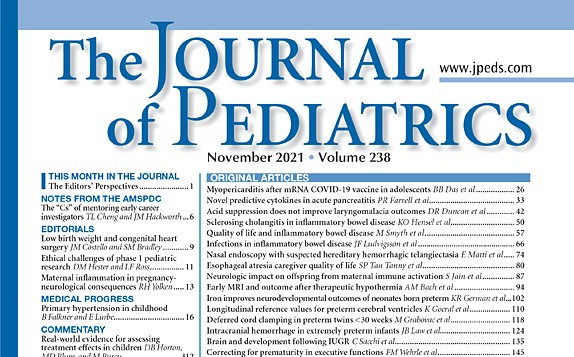
A new paper from INFANT has just been published in The Journal of Pediatrics, titled, Neonatal Seizure Management – Is the Timing of Treatment Critical? INFANT Centre research fellow Dr Andreea Pavel is the first author on the paper.

The open access paper, which is the latest from the ANSeR study team led by INFANT Director Prof Geraldine Boylan. The team found that the treatment of neonatal seizures may be time-critical.

472 newborns were recruited across eight neonatal intensive care units in Ireland (Cork University Maternity Hospital & Rotunda Hospital), London (University College London Hospital, Great Ormond Street Hospital, Royal London Hospital, Homerton University Hospital), the Netherlands (University Medical Centre, Utrecht), and Sweden (Karolinska University Hospital).

The study assessed the impact of the timing of seizure treatment on subsequent seizure burden and described overall seizure management in a large neonatal cohort.

The research team found a significantly lower seizure burden and less seizures in infants treated within 1 hour of  seizure onset.

To find out more, read the paper here.

INFANT Led Research Team Create App That Could Revolutionise Maternal Healthcare in Developing Countries

By |2021-11-10T17:35:31+00:00November 10th, 2021|

Researchers at INFANT have created a ground-breaking app that could help reduce maternal and perinatal mortality rates in developing countries.

Funded by the Global Pregnancy Collaboration (CoLab), Dr Ali Khashan and Dr Simon Woodworth from the INFANT research centre at University College Cork, alongside CoLab’s Professor Christopher Redman, designed the ULTRA app to improve health outcomes for mothers and babies by enabling healthcare officials to accurately record key data so that they can establish targeted intervention strategies aimed at improving maternal healthcare.

Having received an Irish Research Council COALESCE funding, the pioneering app will be trialled across four districts in the Kilimanjaro Region of Northern Tanzania over the course of the next three years.

The research team, led by Dr Khashan and Professor Blandina Mmbaga from the Kilimanjaro Christian Medical Centre, alongside  Professor Redman and Dr Woodworth, believe that the app could provide developing countries with the ability to capture key data that might otherwise be lost.

In the developing world, countries like Tanzania tend to rely on paper-based systems to detail the provision of maternal healthcare services.

Although secure, those paper-based systems tend to be inefficient as they’re not designed to inform decision-making or measure the impact of medical interventions.

That makes them unusable in a modern context where accurate data is used to create strategies to reduce maternal and perinatal mortality rates.

We wanted to create a simple, low-cost, mobile app that could collect and upload accurate data so that health authorities can make informed decisions about the provision of maternal healthcare in specific contexts.

The ULTRA app has been developed to accept data both on and offline so that it can be used in remote areas where the most vulnerable families live.

Set to be trialled in four of Northern Tanzania’s seven districts, where 44,000 births are recorded annually, the ULTRA app will be deployed in both clinical and domestic settings, where many births go unregistered.

As such, the ULTRA app has been designed with simplicity in mind so that healthcare workers can be trained quickly to input data into its interface.

This means that Dr Khashan and his team have created an app that avoids the inclusion of superfluous “‘wouldn’t it be nice” features that can make platforms unwieldly.

A substantial number of births go unregistered in sub-Saharan Africa. It’s an endemic problem that affects less educated, poorer mothers, living remotely in rural areas.

It’s a prevalent issue in the poorest countries, most notably in sub-Saharan Africa. Eastern and Southern Africa, for example, had the lowest average birth certificate coverage at less than 30%.

To capture these births, we wanted to design an app that made it easy to identify and record non-institutional, as well as institutional, deliveries.

Created with the privacy of users in mind, data uploaded from the ULTRA app will be stored on servers in Tanzania rather than in Europe or the U.S, a feature that was important to Dr Khashan and the international research team in order to inspire confidence among mothers.

The app is aimed at low-income countries where access to data can be relatively limited.

It also collects personal information and we wanted to give mothers control over their own data. Privacy was something that we built into the app so that it would inspire confidence.

Throughout the construction of the app, we needed to weigh the right to privacy against the needs of health agencies in the developing world who require an affordable platform that can lead to targeted intervention.

Over the course of the next 36 months, Dr Khashan and his team will engage in testing the ULTRA app in Tanzania to ensure that it performs without any technical or practical issues, paying particular interest to the cost and usability of the system so that it might be rolled out across the developing world.


INFANT Seminar Series: Dr Juan Trujillo and The Paediatric Allergy Service and His Research at INFANT

By |2021-11-10T16:45:14+00:00November 9th, 2021|

As part of the INFANT seminar series, Dr Juan Trujillo will discuss the paediatric allergy service at CUH and his research this Friday, November 12th 2021 at 12pm.

Dr Trujillo’s presentation will largely touch on the following areas.

• Brief introduction of the paediatric allergy service and his research at INFANT (5min)
• Allergy awareness involvement in collaboration with several partners (5min)
• Progression in new educational model to cover not only health care population in Ireland but the entire Irish population (10 min)
• Active and pending research (15min)


Go to Top