INFANT Student Secures IRC Scholarship 

By |2021-10-06T12:49:13+01:00September 1st, 2021|

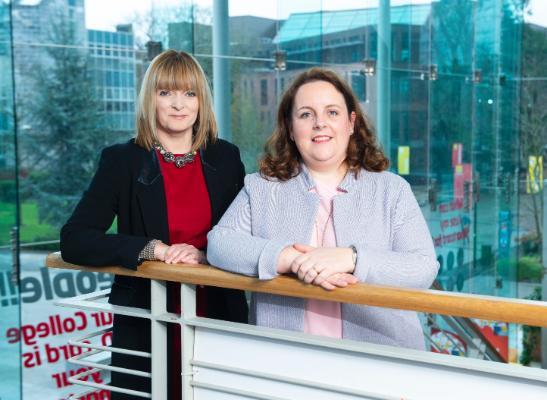
INFANT centre and UCC Departments of Biochemistry and Obstetrics & Gynaecology PhD student Caroline Joyce was awarded an Employment-Based Programme Postgraduate award by the Irish Research Council on 25th August 2021.  


Caroline, who is a Principal Clinical Biochemist in Cork University Hospital, received the prestigious scholarship for her research into biomarker discovery for the diagnosis, management and treatment of women with Gestational Trophoblastic Disease (GTD). She was one of 28 awardees under this scheme and the only recipient in Cork.  


Molar pregnancy (MP) is the commonest form of GTD with an incidence of one per 600 pregnancies. First trimester ultrasound and levels of the pregnancy hormone, human chorionic gonadotrophin (hCG) can diagnose a MP with histological confirmation of trophoblastic tissue in the placenta. After a molar pregnancy, hCG levels are monitored closely until levels return to normal and most women have a good outcome.  


However, some patients with GTD develop persistent disease or gestational trophoblastic neoplasia (GTN) and may require surgery and/or chemotherapy. Plateauing or rising hCG levels can indicate disease recurrence but alternative more sensitive biomarkers are needed to ensure early detection and treatment of this largely curative disease.  


Caroline’s research will examine the molecular mechanisms underlying this rare disease under the supervision of INFANT’s Professor Keelin O’Donoghue, Professor Tommie McCarthy from UCC’s School of Biochemistry and Cell Biology, and Dr John Coulter, Consultant Gynaecologist and Clinical Lead at the National Gestational Trophoblastic Disease Centre. 
 

Professor Keelin O’Donoghue Co-authors Report on Implementation of National Bereavement Standards across all 19 Maternity Units

By |2021-08-18T09:48:14+01:00August 18th, 2021|

Infant’s Professor Keelin O’Donoghue – https://www.ucc.ie/en/obsgyn/staff/keelin/  – has co-authored a report that aims to develop and improve perinatal bereavement care across all of Ireland’s Maternity units.

Read/Download the report (PDF) here –  https://www.infantcentre.ie/2021/08/18/hse-national-standards-for-bereavement-care-report/

Compiled by Prof O’Donoghue, Clinical lead for Implementation, and Riona Cotter National Programme Manager,  the report highlights the dedication and hard work of healthcare professionals, support groups and voluntary organisations who work with parents bereaved through pregnancy loss and perinatal death.


Titled, The Implementation of the National Standards for Bereavement Care Following Pregnancy Loss and Perinatal Death – link: https://www.infantcentre.ie/2021/08/18/hse-national-standards-for-bereavement-care-report/ , the report also acknowledges the work and commitment in each Maternity Unit to implement the standards, as well as outlining the work still to be done.

Speaking following the launch of the report, Professor O’Donoghue said that she was grateful to all of those who contributed to the implementation programme.

“This report shows that progress has been made in the implementation of the Bereavement Standards nationally..”

“We are grateful to all the families and volunteers who shared their experiences of pregnancy loss and perinatal death with us”.

“Their experiences helped inform us of what is necessary to provide high quality bereavement care in our Maternity services”.

The final recommendations of the report are based on audit findings, expert opinion, best practice and the learning from experiences of bereaved parents and families, which should be a priority for every Maternity Unit.

Read the report here – https://www.infantcentre.ie/2021/08/18/hse-national-standards-for-bereavement-care-report/

Results of PARROT Ireland Trial Published in British Medical Journal

By |2021-08-14T09:50:51+01:00August 13th, 2021|

Results of PARROT Ireland Trial Published in British Medical Journal

Research funded by the Health Research Board Mother and Baby Clinical Trial Network Collaborative Ireland and published by Professor Keelin O’Donoghue in the British Medical Journal, has found that using the Placental Growth Factor test in clinical practice does not improve or worsen outcomes for women and their babies.

A clinical trial involving 2,313 pregnant women has found that using the Placental Growth Factor (PlGF) test does not help Clinicians improve or worsen outcomes for women and their babies.

The potentially dangerous condition pre-eclampsia, which affects between 4-7% of pregnant women, causes high blood pressure and protein in urine, and may in severe cases even lead to the fatality of a mother or baby.

Published in the British Medical Journal  [https://www.bmj.com/content/374/bmj.n1857 ], the findings of the trial do not support the addition of PlGF testing, which had previously in other studies shown promising results in helping to diagnose pre-eclampsia or manage pregnancy complicated by pre-eclampsia.

The results of the national multi-centre trial, which was led by Professor Keelin O’Donoghue [https://www.ucc.ie/en/obsgyn/staff/keelin/], along with investigators from 7 maternity units across Ireland,  from UCC’s world renowned Infant Centre, leaves clinicians without an effective test that can differentiate between women presenting with high blood pressure and those affected by pre-eclampsia.

“At present, we do not have an effective test to tell the difference between women with symptoms of pre-eclampsia, and those that can be managed as an out-patient”.

“High blood pressure is a common problem in pregnancy, affecting about 10-15% of women”.

“Whilst most cases of raised blood pressure are not serious, about 4-7% of pregnant women develop pre-eclampsia”.

Funded by the Health Research Board Mother and Baby Clinical Trial Network Collaborative Ireland, the PARROT Ireland trial was conducted in the seven largest maternity units in Ireland between June 2017 and April 2019.

The trial, which was the largest randomised control trial of PlGF to date, invited women, pregnant with a single baby between 20-36+6 weeks gestation, who had signs or symptoms of pre-eclampsia to take part.

Of the 2,313 women who took part, 1,202 underwent standard hospital tests for suspected pre-eclampsia, while 1,017 had the additional PlGF test performed.

The PlGF test result was given to pregnant women and their clinical teams to help them make decisions on further care and investigations.

Serious complications in mothers, such as; brain, kidney, liver, heart or lung compromise, placental abruption, severe high blood pressure or intensive care admission were recorded, and the results compared between the group that had the test and the group that did not.

Similarly, serious complications in their babies such as lack of oxygen at birth, admission to the neonatal unit, low birth weight, brain, bowel, lung disease or death were also recorded and compared.

The research team continued to engage with the women who took part in the study until both mother and baby were discharged from hospital.

The results of the trial showed that using the PlGF test did not improve or worsen outcomes for women and their babies.

In the end, the results of the 22-month long study did not support the addition of PlGF testing into routine clinical investigations for women presenting with suspected pre-eclampsia.

Funding was provided by the Health Research Board Mother and Baby Clinical Trial Network Collaborative Ireland (HRB-MBCTNI) Grant Number CTN-2014-10.

Link to BMJ Article: https://www.bmj.com/content/374/bmj.n1857

C4C – Press Release: First site open for patient recruitment into ‘Kawasaki Disease Coronary Artery Aneurysm Prevention trial (KD-CAAP)’ study

By |2021-08-06T10:49:39+01:00August 6th, 2021|

The IMI conect4children (c4c) consortium are pleased to announce that the first site is now open for the ‘Kawasaki Disease Coronary Artery Aneurysm Prevention trial (KD-CAAP)’ study as of 28 September 2020 at Great Ormond Street Hospital NHS Foundation Trust. Kawasaki disease is a disease where arteries, particularly the coronary arteries in the heart, become inflamed, sometimes causing irreversible heart damage, heart attacks or even death. To prevent heart damage, Kawasaki disease in children and young people must be recognised by clinicians early, and promptly treated with anti-inflammatory medicines. This study will assess the effectiveness of adding steroids to standard treatment in children with Kawasaki Disease, and aims to recruit 262 children as part of the study. The study will continue to open in approximately 60 sites in 15 countries across Europe.

In April 2019, c4c announced the selection of its first portfolio of pan-European paediatric studies, aimed at advancing the understanding of high priority medicines commonly used in babies, children and young people in Europe. The KD-CAAP study is the first of the proof of viability studies, to begin recruitment. The other academic studies, shown below, plan to begin recruitment later this year, despite initial delays due to the COVID-19 pandemic.

View Full Press Release Here: Conect4Children – PRESS RELEASE

Downloads: Conect4Children (C4C) – PRESS RELEASE

Related Links: https://conect4children.org/

Press Release for: BABY LOSS AWARENESS WEEK

By |2021-09-23T10:55:48+01:00October 14th, 2020|

Wednesday 14 October 2020

RESEARCHERS FROM PREGNANCY LOSS RESEARCH GROUP AND INFANT CENTRE UCC/CUMH ARE WORKING TOGETHER TO HELP IMPROVE SERVICES FOR THOSE WH0 EXPERIENCE RECURRENT MISCARRIAGE

October 13th 2020: Baby Loss Awareness Week, which runs from October 9 – 15, is an international event which seeks to raise awareness of the issues affecting families who have experienced a loss of a pregnancy or baby. Researchers from the Pregnancy Loss Research Group and Infant Research Centre at Cork University Maternity Hospital (CUMH)/ University College Cork share some of the work that they are doing with those who have experienced the loss of a pregnancy or baby, particularly in the area of recurrent miscarriage, as part of efforts to standardise and improve services across the country.


Miscarriage affects one in four couples, while at least 1-2% will experience at least two or more first-trimester miscarriages in a row, known as recurrent miscarriage. The loss of a baby at any stage of pregnancy can have a devastating impact on a woman, her partner, and their family, even more so if this loss occurs several times.


Rachel Rice, a Parent Advocate said


“Despite having had a first miscarriage, nothing prepared me for the reality that it could happen again and again and again. It is a truly devastating experience and women must be assured that the services they require from diagnosis and treatment, to follow up care and investigation, are evidenced based, informed by best practice clinical guidelines and delivered in a standardised way across all maternity services in Ireland. Parents’ loss does not need to be compounded by inadequate service provision. Improving the quality of recurrent miscarriage care needs to become a priority in our maternity services nationally. The RE:CURRENT Project is unique in its commitment to involving women and men who have experienced recurrent miscarriage on its advisory group, ensuring that the research is informed by the lived experience of parents at each stage of the process. The importance of this work cannot be emphasised enough.”


Led by Dr Keelin O’Donoghue, Consultant Obstetrician at Cork University Maternity Hospital and Principal Investigator at INFANT,  the Health Research Board-funded RE:CURRENT (Recurrent miscarriage: Evaluating CURRENT services) Project aims to evaluate recurrent miscarriage services in the Republic of Ireland. The Team is collaborating with key stakeholders across the country, including: healthcare and allied health professionals, representatives from advocacy and support organisations, those involved in the administration, governance and management of maternity services, academics, and women and men who have experienced recurrent miscarriage.


Speaking about the Project, Dr Peter McKenna, Clinical Director of the National Women and Infants Health Programme said


“Recurrent miscarriage impacts a significant number of the population, affecting physical and psychological wellbeing. Part of the anguish caused to women and their families is our inability to offer an explanation as to why this happens. Thorough clinical assessment and greater support to women who experience recurrent miscarriage may be important for successful outcomes in future pregnancy. A key strength of this project is the involvement of a wide range of stakeholders, including women and men who have experienced miscarriage, to inform developments in maternity services in Ireland.”


Over a two-year period, the research team will examine the provision of clinical and supportive care to those who experience recurrent miscarriage with a view to informing service optimisation. As part of this work, the Team has reviewed guidelines for recurrent miscarriage care in different countries, and conducted interviews with health professionals to elicit their views on current care. In the coming months they will also speak to women and men who have experienced recurrent miscarriage to obtain insight into their experiences of the existing services.


The risk of miscarriage depends on a number of factors, including maternal age and number of previous miscarriages. While there are several causes of recurrent miscarriage, no cause is identified in half of cases following investigations and are ‘unexplained’. Many couples are unprepared for a miscarriage, and are often dependent on healthcare professionals to guide them around management and investigations.


According to Dr Keelin O’Donoghue, Consultant Obstetrician at Cork University Maternity Hospital and Principal Investigator at INFANT, “individualised care, appropriate clinical information, and respect for the experiences, views, and wishes of those who experience recurrent miscarriage are important. However, there is currently no national standard for the provision of services and supports. Findings from this project will inform efforts to standardise and improve the quality of services for those who experience recurrent miscarriage”.


Notes for editors:


The RE:CURRENT Project Team comprises Dr Keelin O’Donoghue (PI), Dr Sarah Meaney (Co-Applicant), and Dr Rebecca Dennehy and Marita Hennessy PhD (Postdoctoral Researchers).


Pregnancy Loss Research Group: The Pregnancy Loss Research Group was established in Cork University Maternity Hospital in 2012 and is led by Dr Keelin O’Donoghue, Senior Lecturer and Consultant Obstetrician and Gynaecologist. The research group includes obstetricians, midwives, nurses, social workers, social scientists, epidemiologists, service users, perinatal pathologists, chaplains, educators, researchers, PhD, postgraduate and undergraduate students. The Group studies the lived experiences of men and women who have experienced all aspects of pregnancy loss including miscarriage. Its aim is to advance the services offered to these parents, by improving the understanding and awareness of the consequences of pregnancy loss amongst healthcare professionals and among the general population.


INFANT: The Irish Centre for Maternal and Child Health Research (INFANT) at University College Cork is Ireland’s first translational research centre focused entirely on pregnancy, birth and early childhood. Co-located at UCC, CUH and CUMH, INFANT has a local impact with a global reach. The centre is answering the international need for research and innovation to improve health outcomes for mothers and babies.

Resources for parents, families, health professionals, and anyone who needs information and support about pregnancy and/or infant loss:

Pregnancy and Infant Loss Website: www.pregnancyandinfantloss.ie


Cork Miscarriage Website: www.CorkMiscarriage.com. This is a valuable resource for parents who experience pregnancy loss or perinatal death. The website provides accurate and accessible information on a sensitive and often stigmatised subject, shares the latest research into the causes of baby loss, promotes emotional well-being, and offers details on how to access the appropriate support services.

Féileacáin (Stillbirth and Neonatal Death Association of Ireland – SANDAI) was formed by a group of bereaved parents to offer support to anyone affected by the death of a baby around the time of birth, and the organisation is now the national charity supporting families affected by perinatal loss. Website: https://feileacain.ie/


The Miscarriage Association of Ireland, a charitable body set up by, and with the support of women and men who themselves have been experienced the loss of a baby through miscarriage. Website: http://www.miscarriage.ie/

A Little Lifetime Foundation’s aim is to provide information, services and support based on other bereaved parents’ and families’ experiences. Website: https://alittlelifetime.ie/


Baby Loss Awareness Week, which runs from October 9 – 15, is an international event which seeks to raise awareness of the issues affecting families who have experienced a loss of a pregnancy or baby.


For interviews contact: Tara O’Leary, Communications Infant Research Centre, UCC on 0858077849 or email tara.oleary@ucc.ie

Infant Mental Health

By |2020-11-22T13:24:30+00:00June 19th, 2020|

Friday 19 June 2020

Here at the INFANT Research Centre, we specialise in the science of babies brains!

The brain develops more in the first five years than at any other stage of our life. The first 1,000 days of life are vital as the brain and biological pathways formed during this time can affect physical and mental health for the rest of a babies life.

During pregnancy and infancy, it is obvious how physically reliant babies are on their parents and caregivers. They are socially and emotionally connected to us in so many fascinating ways. The way we interact with babies and infants shapes their brain development. Infant Mental Health is the term used to describe the ability of a child to form close relationships with those around them like mum and dad, siblings and grandparents, to understand and express their emotions and to explore and learn about their environment around them. When one hears the phrase ‘infant mental health’, there may be a tendency to be concerned that is it connected with mental illness and be puzzled as to how the term mental health could be associated with the stage of infancy.

Babies are like scientists, exploring the world around them by sending out messages to see what happens, how things work, and where they fit in!  They serve the ball and wait for us to return it. ‘The ball’ might be a cry, a smile, eye contact, a word, or stretched out arms. For our ‘serve’ we can offer physical touch and comfort, calm tone of voice, eye contact, smiles, repeated words, and praise. When we respond with love, calmness, and positivity, meeting their needs, we enable them to form attachments, develop trust, and confidence in us as their parent/caregiver.

Babies need love, secure relationships, to feel connected, in order to thrive. They will only learn how to be part of happy relationships by experiencing them: they learn to love by being loved.

Here are some simple everyday things that parents and caregivers can do to nurture the mental health and wellbeing of babies.

  • Talk with your child constantly
  • Create a healthy environment
  • Ensure your child feels heard
  • Playtime is vital
  • Expose them to new settings and people

INFANT student wins Student Entrepreneur Award

By |2020-11-22T13:26:11+00:00June 12th, 2020|

Friday 12 June 2020

INFANT PhD student Mark O’Sullivan has won the top prize at Enterprise Ireland’s Student Entrepreneur Awards 2020 for his Neurobell medical device. Mark was one of 10 finalists participating in the virtual final of the third-level Student Entrepreneur Awards.

Mark developed Neurobell to support early detection and monitoring of brain injuries in newborns and has being working on the project since 2016. With the device, he aims to help clinicians diagnose abnormal brain activity faster and with greater accuracy.

“This award will help Neurobell on the road to commercialisation and help me excel as an entrepreneur,” 

“Sincere thanks to my academic advisors and colleagues, and to the entrepreneurship ecosystem in UCC which has provided me with the support and resources to achieve this.”

He will now receive a €10,000 cash prize fund and have the opportunity to avail of specialist advice and assistance from Enterprise Ireland to help turn his enterprise idea into a business reality.

Well done Mark!

INFANT Researchers share in €1.4m SFI funding

By |2020-11-22T13:27:59+00:00June 9th, 2020|

Tuesday 09 June 2020

Researchers at INFANT  have received funding for a pilot project that aims to reduce the number of hospital check-up visits for pregnant women during the COVID-19 pandemic.

With funding from Science Foundation Ireland, INFANT researchers will apply connected technology to enable pregnant women to have their blood pressure monitored remotely.

The project is one of 11 proposals which is to share funding of €1.4m under the SFI-coordinated research and innovation response to the COVID-19 pandemic, as announced today by Minister for Business, Enterprise and Innovation, Heather Humphreys TD.

If a pregnant woman’s blood pressure is too high for too long and left uncontrolled, it can affect the baby’s growth and may be a sign of a potentially life-threatening condition called pre-eclampsia.

In some cases, women with suspected high blood pressure may need to present at the hospital for extra check-ups as well as their routine consultations. This is more difficult during the COVID-19 pandemic.

The study at Cork University Maternity Hospital will use remote technology to monitor blood pressure in pregnant women in the COVID-19 pandemic, including inpatients and outpatients and COVID-positive and COVID-negative mothers. The 500 pregnant women who enrol in the project will use an automated device connected to the INFANT Research Centre’s LEANBH platform to measure their blood pressure and relay the results to the clinical team. The mothers can then be alerted if their care needs to change.

The result will mean fewer mothers needing to attend outpatients in CUMH in person for blood-pressure monitoring during the COVID-19 pandemic, thereby reducing potential exposure to the virus. It will also allow closer monitoring of blood pressure in pregnancy than is currently possible.

LEANBH can also be used within the Maternity hospital to allow women to take their blood pressure themselves in a dedicated, isolated room,  if required, without the need for direct contact between staff and patient. The readings thus taken are directly visible to the clinicians and automatically uploaded in the patient’s record just like they would be for a home reading. This further limits opportunities for person to person contamination – a further advantage of the software solution developed at INFANT.

In addition, the blood-pressure data will facilitate future research, and the project will also see the LEANBH platform integrated into the National Electronic Health Maternity Record, potentially leading to a roll out to all maternity units in Ireland.

The research, which has been awarded €118,877 in SFI funding, is led by Professor Frédéric Adam, Business Information Systems Department, Cork University Business School, and the INFANT Research Centre, and Dr Fergus McCarthy, Consultant Obstetrician and Senior Lecturer, Department of Obstetrics and Gynaecology and the INFANT Research Centre at University College Cork.

Prof Adam said: “Connected health solutions offer great opportunities to respond to the challenges that hamper the progress of healthcare systems around the world. The care for many pathologies could be radically changed by using leading-edge yet affordable technology delivered quickly – for instance on a mobile phone – directly to the patient.

Dr McCarthy said: “This is a fantastic opportunity to improve our care for pregnant women by offering them safe, accurate and convenient monitoring of their blood pressure in pregnancy in the comfort of their homes with results monitored by an in-house team of midwives and doctors.

“There is huge potential to extend this project nationally, and relook at how we offer care to all our pregnant women to ensure they have as safe a pregnancy as possible.”

Commenting on todays announcement, INFANT Director, Prof Geraldine Boylan said: “We are delighted to received funding for this important project from SFI under the  COVID-19 Rapid Response call which allows INFANT to work closely with the excellent team at Cork University Maternity Hospital.  This project demonstrates the value of strong collaboration between Universities and the HSE in addressing urgent clinical needs,  which is more important now than ever.”

INFANT giving a voice to children with special needs

By |2020-11-22T12:27:37+00:00May 29th, 2020|

Friday 29 May 2020

INFANT has launched a new study to evaluate the impact of COVID-19 restrictions on the accessibility of support services for carers of children with special needs, and the effect, if any, on carer well-being.

Carers Access to REspite services and support during COVID-19 (CARE Study) is about giving a voice to children with special needs and their carers during COVID-19 pandemic.

Participation is open to people that are 18 years of age or over and who are carers or guardians to a child or children with special needs in the Republic of Ireland and it involves answering a 15-minute survey, at a time that suits you.

Children with physical and intellectual disabilities make up 6.7% of the Irish population and require extra supportive care and services daily, for them to participate in all aspects of life. The imposed COVID-19 restrictions will have reduced or removed their support network, which will directly impact the physical and mental development of these children. The current situation will also inevitably impact the well-being of carers and affect the quality of life for both entities.

Healthy Eating for Pregnant Women

By |2020-11-22T12:27:57+00:00May 26th, 2020|

Tuesday 26 May 2020

Since the global outbreak of COVID-19, we are being inundated with claims that certain foods, nutrients and nutritional supplements can prevent or even cure COVID-19.

However, the truth about diet and COVID-19 is this: No single food, nutrient or supplement can “boost” our immune function to prevent us from catching COVID-19. Good hygiene practices and physical distancing remain the best ways of limiting our risk of infection.

A healthy diet has a role in maintaining a healthy immune system and helping the body fight infection. There are a number of healthy food and lifestyle choices that you can make during this time to ensure that your body has all the nutrients it needs to keep you healthy, to help your baby grow and develop and to support your immune function.

1. Get your supply of essential nutrients

Aim for a diet that includes a range of healthy, nutrient-rich foods that will deliver important vitamins and minerals for pregnancy such as folic acid, iron, calcium, vitamin D and omega-3 fatty acids.

  • Take a folic acid supplement (400μg per day) every day for the first 12 weeks of your pregnancy and include foods that are a rich source of folic acid in your diet, such as green leafy vegetables, fortified breakfast cereals and milk.
  • Eat foods that are rich in iron at least twice a day. Good sources of haem iron (easily absorbed by the body) include red meats like beef, lamb and pork and non-haem iron (less- well absorbed) is found in eggs, green leafy vegetables, pulses and fortified breakfast cereals. Try to eat foods rich in vitamin C (oranges, kiwis, strawberries and red peppers) at the same time as your non-haem iron sources.
  • Try to eat 3 servings of milk, cheese or yoghurt a day. These foods are rich in calcium which is important for healthy bones. Low-fat dairy products contain the same amounts of calcium as full-fat versions.
  • Aim to eat 1-2 portions of oily fish like salmon, mackerel, herring and sardines every week. These are excellent sources of omega-3 fatty acids (important for baby’s brain development) and vitamin D (important for you and your baby’s bone health).
2. Gain a healthy level of weight and keep active

It is normal to gain weight during your pregnancy, and it is important to keep weight gain to a safe and healthy level for you and your baby. You may hear advice about “eating for two” while you are pregnant, but you should not eat twice as much during pregnancy. Staying physically active during your pregnancy, even if you did not exercise regularly before becoming pregnant, is also important. Talk to your healthcare professional leading the care of your pregnancy for advice on a healthy level of weight gain for you and for appropriate exercise regimens during pregnancy.

3. Be aware of portion sizes

Overly large portions of high energy foods contribute to weight gain. It can be difficult to get portion sizes right, and being at home for extended periods, especially without company or with limited activities, can certainly lead to us overeating.

4. Snacking

Snacking during your pregnancy is perfectly fine, and it is a really good way of getting the extra nutrients and calories that your body needs later in your pregnancy. Some snacks may even help you to deal with some of the common symptoms of pregnancy such as nausea, fatigue and gastric upset. Try to avoid fatty and sugary snacks. Instead opt for snacks that will deliver important nutrients like folic acid, vitamin C, iron, calcium and vitamin D.

5. Limit your sugar and salt intake

Fresh produce such as vegetables, fruit, eggs and fresh, unprocessed fish, chicken and meat have no added salt or sugar. Unprocessed staples such as potatoes, rice, noodles, pasta have no added salt or sugar. Build your main meal around these foods. For other meals, prioritise foods with reduced or no added salt or sugar.

Limit your intake of sugary foods like sweets, chocolate, biscuits, cakes, soft drinks and fruit juices with added sugar.

Avoid salty snacks such as crisps. Avoid adding extra salt to your meals at the table. Consider using fresh or dried herbs and spices for added flavour instead.

6. Get enough fibre

Dietary fibre contributes to a healthy gut and digestive system, it keeps hunger between meals at bay and has proven benefits for heart health. Wholegrain cereals, such as wheat, brown rice, corn, oats, rye and barley, and vegetables, pulses and fruit are fibre providers. Juicing vegetables robs them of their fibre, so eat them whole.

7. Stay hydrated

Not only is water the healthiest and cheapest drink, it is also crucial for optimal health (6-8 glasses per day). Drinking water instead of sugar-sweetened beverages is a simple way to limit your intake of sugar and excess calories.

Get your information from a reputable source!

Just as we are being advised to rely on official sources for updates on how to reduce COVID-19 transmission, we should also look to trusted sources for healthy eating advice during pregnancy. The Health Service Executive (HSE) have evidence-based guidelines for eating well during pregnancy.

Go to Top