INFANT Centre News
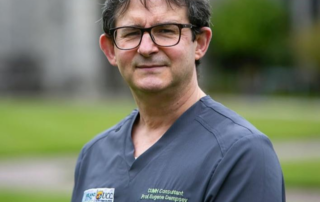
Professor Eugene Dempsey appointed Head of School of Medicine at UCC
Professor Eugene Dempsey, Principal Investigator at INFANT Research Centre and Consultant Neonatologist at Cork University Maternity Hospital, has been appointed Head of the School of Medicine at University College Cork.

Can diet and nutrition influence mental health? New European project aims to find out
Researchers at the INFANT Research Centre, University College Cork (UCC) have joined a new Horizon Europe-funded research project that will investigate how diet and nutrition are associated with mental health across the life course.
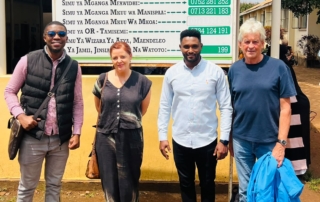
Inside a Kilimanjaro Antenatal Clinic: Can Better Data Improve Maternal and Newborn Health?
Last month, LINDA-FAMILIA project researchers gathered at the foothills of Mount Kilimanjaro in Tanzania to work together on a key project task: evaluation of the newly implemented digital health systems in each of the four project countries.
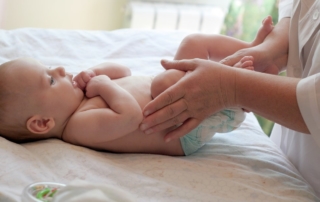
New research programme exploring probiotics and the developing infant microbiome
Researchers at University College Cork’s APC Microbiome Ireland and INFANT Research Centre, together with Cork University Maternity Hospital (CUMH) and Teagasc, have begun a new research programme exploring how probiotics may influence the developing gut microbiome during the early years of life.
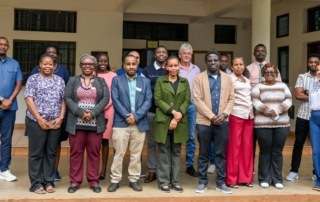
Designing a digital health system
When a digital health information system is complex for the people who rely on it, such as frontline health workers, the consequences reach far beyond a slow screen.
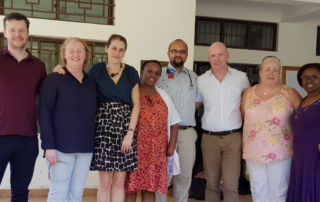
From Cork to Kilimanjaro: a decade of partnership in maternal and newborn health
In 2016, researchers and clinicians from the INFANT Research Centre at UCC travelled to Tanzania to explore collaboration in maternal and child health. Over the course of the visit, the team engaged with a number of potential partner sites, with Kilimanjaro Christian Medical Centre (KCMC) and the Kilimanjaro Clinical Research Institute (KCRI) emerging as the best mutual fit for ongoing collaboration.
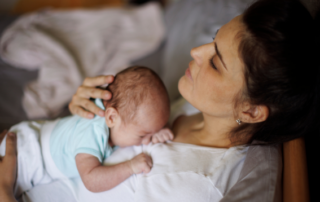
Pregnancy complications can affect mental health long after birth
New research from INFANT Research Centre, University College Cork, highlights the long-term psychological impact of pregnancy and birth complications, calling for more compassionate, woman-centred maternity care.

Better conversations could strengthen stillbirth-prevention efforts
A University College Cork study led by researchers from the National Perinatal Epidemiology Centre, the Pregnancy Loss Research Group at INFANT Research Centre and the School of Public Health, highlights missed opportunities to reduce stillbirth risk in Ireland.

Giving premature babies a stronger start: how PremSmart transformed neonatal nutrition in Ireland
For babies born too soon, the first days of life are critical. During this period, nutrition plays a critical role in brain development, growth and long-term health.
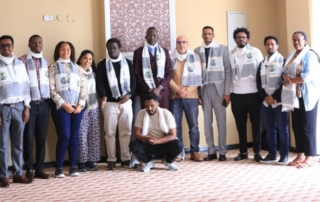
Advancing maternal and child health through better data
Advancing maternal and child health through better data Reliable, high-quality health data is essential for improving care for mothers, babies and children. But when health information is collected differently across countries or systems cannot communicate with one another, it becomes harder to monitor outcomes, inform clinical decisions and generate the evidence needed to strengthen healthcare. As part of the Horizon Europe-funded LINDA-FAMILIA project, researchers and health system partners from Ethiopia, Rwanda, Uganda and Tanzania recently came together in Addis Ababa to advance a shared approach to data harmonisation and interoperability across maternal, newborn and child health systems. Professor Ali Khashan from INFANT Research Centre at University College Cork provided technical leadership during the workshop, leading sessions focused on improving the comparability of maternal health data across participating countries. Working with project partners, participants reviewed existing data collection systems, identified common data elements, explored opportunities for federated research, and developed a regional roadmap for harmonising health data in line with World Health Organization recommendations. Alongside this work, technical sessions explored how Electronic Medical Record (EMR) systems can better integrate with District Health Information Software 2 (DHIS2), helping countries strengthen digital health infrastructure, improve reporting and support more informed clinical and policy decision-making. This workshop marks another important milestone for the LINDA-FAMILIA project as partners work together to build interoperable digital health systems that improve maternal, newborn [...]

Preparing for the next pandemic: Lessons from COVID-19, pregnancy and the power of better data
While COVID-19 may no longer dominate headlines, the lessons learned during the pandemic continue to shape how healthcare systems prepare for future public health emergencies. This is particularly true when it comes to protecting pregnant women and their babies.
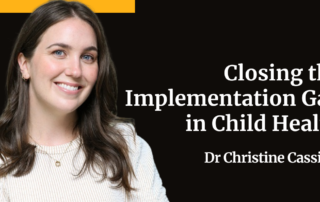
From Evidence to Impact: Dr Chrsitine Cassidy Opens UCC Futures Children Seminar Series
The inaugural UCC Futures Children seminar of the year brought together researchers, clinicians, academic and professional staff, and others interested in improving outcomes for children and families. Opening the event, Professor Geraldine Boylan, Director of UCC Futures Children and INFANT Research Centre, highlighted the importance of creating stronger connections across disciplines at University College Cork (UCC), recognising that children’s outcomes are shaped not only by healthcare, but by education, family supports, environment and wider social systems. Reflecting on the importance of implementation and impact, Professor Boylan noted: “If we can’t implement research into practice, policy, systems or technology, what was the point of doing it in the first place?” The keynote lecture was delivered by Dr Christine Cassidy, Associate Professor at Dalhousie University and Clinician Scientist specialising in child health at IWK Health. Introduced by Dr Rachel Flynn, School of Nursing, UCC, Dr Cassidy explored why implementation science and knowledge translation are essential to ensuring research delivers real-world change. A central theme of the talk was the persistent gap between research and practice. Cassidy highlighted that despite the volume of healthcare research produced globally, evidence does not always translate into practice or policy, while some care delivered may still be low-value or even harmful. Dr Cassidy emphasised that implementation should not be considered an afterthought once research is complete. “We need to design research with [...]
Building stronger evidence for better maternal and child health in East Africa
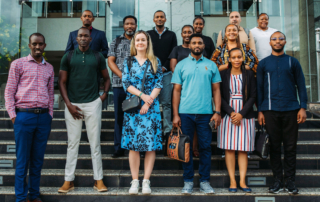
Building stronger evidence for better maternal and child health in East Africa By Jimmy Patrick, Alunyo PhD fellow, Uganda Every day across East Africa, thousands of pregnant women miss antenatal care appointments not because they do not care, but due to barriers such as distance, cost, competing responsibilities, or simply forgetting. When these visits are missed, early warning signs such as infections, high blood pressure, or pregnancy complications go unnoticed, putting both mothers and babies at risk. Improving maternal and child health depends on stronger health systems. It requires stronger evidence to guide care, policy, and innovation. That is why the LINDA-FAMILIA Project brought together nine PhD students and one postdoctoral researcher in Kigali, Rwanda for a four-day intensive training on systematic review and meta-analysis. The training, held from 20-24 April 2026, focused on helping students build and bring together evidence across different areas of the project, particularly within Work Package 3 (Intervention Evaluation) and Work Package 4 (Clinical Research). Throughout the week, participants developed practical skills in writing research protocols, searching scientific literature, extracting and reviewing data, and analysing results using Review Manager (RevMan). The workshop also extended beyond the classroom. Through visits to Rwanda’s National Health Intelligence Center, students saw how health data is used in real healthcare settings to support decision-making. For many, the training shifted how they think about research. [...]
The gender gap in autism: why we need to do better for girls
The gender gap in autism: why we need to do better for girls Autism diagnosis can be a long and complex process. For some children, assessment takes years. Girls in particular are often identified much later than boys, sometimes not until adolescence meaning they can miss years of support when it matters most. At the INFANT Research Centre in University College Cork, Dr Jane English is investigating whether biological signals present at birth could help change that timeline. Her research focuses on identifying early-life biomarkers that may one day support earlier identification of autism, particularly those who could benefit from additional monitoring and support. The aim is not to diagnose autism at birth, but to build the scientific foundation for earlier screening. If successful, this work could help reduce delays in identification and ensure more children, especially girls, receive support earlier in life. “The overarching goal is to facilitate early intervention in children with autism.” English explains. “At the moment, diagnosis is complex, and quite often children are not diagnosed until the ages of four or five, and in some cases, much later”. A system under pressure In Ireland, autism diagnosis typically involves a multidisciplinary team assessment. While comprehensive, the system is under significant strain. “There are thousands of families on waiting lists for a first-time autism assessment, with waiting times exceeding two years,” [...]

Supporting parents through pregnancy loss with compassion and consistency
Supporting parents through pregnancy loss with compassion and consistency Pregnancy loss and perinatal death are among the most devastating experiences a family can face. At such a time, parents need not only empathy
Biomarkers to enable early treatment of newborn brain injury
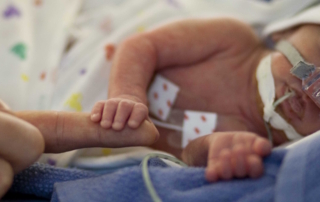
Biomarkers to enable early treatment of newborn brain injury Lack of oxygen to the brain at birth affects almost 200 babies in Ireland each year and more than two million infants globally. This condition, known as hypoxic ischaemic encephalopathy
Predicting pre-eclampsia before it becomes dangerous
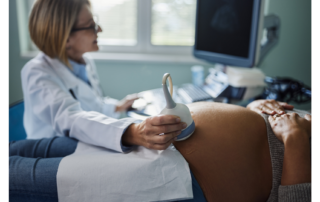
Predicting pre-eclampsia before it becomes dangerous For many women, pre-eclampsia arrives without warning. What begins as a healthy pregnancy can suddenly become life-threatening, with serious consequences for both mother and baby
From research to real-time care: the ANSeR study
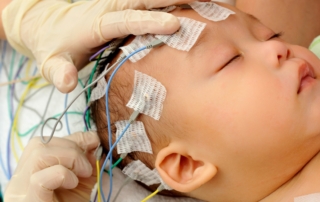
From research to real-time care: the ANSeR study Babies admitted to neonatal intensive care due to complications during pregnancy are at high risk of brain injury and seizures, which can have lifelong consequences if not detected and treated early
Parents’ voices helping shape cerebral palsy research
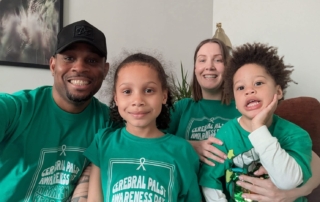
Parents’ voices helping shape cerebral palsy research Research is strongest when it reflects the realities of the people it aims to support. At the INFANT Research Centre at University College Cork (UCC), parents are helping shape cerebral palsy research through the Cerebral Palsy Parent Advisory Group (CP-PAG). The group is part of the wider ELEVATE research programme and the National Cerebral Palsy Programme, which aim to improve early diagnosis, care pathways and long-term outcomes for children with cerebral palsy in Ireland. The advisory group brings together parents who share their lived experience to help guide research aimed at improving care, support and outcomes for children with cerebral palsy. For Cerebral Palsy Awareness Day (25 March), INFANT is highlighting the role parents play in ensuring research reflects the priorities and everyday experiences of families. Parents involved in the group say their perspectives help researchers better understand what life with cerebral palsy looks like beyond clinical settings. “We are living the reality every day,” says Kirsty, whose four-year-old son Andre has spastic quadriplegic cerebral palsy. “We can offer perspective into things researchers might not realise are important but matter greatly to families.” Pictured left, Kirsty Diaso with her husband, daughter, and son Andre, who has spastic quadriplegic cerebral palsy; pictured right, Kirsty and Andre. Why lived experience matters in research Cerebral palsy is a [...]

Postdoctoral Researcher Opportunity
Postdoctoral Researcher Opportunity INFANT Research Centre, University College CorkFixed Term: 24 Months (Full-Time) The INFANT Research Centre at University College Cork is inviting applications for a Postdoctoral Researcher to join the SOPHIE Project (School-age Outcome Prediction using radiomic imaging algorithms in Hypoxic Ischaemic Encephalopathy). About the Project The SOPHIE project aims to improve how we predict long-term outcomes for infants affected by hypoxic ischaemic encephalopathy (HIE). This research focuses on developing advanced MRI-based biomarkers that can help identify children at risk of altered brain development and cognitive challenges at school age. The project involves: MRI scanning and neurocognitive assessment of school-age children with a history of HIE, alongside matched controls Advanced quantitative MRI analysis Identification of imaging features linked to neurodevelopmental outcomes Development of machine learning models to predict future brain development Integration of imaging and clinical data to improve early prediction tools Role Overview The successful candidate will contribute to a multidisciplinary research programme combining neuroimaging, data analysis, and machine learning to advance understanding of early brain injury and long-term outcomes. Salary €46,805 – €53,391 per annum (IUA PD1 Salary Scale) How to Apply Applications must be submitted via the University College Cork recruitment portal:👉 https://ore.ucc.ie/ Job Ref: 094673 For full details and the information package, please visit the link above. Informal Enquiries Prof Brian Walsh📧 brianhenry.walsh@ucc.ie Key Dates Closing Date: Friday, 3 [...]

Transforming peanut allergy care in Ireland
Food is supposed to be simple. But for families of children with severe food allergies, everyday life can be shaped by uncertainty. A birthday party, a school lunch, or a simple snack can carry the risk of a serious allergic reaction.
Building Research Capacity Across LINDA-FAMILIA
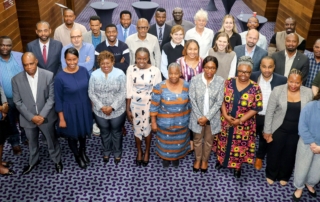
Strengthening research capacity is essential for improving maternal and newborn health. When local teams have the skills, knowledge and systems to generate high-quality research and use its findings, they are better equipped to design services and respond to the challenges facing women, children and families in their communities. This ambition sits at the heart of the LINDA-FAMILIA project, which brings together researchers, clinicians and public health experts working across multiple countries to strengthen the evidence base for improving maternal and newborn health. A key focus of the project is enhancing the ability of individuals and institutions to conduct high-quality research and make effective use of data collected through eRegistries. One of the project’s first milestones has been the development of a Theory of Change for research capacity strengthening (RCS). A Theory of Change helps map how a project’s activities are expected to lead to meaningful and lasting change. In practical terms, it means identifying the challenges we want to address, agreeing on the activities that will help tackle them, and defining the outcomes we hope to achieve over time. This framework was created during a collaborative workshop at the LINDA-FAMILIA kick-off meeting in Istanbul in November 2025 (pictured above). Partners from across the consortium came together to share their perspectives on key issues and priorities for strengthening research capacity. The result is a collective document [...]
Advancing Digital Health Integration: LINDA-FAMILIA Technical Meeting in Ethiopia
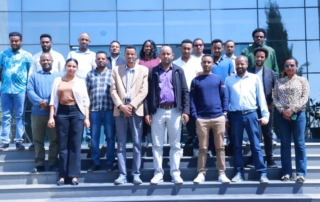
Strengthening digital health systems requires more than technology. It requires coordination, shared standards, and strong partnerships. On 26 February 2026, partners of the LINDA-FAMILIA project in Ethiopia came together for a high-level technical meeting to move system integration plans forward. Hosted at the Ethiopian Public Health Institute, the meeting brought together experts from the Ministry of Health Digital Health Department, the Addis Ababa Regional Health Bureau, EPHI’s National Data Management Center, HISP Ethiopia, and Pulse Tech, alongside other key partners. Discussions focused on strengthening interoperability between Electronic Medical Records and DHIS2, improving real-time reporting, standardising metadata, and preparing for system deployment. A steering committee was established to oversee integration, with clear technical responsibilities assigned across institutions. This meeting marks another important step toward building a more connected, data-driven maternal and child health system in Ethiopia. You can read the full story on our partner’s website here.

Children Needed For Research Study: The SOPHIE Study
The SOPHIE Study is a research study at University College Cork and Cork University Maternity Hospital/Cork University Hospital. Researchers at INFANT, UCC are looking for healthy children aged 5-11 years old to take part in this study. The study is looking to recruit more participants. What is the Study? ‘SOPHIE’ is an acronym for ‘School-aged Outcomes Post Hypoxic Ischaemic Encephalopathy’. Some children are diagnosed with hypoxic ischaemic encephalopathy (HIE) after birth. These babies need extra help after delivery, due to issues with oxygen and blood flow to their brain. They are admitted to the neonatal unit and receive special treatment to help their brain to recover. There is very little information on how children who have been diagnosed with HIE in the newborn period continue to develop after two years of age. We know that some children have difficulties at school, but we don’t know how to identify these children early so that we can intervene sooner and improve their long-term outcomes. We are looking for healthy children to volunteer also to have a developmental assessment and if they wish, an MRI brain scan. The project is supervised by supervisors from University College Cork, Cork University Hospital, and INFANT Research Centre. Who is it for? Healthy children aged 5-11 years old who have no known developmental issues. Children are eligible if they were born after [...]
Children Needed for Research Study: AIM-HIGH Feasibility Study
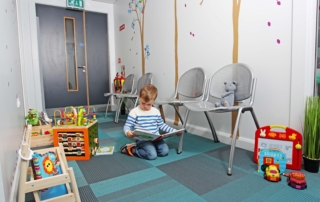
Overview The AIM-HIGH Feasibility Study is a research study at the INFANT Research Centre at University College Cork (UCC) and Cork University Maternity Hospital(CUMH). Researchers at INFANT, UCC are looking for healthy infants aged between 22 – 26 months to take part in this study. Express Interest here: https://forms.office.com/e/ZzAkScCcDG What is the Study? In the INFANT Research Centre, we have developed a new way of measuring how well your child thinks, understands and learns about the world around them. The new test, CogniToT, is an interactive 20-minute tablet-based test involving playful tasks. Recently we have improved the design so that children with poorer vision can also complete the tasks. Before we test this in high-risk infants, but we need to see how healthy, normal-sighted children also perform on this new version. This is why we are asking for healthy children (22 – 26 months) to participate in this study. The study is supervised by clinical consultants from University College Cork, Cork University Hospital, and INFANT Research Centre. Who is it for? Healthy infants, born at term, now aged between 22- 26 months with no known developmental or visual concerns. What do I need to do? Attend a 1-hour visit at the INFANT Research Centre, Cork University Hospital. During the visit, we will check your child’s vision, get them to complete the updated version of CogniToT [...]