About Comms

This author has not yet filled in any details.
So far Comms has created 393 blog entries.

Harnessing gaming technology to assess brain development in young children: Liltoda grows from cutting edge research in the INFANT centre, UCC.
By |2021-09-23T11:20:43+01:00September 1st, 2021|

New technology to support non-verbal assessment of infants & young children.

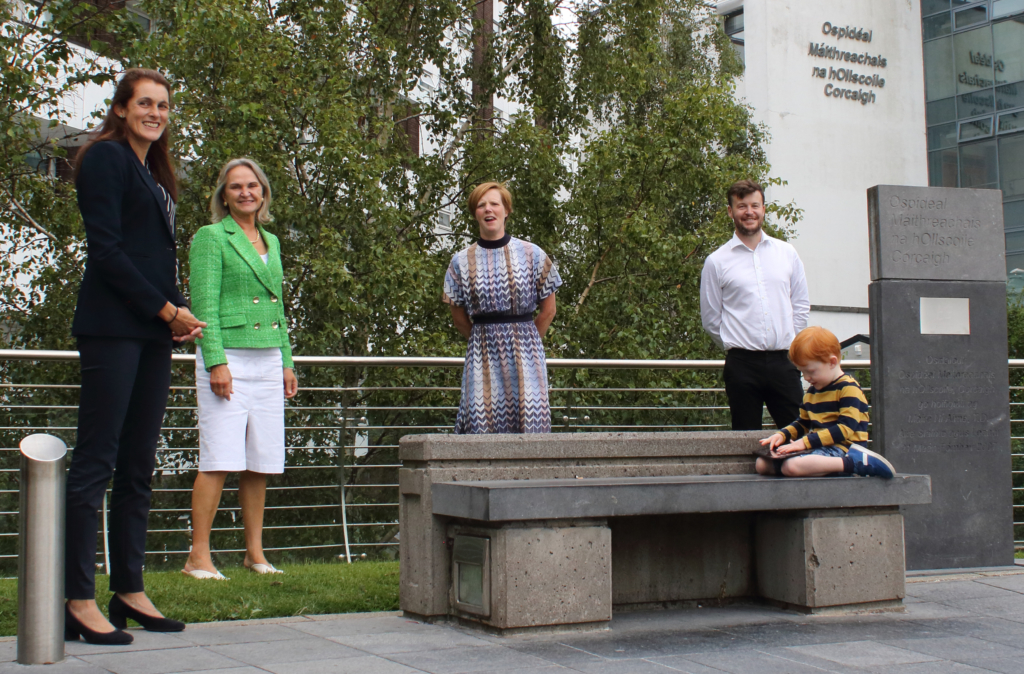
31st August 2021: A new UCC spin out company, Liltoda Ltd, launched today. Liltoda will focus on harnessing the power of gaming technology for the early detection of infant brain injury. The Liltoda team aim to create a sea change in the assessment of brain development in young children. The company is the direct result of an ongoing collaboration between Ireland’s world-class Maternal and Child Health research centre, the INFANT centre, and global gaming company, Hello Games.  

Since 2014 Deirdre Murray, Professor of Paediatrics in UCC, and her brother Sean Murray, Founder and Managing Director of Hello Games, have worked together to study the ability of young infants to interact with touchscreen technology. The responsive nature of touchscreen tablets allows young children aged 18 months onwards to interact and solve puzzles without the need for language. Traditionally, cognitive ability in very young children is assessed based on the surrogate markers of developmental milestones. Parents can easily track a child’s speech and motor skills, but tracking their child’s thinking skills and problem solving ability is much more difficult. For this reason many children with learning difficulties are not detected before starting school. Children often have years of struggling at school before their difficulties come to light. Traditional tests such as Bayley’s Scales, were developed in the 1950s, based on observation of children’s play and development of the time.  This widely-used method to measure cognitive, language, and motor skills takes over an hour to complete with an infant, requires a specially trained professional and relies heavily on a child’s ability to understand verbal instructions.  As a result, an infant with poor or late developing language skills, or with hearing difficulties or a child whose mother tongue is not English, will perform poorly. Children from minority groups are therefore disadvantaged from early on.

“Children’s brains grow and develop rapidly in the first few years of life. Their ability to learn about the world around them and to quickly solve problems and learn new skills is fascinating to watch, but up to now has been difficult to measure. Most of our tests depend on the use of language to explain and to observe a child’s responses across a number of tests. If a child speaks a different language, or has no language at all, they are very difficult to assess. The beauty of this application is the child is engaged and self-motivated to complete the tasks, without any instruction from us. This new technology which can be deployed on a tablet interface or similar screen, without verbal instruction and will accurately assess a child’s ability to problem solve and complete complex tasks in just 15-20 minutes,” said Prof. Deirdre Murray, principal investigator with the INFANT Research Centre, UCC.

“This means that children with learning difficulties who are currently “missed” as they do not have access to a trained psychologist can be identified at a much earlier stage so that intervention and investigation can start in time to help them to reach their full potential”.

The programming expertise of Hello Games has allowed them to develop assessments that are engaging and age appropriate for toddlers from 18 months onwards. The app, which will be used by trained health care staff, has been six years in development and has already been piloted to test cognitive skills in over 400 infants. Hello Games co-founder and managing director, Sean Murray said, 

“It’s exciting to see how technology we have developed at Hello Games can really improve diagnostics for brain development. As gaming developers, we understand intuitive paths, visual interfaces and the natural skills required to process information through technology. To see this technology that we have developed with INFANT being used to help infants and young children is really rewarding, and we are confident that using this technology is a better way to test for cognitive ability in young children, yielding conclusive results and creating a better experience for the infant.”

 Head of UCC College of Medicine and Health, Prof. Helen Whelton, commented;

“Litolda is a fantastic example of the potential of clinical research to directly improve health care. INFANT have taken a multi-disciplinary approach combining engineering, neuroscience, gaming, psychology and clinical insights to develop a ground-breaking new platform to help assessments of child development. Litolda will provide the pathway to translate this into direct clinical use as well as driving economic impact as an exciting digital health start-up”

INFANT Research Centre UCC, Director, Prof. Geraldine Boylan welcomed the announcement stating, 

“I am delighted that this new industry partnership between INFANT and Hello Games is underway. INFANT now works with over 40 companies in many different sectors and it is very exciting that we are now working with a young “indie” company in the gaming world to explore how gaming developers and their skills can be deployed to develop smart, and clinically useful tests to help child development. This is a perfect example of one of INFANT’s key differentiators, combing clinical insights, engineering and collaboration across different fields and stakeholder groups to develop an innovation that can be deployed to improve outcomes for children’

Prototype applications have already been tested in children from Ireland, Sweden, UK, Gambia and Qatar and this work has led to licencing of software from both UCC and Hello Games for the development of the CogniToT® application. 

Mike Cunneen CTO of Liltoda adds “Academic researchers from around the world have been contacting us to ask to use this tool. Launching the CogniToT® application through Liltoda will allow us to create an interface for researchers, psychologists and paediatricians to access this technology seamlessly so that we can reach many more children, whatever their geographical location. We believe that infant cognitive assessment will change dramatically in the next 5-10 years and Liltoda aims to be at the forefront of this new era. Earlier detection of problems will open up many new possibilities for early intervention and early brain protection”. The next step for the company will be the development of homebased remote assessment whereby children from any corner of the globe can be assessed by secure video link and downloadable applications.

There is also rich potential in CogniToT® being a new digital health tool to support electronic clinical trial management tracking outcomes in trial interventions where development markers need to be assessed at scale and across multiple sites and countries or in post-mark surveillance of any therapies that may influence brain development.

 Interim Director Innovation at UCC, Dr. Sally Cudmore added;

 ‘It is imperative that first-class research is commercialised in order to realise beneficial impact for society. UCC Innovation has played a key role in the launch of this new UCC spin out, Liltoda Ltd, which has developed technology to assess cognitive development in infants, allowing earlier interventions when needed. I am delighted to see the establishment of this innovative company, and the transition of their state-of-the-art technology into a commercial reality with endless possibilities for growth and expansion’’

For more information please visit https://www.liltoda.ie/ or https://www.infantcentre.ie. Please contact Tara O’Leary communications College of Medicine and Health on 0858077849 or email tara.oleary@ucc.ie for more information.

ENDS

Infant Mental Health

By |2020-11-22T13:24:30+00:00June 19th, 2020|

Friday 19 June 2020

Here at the INFANT Research Centre, we specialise in the science of babies brains!

The brain develops more in the first five years than at any other stage of our life. The first 1,000 days of life are vital as the brain and biological pathways formed during this time can affect physical and mental health for the rest of a babies life.

During pregnancy and infancy, it is obvious how physically reliant babies are on their parents and caregivers. They are socially and emotionally connected to us in so many fascinating ways. The way we interact with babies and infants shapes their brain development. Infant Mental Health is the term used to describe the ability of a child to form close relationships with those around them like mum and dad, siblings and grandparents, to understand and express their emotions and to explore and learn about their environment around them. When one hears the phrase ‘infant mental health’, there may be a tendency to be concerned that is it connected with mental illness and be puzzled as to how the term mental health could be associated with the stage of infancy.

Babies are like scientists, exploring the world around them by sending out messages to see what happens, how things work, and where they fit in!  They serve the ball and wait for us to return it. ‘The ball’ might be a cry, a smile, eye contact, a word, or stretched out arms. For our ‘serve’ we can offer physical touch and comfort, calm tone of voice, eye contact, smiles, repeated words, and praise. When we respond with love, calmness, and positivity, meeting their needs, we enable them to form attachments, develop trust, and confidence in us as their parent/caregiver.

Babies need love, secure relationships, to feel connected, in order to thrive. They will only learn how to be part of happy relationships by experiencing them: they learn to love by being loved.

Here are some simple everyday things that parents and caregivers can do to nurture the mental health and wellbeing of babies.

  • Talk with your child constantly
  • Create a healthy environment
  • Ensure your child feels heard
  • Playtime is vital
  • Expose them to new settings and people

INFANT Researchers share in €1.4m SFI funding

By |2020-11-22T13:27:59+00:00June 9th, 2020|

Tuesday 09 June 2020

Researchers at INFANT  have received funding for a pilot project that aims to reduce the number of hospital check-up visits for pregnant women during the COVID-19 pandemic.

With funding from Science Foundation Ireland, INFANT researchers will apply connected technology to enable pregnant women to have their blood pressure monitored remotely.

The project is one of 11 proposals which is to share funding of €1.4m under the SFI-coordinated research and innovation response to the COVID-19 pandemic, as announced today by Minister for Business, Enterprise and Innovation, Heather Humphreys TD.

If a pregnant woman’s blood pressure is too high for too long and left uncontrolled, it can affect the baby’s growth and may be a sign of a potentially life-threatening condition called pre-eclampsia.

In some cases, women with suspected high blood pressure may need to present at the hospital for extra check-ups as well as their routine consultations. This is more difficult during the COVID-19 pandemic.

The study at Cork University Maternity Hospital will use remote technology to monitor blood pressure in pregnant women in the COVID-19 pandemic, including inpatients and outpatients and COVID-positive and COVID-negative mothers. The 500 pregnant women who enrol in the project will use an automated device connected to the INFANT Research Centre’s LEANBH platform to measure their blood pressure and relay the results to the clinical team. The mothers can then be alerted if their care needs to change.

The result will mean fewer mothers needing to attend outpatients in CUMH in person for blood-pressure monitoring during the COVID-19 pandemic, thereby reducing potential exposure to the virus. It will also allow closer monitoring of blood pressure in pregnancy than is currently possible.

LEANBH can also be used within the Maternity hospital to allow women to take their blood pressure themselves in a dedicated, isolated room,  if required, without the need for direct contact between staff and patient. The readings thus taken are directly visible to the clinicians and automatically uploaded in the patient’s record just like they would be for a home reading. This further limits opportunities for person to person contamination – a further advantage of the software solution developed at INFANT.

In addition, the blood-pressure data will facilitate future research, and the project will also see the LEANBH platform integrated into the National Electronic Health Maternity Record, potentially leading to a roll out to all maternity units in Ireland.

The research, which has been awarded €118,877 in SFI funding, is led by Professor Frédéric Adam, Business Information Systems Department, Cork University Business School, and the INFANT Research Centre, and Dr Fergus McCarthy, Consultant Obstetrician and Senior Lecturer, Department of Obstetrics and Gynaecology and the INFANT Research Centre at University College Cork.

Prof Adam said: “Connected health solutions offer great opportunities to respond to the challenges that hamper the progress of healthcare systems around the world. The care for many pathologies could be radically changed by using leading-edge yet affordable technology delivered quickly – for instance on a mobile phone – directly to the patient.

Dr McCarthy said: “This is a fantastic opportunity to improve our care for pregnant women by offering them safe, accurate and convenient monitoring of their blood pressure in pregnancy in the comfort of their homes with results monitored by an in-house team of midwives and doctors.

“There is huge potential to extend this project nationally, and relook at how we offer care to all our pregnant women to ensure they have as safe a pregnancy as possible.”

Commenting on todays announcement, INFANT Director, Prof Geraldine Boylan said: “We are delighted to received funding for this important project from SFI under the  COVID-19 Rapid Response call which allows INFANT to work closely with the excellent team at Cork University Maternity Hospital.  This project demonstrates the value of strong collaboration between Universities and the HSE in addressing urgent clinical needs,  which is more important now than ever.”

INFANT giving a voice to children with special needs

By |2020-11-22T12:27:37+00:00May 29th, 2020|

Friday 29 May 2020

INFANT has launched a new study to evaluate the impact of COVID-19 restrictions on the accessibility of support services for carers of children with special needs, and the effect, if any, on carer well-being.

Carers Access to REspite services and support during COVID-19 (CARE Study) is about giving a voice to children with special needs and their carers during COVID-19 pandemic.

Participation is open to people that are 18 years of age or over and who are carers or guardians to a child or children with special needs in the Republic of Ireland and it involves answering a 15-minute survey, at a time that suits you.

Children with physical and intellectual disabilities make up 6.7% of the Irish population and require extra supportive care and services daily, for them to participate in all aspects of life. The imposed COVID-19 restrictions will have reduced or removed their support network, which will directly impact the physical and mental development of these children. The current situation will also inevitably impact the well-being of carers and affect the quality of life for both entities.

Healthy Eating for Pregnant Women

By |2020-11-22T12:27:57+00:00May 26th, 2020|

Tuesday 26 May 2020

Since the global outbreak of COVID-19, we are being inundated with claims that certain foods, nutrients and nutritional supplements can prevent or even cure COVID-19.

However, the truth about diet and COVID-19 is this: No single food, nutrient or supplement can “boost” our immune function to prevent us from catching COVID-19. Good hygiene practices and physical distancing remain the best ways of limiting our risk of infection.

A healthy diet has a role in maintaining a healthy immune system and helping the body fight infection. There are a number of healthy food and lifestyle choices that you can make during this time to ensure that your body has all the nutrients it needs to keep you healthy, to help your baby grow and develop and to support your immune function.

1. Get your supply of essential nutrients

Aim for a diet that includes a range of healthy, nutrient-rich foods that will deliver important vitamins and minerals for pregnancy such as folic acid, iron, calcium, vitamin D and omega-3 fatty acids.

  • Take a folic acid supplement (400μg per day) every day for the first 12 weeks of your pregnancy and include foods that are a rich source of folic acid in your diet, such as green leafy vegetables, fortified breakfast cereals and milk.
  • Eat foods that are rich in iron at least twice a day. Good sources of haem iron (easily absorbed by the body) include red meats like beef, lamb and pork and non-haem iron (less- well absorbed) is found in eggs, green leafy vegetables, pulses and fortified breakfast cereals. Try to eat foods rich in vitamin C (oranges, kiwis, strawberries and red peppers) at the same time as your non-haem iron sources.
  • Try to eat 3 servings of milk, cheese or yoghurt a day. These foods are rich in calcium which is important for healthy bones. Low-fat dairy products contain the same amounts of calcium as full-fat versions.
  • Aim to eat 1-2 portions of oily fish like salmon, mackerel, herring and sardines every week. These are excellent sources of omega-3 fatty acids (important for baby’s brain development) and vitamin D (important for you and your baby’s bone health).
2. Gain a healthy level of weight and keep active

It is normal to gain weight during your pregnancy, and it is important to keep weight gain to a safe and healthy level for you and your baby. You may hear advice about “eating for two” while you are pregnant, but you should not eat twice as much during pregnancy. Staying physically active during your pregnancy, even if you did not exercise regularly before becoming pregnant, is also important. Talk to your healthcare professional leading the care of your pregnancy for advice on a healthy level of weight gain for you and for appropriate exercise regimens during pregnancy.

3. Be aware of portion sizes

Overly large portions of high energy foods contribute to weight gain. It can be difficult to get portion sizes right, and being at home for extended periods, especially without company or with limited activities, can certainly lead to us overeating.

4. Snacking

Snacking during your pregnancy is perfectly fine, and it is a really good way of getting the extra nutrients and calories that your body needs later in your pregnancy. Some snacks may even help you to deal with some of the common symptoms of pregnancy such as nausea, fatigue and gastric upset. Try to avoid fatty and sugary snacks. Instead opt for snacks that will deliver important nutrients like folic acid, vitamin C, iron, calcium and vitamin D.

5. Limit your sugar and salt intake

Fresh produce such as vegetables, fruit, eggs and fresh, unprocessed fish, chicken and meat have no added salt or sugar. Unprocessed staples such as potatoes, rice, noodles, pasta have no added salt or sugar. Build your main meal around these foods. For other meals, prioritise foods with reduced or no added salt or sugar.

Limit your intake of sugary foods like sweets, chocolate, biscuits, cakes, soft drinks and fruit juices with added sugar.

Avoid salty snacks such as crisps. Avoid adding extra salt to your meals at the table. Consider using fresh or dried herbs and spices for added flavour instead.

6. Get enough fibre

Dietary fibre contributes to a healthy gut and digestive system, it keeps hunger between meals at bay and has proven benefits for heart health. Wholegrain cereals, such as wheat, brown rice, corn, oats, rye and barley, and vegetables, pulses and fruit are fibre providers. Juicing vegetables robs them of their fibre, so eat them whole.

7. Stay hydrated

Not only is water the healthiest and cheapest drink, it is also crucial for optimal health (6-8 glasses per day). Drinking water instead of sugar-sweetened beverages is a simple way to limit your intake of sugar and excess calories.

Get your information from a reputable source!

Just as we are being advised to rely on official sources for updates on how to reduce COVID-19 transmission, we should also look to trusted sources for healthy eating advice during pregnancy. The Health Service Executive (HSE) have evidence-based guidelines for eating well during pregnancy.

The Scientific Theory of Happiness

By |2020-11-22T12:28:10+00:00May 22nd, 2020|

Friday 22 May 2020

Our Clinical Psychologists, Leanna Fogarty and Dr Margaret O’ Rourke have identified a number of tools and resources to help you deal with any additional stresses in your lives. We will share some bitesize tips with you every week through the INFANT website and our social media channels.

There are no quick fixes but there are things that we can do to remain focused, calm, and positive.

–

Psychological research has discovered that happiness can be built and enhanced with five core ingredients. The word PERMA is the easiest way to remember the five important building blocks of mental health and wellbeing – all things that are very helpful right now!

1. Positive Emotions

It can be hard work to be positive sometimes but the more you try the more it will become a habit. Positive emotions really help your mental health and will build and support confidence and self-belief, creativity, flexibility, optimism, perseverance, physical and mental health productivity, and energy.

2. Engagement

Being fully focused and engaged on the task at hand is very good for wellbeing. Try to be fully present in the now and the tasks and activities you are engaged in  – it doesn’t matter how simple or difficult the task may be.

3. Relationships

Positive relationships help us build resilience, reduce stress, and improve wellbeing. Regardless of what happens at work, at home, or in your life, try to ensure you work at keeping relationships positive and supportive.

4. Meaning

Belonging to and serving something bigger than ourselves is an excellent way to build wellbeing and purpose. What could be more important than the job you do as a parent? Every parent struggles from time to time so cut yourself some slack, be kind and compassionate towards yourself, and always ask for help if you need it!

5. Accomplishment

Your family, friends, and community salute you and want to congratulate you on the way you are adapting to and handling this very difficult situation. Remember we talked about the KISS technique a few weeks ago? Keep your day simple and structured!

Support crucial for maintaining successful breastfeeding

By |2020-11-22T12:28:28+00:00May 14th, 2020|

Thursday 14 May 2020

New research led by Dr. Andrea Hemmingway, PI Prof Mairead Kiely, and the INFANT maternal and child nutrition team has been published in the British Journal of Nutrition.

The study has reported that breastfeeding rates have increased slightly over the past 10 years and mothers are breastfeeding for longer.

Breastfeeding is recommended, where possible, because it has many health benefits for mum and baby. It can promote the development of a baby’s immune system and protect against infection. For mums, breastfeeding reduces the risk of breast cancer and may help with a gradual return to pre-pregnancy weight.

Using data from the COMBINE study – of which over 450 families from Cork and the surrounding area participated between 2015-2017 – the team analysed current infant feeding practices and explored changes in breastfeeding rates over the past 8-10 years.

The COMBINE study found that 75% of mums were breastfeeding to some extent by the time they went home from the hospital and 44% breastfed solely without formula top-ups. In comparison, INFANT’s BASELINE study – led by PI Prof Deirdre Murray between 2008 and 2011 – had a breastfeeding rate of 69% at the time mums went home and 40% breastfed solely.

Both studies had several follow-up visits with families during the first year. At two months of age, 36% of COMBINE babies were solely breastfeeding, compared with 27% in BASELINE. At six months, the rate of breastfeeding had doubled from 12% in BASELINE to 24% in COMBINE.

Current guidelines from the WHO and the HSE are to breastfeed solely for about six months and to continue breastfeeding while introducing solid foods from 4-6 months. Although our rates of continued breastfeeding are very low in Ireland, the improvement over time in these two studies is encouraging.

Interacting closely with families throughout the first six months of life, the COMBINE study team identified a link between combination feeding and stopping breastfeeding earlier. Combination feeding – using a combination of breastfeeding and infant formula – was common at hospital discharge and over the early infant period. The main reasons for combination feeding at one-month included: maternal perception of infant hunger, healthcare professional advice, and breastfeeding difficulties.

These findings highlight the need for early breastfeeding supports for mums, babies, and families, particularly in the first weeks and months after birth. The results also indicate that mums who are able to establish successful breastfeeding initially are now continuing to breastfeed for longer.

Read the full publication here. The research was supported by a grant from Science Foundation Ireland.

INFANT shortlisted to compete for €2 million prize

By |2020-11-22T12:28:42+00:00May 11th, 2020|

Monday 11 May 2020

Minister for Business, Enterprise and Innovation, Heather Humphreys, TD, today announced that twelve teams have been shortlisted to progress onto the next phase of the SFI Future Innovator Prize.

Funded by the Department of Business, Enterprise and Innovation through Science Foundation Ireland (SFI), this competition is part of an overall government plan to cultivate challenge-based funding in Ireland. The two Challenges, the Artificial Intelligence (AI) for Societal Good Challenge and the Zero Emissions Challenge are run in partnership with the Department of Foreign Affairs and Trade.

AI4LIFE – led by Prof Geraldine Boylan, Prof Liam Marnane and Societal Champion Dr Mairead O’Riordan – will focus on the challenge of reducing neonatal morbidity and mortality. 

The team plan to develop a new, easy to interpret, fetal monitoring system that will use AI assisted interpretation to monitor the vital signs of mother and baby during labour to quickly identify any issues. 

The AI4LIFE project has the potential to impact current clinical practice and improve the lives of families and their babies nationally and internationally.

Minister Heather Humphreys, TD said: “I am delighted to announce that twelve teams will go forward to the next phase of the Future Innovator Prize competition. These teams are addressing key societal challenges Zero Emissions and Artificial Intelligence for Societal Good. I commend the researchers on their inspiring solution-focused ideas. Now more than ever, we need to ensure that ongoing significant national and global issues including climate change, disease diagnosis and treatment continue to be addressed. Programmes such as the Future Innovator Prize empower our innovators to deliver creative solutions to important issues where we as a society will benefit.”

Minister for International Development, Ciarán Cannon, TD added: “This important partnership between Irish Aid and Science Foundation Ireland enables innovative research into solutions for key global challenges, such as mitigating climate change.  I am delighted that Irish Aid is co-funding four of the research projects that have reached Seed phase.”

Twenty-four teams have participated to date, six teams have been shortlisted from each Challenge and at the end of the 12-month programme two overall winners will be announced.  The AI for Societal Good Challenge and Zero Emissions Challenge each have prizes of €2 million.

Minister for Training, Skills, Innovation, Research and Development, John Halligan continued:  “It is a privilege to support the development of these great ideas, which are being co-created by interdisciplinary teams from leading institutes and organisations across the country spanning Galway, Cork, Limerick and Dublin. Best of luck to all the teams for the next phase of the competition.”

Dr Ruth Freeman, Director Science for Society, Science Foundation Ireland added her congratulations: “Well done to the twelve teams on their success, hard work and dedication. It is an achievement to progress this far in the Future Innovator Prize competition. The excellent standard of the projects illustrates the importance of continuing to embed competitive and challenge-based funding within the Irish ecosystem. Many of the projects here directly address UN sustainable development goals and can potentially help Ireland achieve these aims. I look forward to following the teams as they journey through this next phase of the programme.”

The twelve successful teams represent a diverse range of backgrounds and closely engage with societal and industry stakeholders to co-create their solutions. In the AI for Societal Good Challenge these solutions address societal concerns of both national and global significance that align with the UN Sustainable Development Goals, from detection of greenwashing, to tracking climate change adaptation, and lung cancer treatment to detection of preeclampsia or endometriosis and fetal monitoring.

Maternal Mental Health Awareness Week 2020

By |2020-11-22T12:29:02+00:00May 8th, 2020|

Friday 08 May 2020

This week is World Maternal Mental Health Awareness Week. The aim is to raise awareness of maternal mental health issues and to promote the help and support that is available for those who require it.

Pregnancy and the period after birth can be particularly challenging and now, more than ever, it is normal to feel extra stressed, anxious, overwhelmed, or upset.

The World Health Organisation (WHO) has recognised worldwide that 15.6% of pregnant women and 19.8% of women who have just given birth experience challenges in relation to mental health.

It is important to be prepared and equipped to try and face these added stresses and what better way to do so than with the aid of a ‘TOOLBOX’.

Our INFANT clinical psychologists Leanna Fogarty and Dr. Margaret O’Rourke have put together a quick summary of the essential tools that you need in your toolbox!

Tools for you Toolbox

Tool 1: GROUNDING: Try to ground yourself by becoming aware of your thoughts and feelings. Slow them down and try and connect with your body by relaxing and breathing. Refocus and engage with the world around you.

Tool 2: UNHOOKING: The main aim is to try and unhook yourself from unhelpful and intrusive thoughts. NOTICE that a difficult thought or feeling has hooked you. Realise that you are distracted by a difficult thought or feeling, and notice it with curiosity. NAME the difficult thought or feeling, then, REFOCUS on what you are doing.

Tool 3: ACTING ON YOUR VALUES: Choose the values that are most important to you.  You and only you can decide which values are most important to you! Then pick one small way that you can act according to these values? What will you do? What will you say? Even tiny actions matter!

Tool 4: BEING KIND : Everyone is in this together, you most importantly, realise this and respond with kindness. Unhook from unkind thoughts by noticing and naming these. Being kind to yourself will help to give you energy, motivation and positivity to help others.

Tool 5: MAKING ROOM: The aim here is to push out all those negative thoughts and feelings. This is very difficult to master, but with time and practice and the right tools you can accomplish this. Instead of fighting with the thought or feeling, allow it to move through you, acknowledge it and move on.

Useful Resources

Families do better when they KISS!

By |2020-11-22T12:29:17+00:00May 1st, 2020|

Friday 01 May 2020

The team at INFANT would like to assure all of our community that we understand how challenging a situation we now find ourselves in.

Our Clinical Psychologists, Leanna and Margaret have identified a number of tools and resources to help you deal with any additional stresses in your lives. We will share some bitesize tips with you every week through the INFANT website and our social media channels.

There are no quick fixes but there are things that we can do to remain focused, calm, and positive and to and keep moving forward.

Please let us know if you find these resources useful!

Keep it Simple and Structured (KISS)

Maintaining a daily routine can help you preserve a sense of order and purpose in your life despite the unfamiliarity of isolation and quarantine. Try to include regular daily activities, such as work, exercise or learning, even if they must be done remotely. Integrate other healthy pastimes as needed. Spend time on things that make you happy!

Over the next few days try using the KISS approach.

  1. KEEP: Make sure each day has a beginning, middle, and end. Children cope better with stress when it is introduced in predictable ways, such as daily routines and normal activities: getting up in the morning, getting dressed, breakfast, school work, fun-time, bedtime routines, eating healthy, drinking healthy, getting enough sleep and doing things that you enjoy.
  2. IT: Be clear about your priorities for each day. What is important to you, what needs to be done? For most of us controlling our behaviour is easier than controlling our thoughts and feelings. So our number one aim is to take control of our behaviour, plan, structure and accomplish.
  3. SIMPLE: List the tasks you need to complete and celebrate the little wins for the day. Keep it simple and focus on what is important for you and your baby.
  4. STRUCTURED: Now is a time when it is particularly important to have structure to ensure a productive day. Structure your day, have a plan, try and stick to routines especially when children are involved.

Useful Apps

  • Mind Shift is a mental health app designed specifically for teens and young adults with anxiety. Rather than trying to avoid anxious feelings, Mind Shift stresses the importance of changing how you think about anxiety. It can encourage you to take charge of your life, ride out intense emotions, and face challenging situations.
  • Self Help for Anxiety Management might be perfect for you if you’re interested in self-help, but meditation isn’t your thing. Users are prompted to build their own 24-hour anxiety toolkit that allows you to track anxious thoughts and behaviour over time, and learn 25 different self-help techniques.
  • Happify Need a happy fix? With its psychologist-approved mood-training program, the Happify app is your fast-track to a good mood. Try various engaging games, activity suggestions, gratitude prompts and more to train your brain as if it were a muscle, to overcome negative thoughts.
  • Headspace makes meditation simple. Learn the skills of mindfulness and meditation by using this app for just a few minutes per day. You gain access to hundreds of meditations on everything from stress and anxiety to sleep and focus. The app also has a handy “get some headspace” reminder to encourage you to keep practicing each day.
  • Calm provides people experiencing stress and anxiety with guided meditations, sleep stories, breathing programs, and relaxing music. This app is truly universal; whether you’ve never tried meditation before or regularly practice, you’ll find the perfect program for you.
  • Smiling Mind is a way to practice daily meditation and mindfulness exercises from any device. Smiling Mind is a unique tool developed by psychologists and educators to help bring balance to your life. This is really helpful during times of stress and is a fun and unique way to help you put a smile on your mind.
Go to Top