About Comms

This author has not yet filled in any details.
So far Comms has created 393 blog entries.

UCC spins out new medtech start-up, NeuroBell

By |2024-01-08T10:06:49+00:00January 8th, 2024|

  • NeuroBell has developed an AI-powered medical device to accurately detect seizures in newborns, which can reduce the risk of long-term brain injury.
  • Seizures are the most common sign of brain injury, signalling the need for urgent treatment that can prevent further seizures and improve outcomes.
  • The start-up has secured an investment of €2.1m to fund product development, clinical trials, and the creation of new jobs.

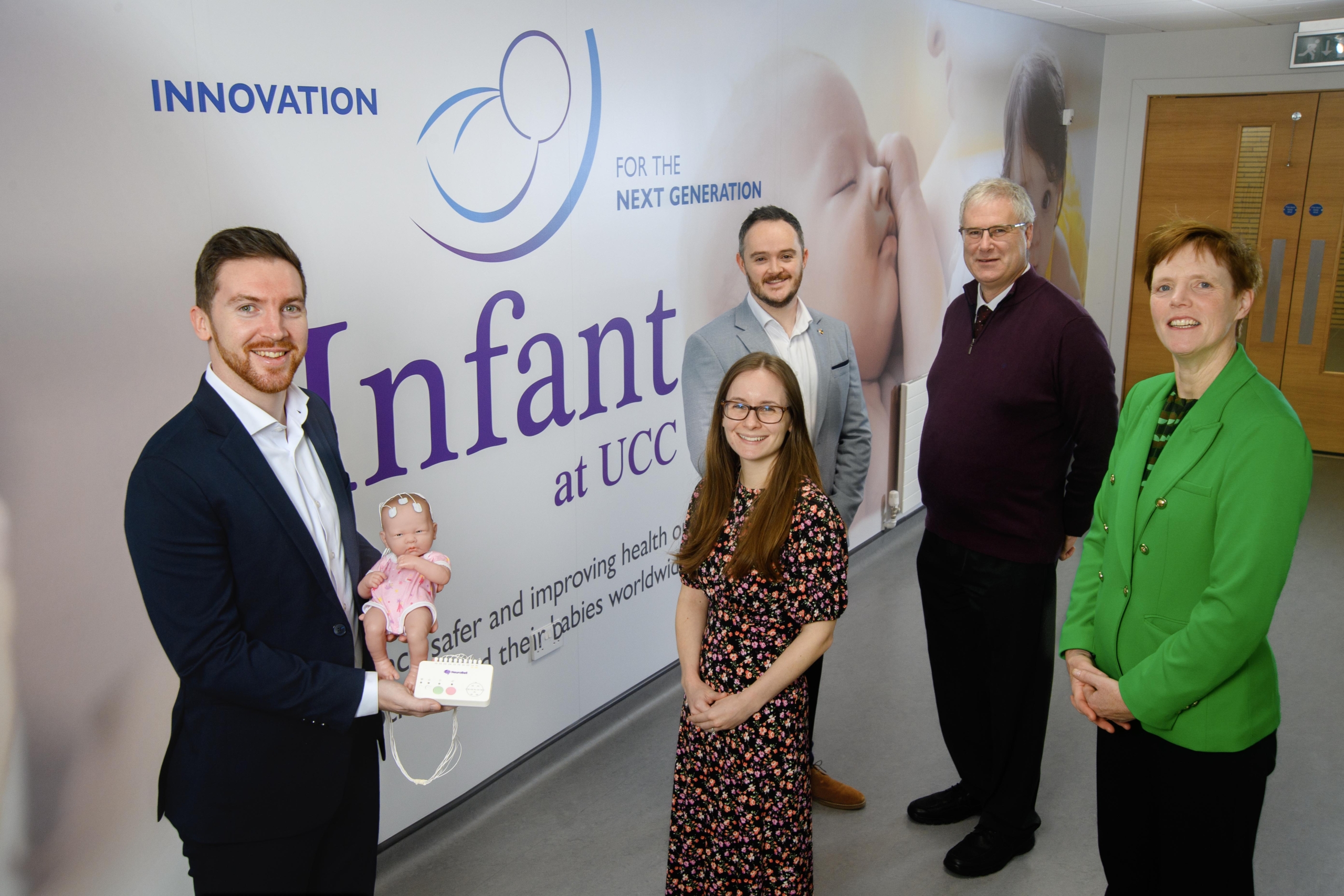
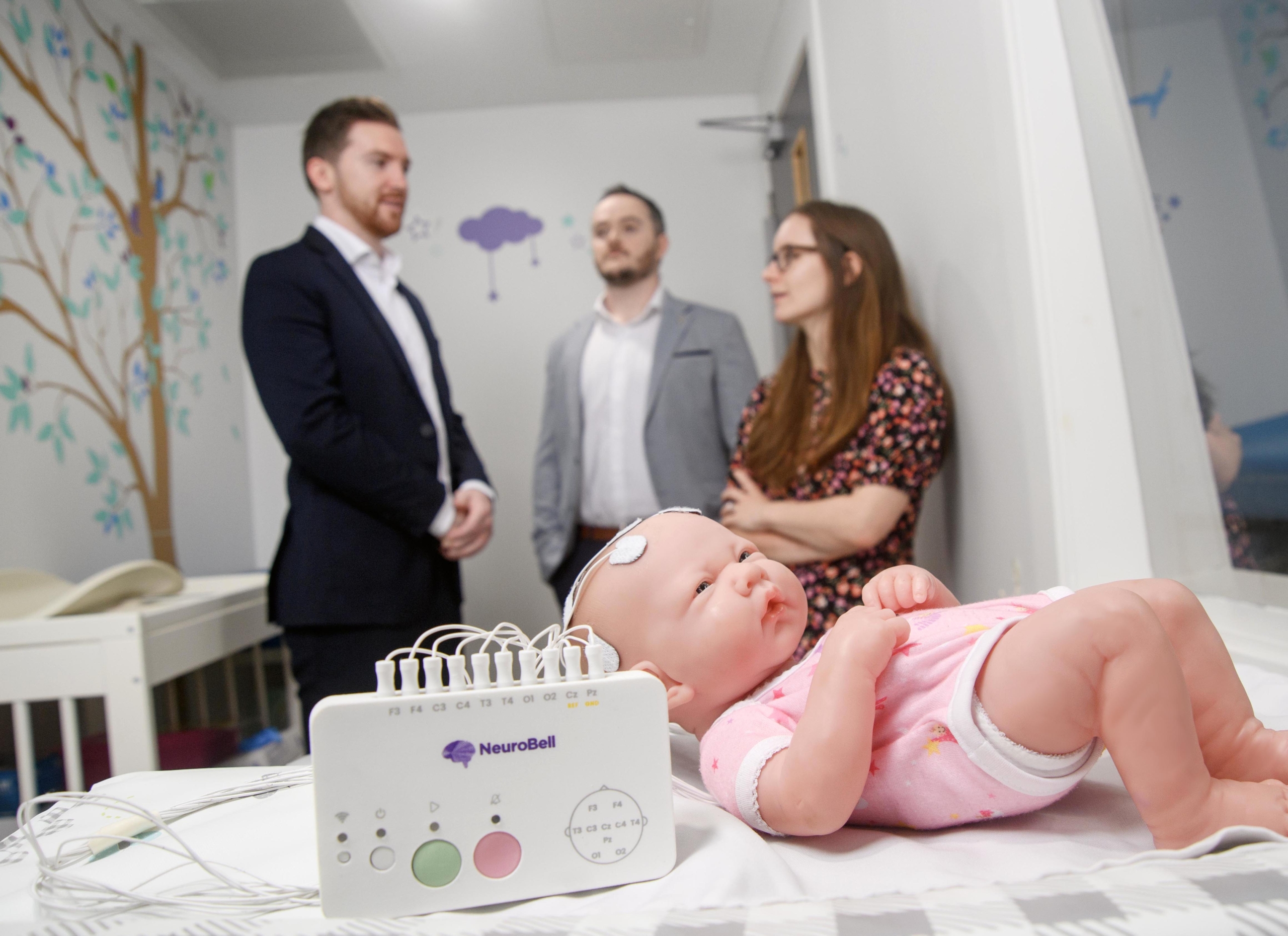
8 January 2024: University College Cork has announced the spin-out of NeuroBell, a Cork-based medtech start-up, as NeuroBell closes a €2.1M investment led by Furthr VC, Atlantic Bridge and HBAN MedTech Syndicate, with Enterprise Ireland and other private investors also investing in the round.

The funding will enable NeuroBell to launch its ground-breaking technology for real-time and accurate detection of seizures in newborns needing additional care, enabling early intervention that can improve outcomes. To support its mission, NeuroBell will create 12 new jobs by 2025.

Founded by Dr Mark O’Sullivan, Dr Alison O’Shea and Colm Murphy, and a spin-out from University College Cork and the Irish Centre for Maternal and Child Health Research (INFANT), NeuroBell aims to address a critical gap in the availability and accuracy of current technologies used to detect seizures in newborns admitted to the neonatal intensive care unit (NICU). Early detection of seizures is crucial for enabling early interventions in infants with brain injury and may help reduce the impact of life-changing conditions such as epilepsy and cerebral palsy.

Currently, continuous electroencephalography (EEG) monitoring is used to monitor newborn brain activity, however, these devices are cumbersome, have limited availability and require specialised training to operate and interpret results. A lack of expertise in this area leads to overlooked and untreated seizures.

Using embedded edge-AI, NeuroBell has developed an easy-to-use, pocket-sized wireless brain monitor which can detect seizures in NICU patients. The technology enables routine monitoring of babies across various hospital settings without the need for specialised expertise. The user-friendly system eliminates the need for extensive training in both configuration and result interpretation.

Supported by the Enterprise Ireland Commercialisation Fund, NeuroBell is now focused on securing FDA approval before launching its device in the US market in 2024, followed by the European market. The funding will enable NeuroBell to develop its product further, carry out additional clinical trials and expand its team. The new roles will be in engineering, quality assurance, and business development. The company expects to begin commercial sales of its medical device in 2025.

NeuroBell estimates that approximately two million newborns worldwide suffer from brain injuries at birth. The company expects its device to have a significant impact on the health outcomes of babies who are receiving additional medical care following a traumatic birth. It could also have a considerable impact on financial burden of claims against the state. In Ireland, catastrophic birth injuries account for the single most costly category of claims for the HSE.1

Dr Mark O’Sullivan Co-founder & CEO, NeuroBell, said: “This funding marks a significant leap forward in advancing our goal to launch the product and get it into the hands of clinicians around the world to help newborn patients. It speaks volumes about our incredible team, who are passionate about using novel technologies to solve this critical medical need. Our solution will improve newborn care, offering gold standard brain monitoring with automated decision support to patients in all settings, including regional and tertiary hospitals.”

Richard Watson, Managing Partner, Furthr VC, said: “We are very excited to be backing NeuroBell as they set out on bringing a truly transformative and ground-breaking neonatal monitoring device to market, which will impact the survival and long-term neurological outcomes of tens of thousands of babies in critical care. We are highly impressed by the founding team and what they have achieved to date in UCC prior to spinning out. They have a very clear regulatory, clinical and commercial plan for launching the product, and I’m really look forward to working closely with them on this journey.”

Conor O’Sullivan, Investment Director, Atlantic Bridge University Fund, said: “Having worked closely with NeuroBell’s management team, Enterprise Ireland and UCC Innovation during the company’s Commercialisation Fund we have seen the significant technical and commercial progress made by Mark, Alison and Colm. Atlantic Bridge invests in ambitious founders developing deep technology that has the potential to provide solutions to complex problems. We look forward to continuing to work closely with the NeuroBell team over the coming years and leveraging our global platform and network to support the company.” 

Dr Sally Cudmore, Director, UCC Innovation, said: “NeuroBell is a great example of UCC’s ambition to nurture entrepreneurial talent, with Dr O’Sullivan having participated in multiple business support programmes hosted by UCC Innovation including the SPRINT Accelerator and IGNITE start-up incubation programmes. The significant investment that the team has secured is testament to a strong leadership team and innovative technology. As a Limited Partner in the University Fund II managed by Atlantic Bridge, UCC is delighted to see that fund invest in NeuroBell and their mission to develop technology that will have a significant impact on newborns’ brain health.”

Professor Geraldine Boylan, INFANT Director, said: “We are extremely proud of the achievements of the NeuroBell team and congratulate them warmly on this exciting milestone and significant investment. As the INFANT Centre turns 10 years old, NeuroBell clearly demonstrates how years of multi-disciplinary research combining engineering, neuroscience and neonatology can be translated into innovative devices to help identify newborn babies at risk of seizures.”

Photographs: Daragh Mc Sweeney/Provision

UCC medtech NeuroBell announces spin-out with €2.1m funding round – The Irish Times
Newborn brain test awarded €6.7 million funding

By |2025-01-17T09:29:29+00:00November 28th, 2023|

  • Newborn Brain Test awarded €6.7m to develop a platform to detect abnormal brain activity in infants soon after birth. 
  • The technology screens all newborns for signs of brain injury in less than 15 minutes. 
  • Early detection and intervention are critical for improved outcomes and quality of life. 
  • €58.8 million was awarded to 12 new projects under the Disruptive Technology and Innovation Fund. 

A new technology to test newborns for brain injury has been awarded €6.7million in funding from the Disruptive Technology Innovation Fund (DTIF). The major investment will support scientists and engineers to advance brain health monitoring for newborn babies.  

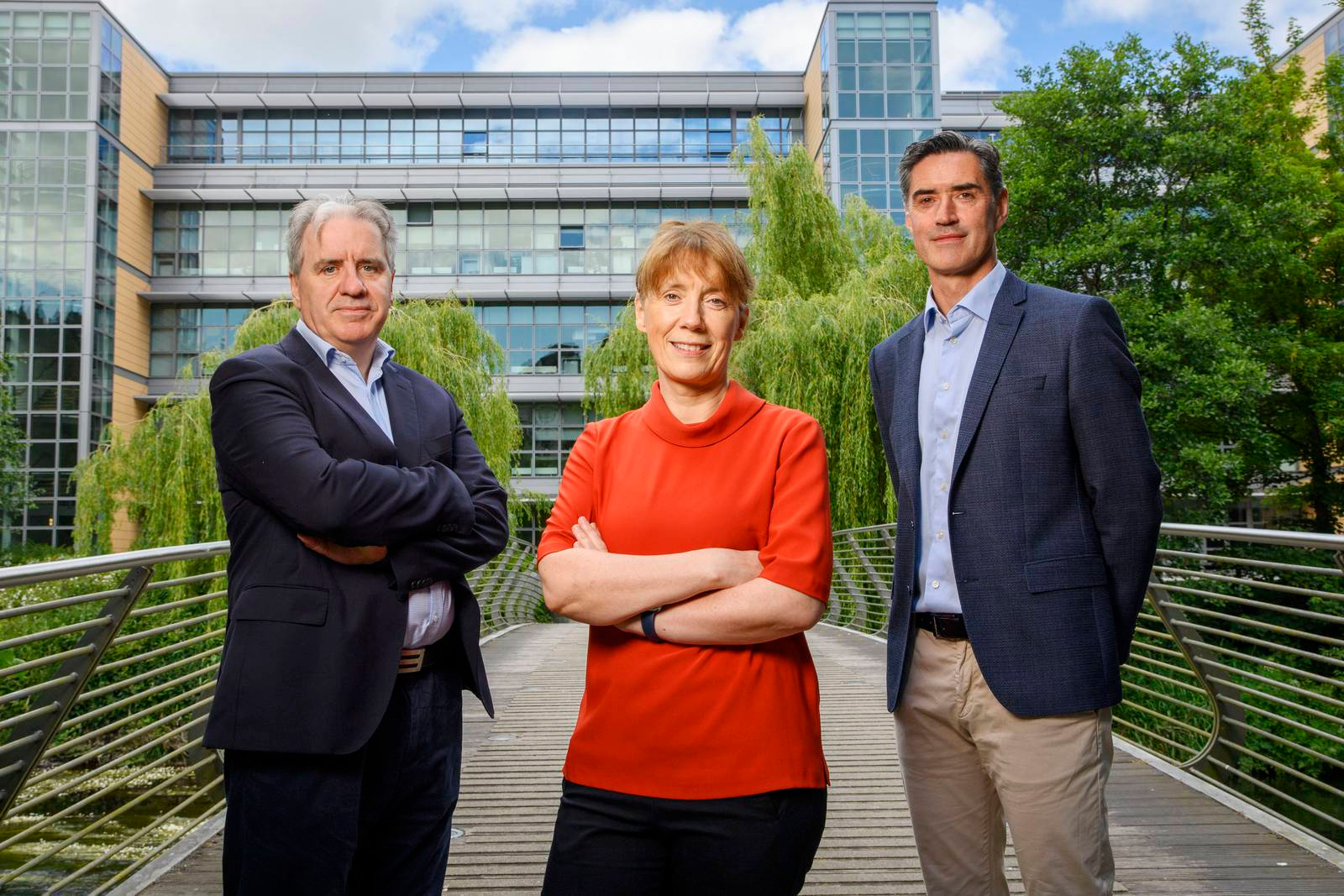
The Irish Centre for Maternal and Child Health Research (INFANT) at University College Cork with UCC spin-out CergenX and Evervault were awarded €6.7million for the Newborn Brain Test (NBT) project which will develop a novel platform to detect abnormal brain activity in infants soon after birth through an automated AI assessment. 

Minister for Enterprise, Trade and Employment, Simon Coveney TD, Minister for Further and Higher Education, Research, Innovation and Science, Simon Harris TD and the Minister of State for Trade Promotion, Digital and Company Regulation, Dara Calleary TD, announced funding of a €58.8 million to 12 new projects under the Disruptive Technology and Innovation Fund (DTIF). 

Screening all newborns for signs of brain injury in less than 15 minutes 

Over 8 million infants are born in Europe and the US each year, with an estimated 41,500 babies born with brain injury. While a newborn may show problems at birth, including difficulty breathing, depressed reflexes, seizures, or a subnormal level of consciousness, brain injuries are frequently clinically invisible and are often left undiagnosed. 

Through a secure, automated AI assessment of 2 channel EEG, the CergenX Wave Device will allow newborns to be tested in less than 15 minutes by non-specialists. The results will alert healthcare professionals on the need for additional review, and potentially onward referral for specialist input, further diagnostic testing, and treatment when necessary. 

Life-changing disruptive technology projects 

Announcing the projects, the Minister for Enterprise, Trade and Employment, Simon Coveney TD said: “I am delighted to announce this significant new funding of almost €60m from the Disruptive Technologies Innovation Fund which underlines our commitment to advancing pioneering technology development in Ireland. The projects are diverse and some are potentially life-changing, such as providing a new minimally invasive and targeted treatment for metastatic lung cancer or using AI to detect abnormal brain activity in infants at birth.” 

“These disruptive projects will also ensure that Ireland’s research and innovation ecosystem is well placed to capitalise on emerging growth sectors while delivering on net zero commitments, decarbonisation and digital transformation, in line with the objectives of the White Paper for Enterprise.”  

This funding means that to date €364 million has been awarded to 103 projects across 6 DTIF Calls. 

Simon Harris, Minister for Further and Higher Education, Research, Innovation and Science said: 

“Impact 2030 positions Ireland to become a leader in research and innovation and a first-choice destination for researchers. The projects emerging from Government investment through this Fund are crucial to the continued growth of Ireland’s research and innovation sector. These collaborative projects are expanding the research agenda and are providing valuable learning opportunities for graduates from home and abroad. This supports us in driving excellence in our higher education institutions and providing a sustainable stream of skilled professionals with the expertise and knowledge needed to create and deliver emerging disruptive technologies.” 

Investing in child health and wellbeing  

Professor Geraldine Boylan, Director of the INFANT Research Centre at UCC, said: “We are thrilled the Newborn Brain Test project has been chosen amongst the 12 DTIF projects. This partnership between INFANT, CergenX and Evervault combines world-class research and industry expertise to develop and deploy disruptive technology to help newborns. A huge thank you to the INFANT team and our partners at Cork University Maternity Hospital who have worked tirelessly over many years to reach this exciting milestone. I would also like to acknowledge the generosity of so many families who have participated in our research to date. This funding is a very welcome large investment in child health research by the Government and is an endorsement of our vision and ambitions for UCC Futures Children.” 

Professor John Cryan, Vice President for Research and Innovation at UCC, welcomed the announcement: “Congratulations to INFANT, UCC spin-out company CergenX and industry partner Evervault Ltd. on receiving €6.7million to develop their technology to detect abnormal brain activity in infants soon after birth. This technology aligns with our ambitious UCC Futures programme in the area of Children, which is soon to be launched. The funding obtained from DTIF plays a key role in supporting the creation of life-changing technologies and securing the future of Ireland’s research and innovation ecosystem.”  

Professor Helen Whelton, Head of College of Medicine and Health, UCC said: “Congratulations to CergenX, spin-out of INFANT, UCC, and their partner Evervault Ltd. Their pioneering technology, that detects abnormal brain activity in newborns, has secured significant DTIF funding. This inspiring research will improve outcomes and quality of life for patients, advancing brain health monitoring for infants. The award highlights the outstanding work at INFANT Research Centre, emphasizing the importance of partnerships in transforming lives through shared expertise and knowledge. 


Photograph: Daragh Mc Sweeney/Provision

Delaying umbilical cord clamping significantly reduces the risk of death in premature babies

By |2023-11-17T15:49:04+00:00November 20th, 2023|

  • INFANT researchers are part of international collaboration highlighting benefits of deferred cord clamping in preterm infants.
  • Waiting for two minutes to clamp the umbilical cord of a premature baby soon after birth could significantly reduce the risk of death relative to immediate clamping.
  • Worldwide almost 13 million babies are born prematurely each year and close to 1 million die shortly after birth.

Waiting for at least two minutes to clamp the umbilical cord of premature babies at birth could decrease the child’s risk of death, two new studies find.

Researchers at the Irish Centre for Maternal and Child Health Research (INFANT) at University College Cork were part of the major international iCOMP collaboration which examined clinical trial data and outcomes of thousands of premature babies across the world.

Two trials conducted at Cork University Maternity Hospital contributed to this database, one of the world’s largest databases in this research field, with over 60 studies and including more than 9,000 babies.

Their findings are published in The Lancet.

The first paper, using data from 3,292 infants across 21 studies, found delayed clamping of the umbilical cord, clamped 30 seconds or more after birth, reduced the risk of death in premature babies compared to those whose umbilical cord was clamped immediately after birth. After analysis, this deferred clamping of the umbilical cord likely reduced the risk of death in premature babies by a third compared to immediate clamping.

The second paper analysed data from 47 clinical trials, which involved 6,094 babies, and compared different durations of delay, compared to immediate clamping or milking the umbilical cord. The authors found that the longer the delay in clamping, the greater the likely benefit. Waiting at least two minutes before clamping the cord of a premature baby may reduce the risk of death by two thirds compared to immediately clamping the cord.

Waiting two or more minutes to clamp the cord had a 91 percent probability of being the best treatment to prevent death shortly after birth. In comparison, immediate clamping had a very low probability (less than 1%) of being the best treatment for preventing death in premature babies.

Professor Eugene Dempsey, Horgan Chair in Neonatology, INFANT Centre UCC, who led the Irish trials said: “Until recently, the standard practice was to clamp the umbilical cord immediately after birth for premature babies. The findings from these reviews highlight the significant benefits of deferred cord clamping for preterm delivery, and it is clear now that except in rare circumstances, immediate clamping should be avoided.”

Director of INFANT Centre, Professor Geraldine Boylan commented on the findings “The high-impact findings published in The Lancet emphasise the importance of global collaborative research and clearly demonstrates the impact of clinical trials on neonatal care and outcomes for premature babies”

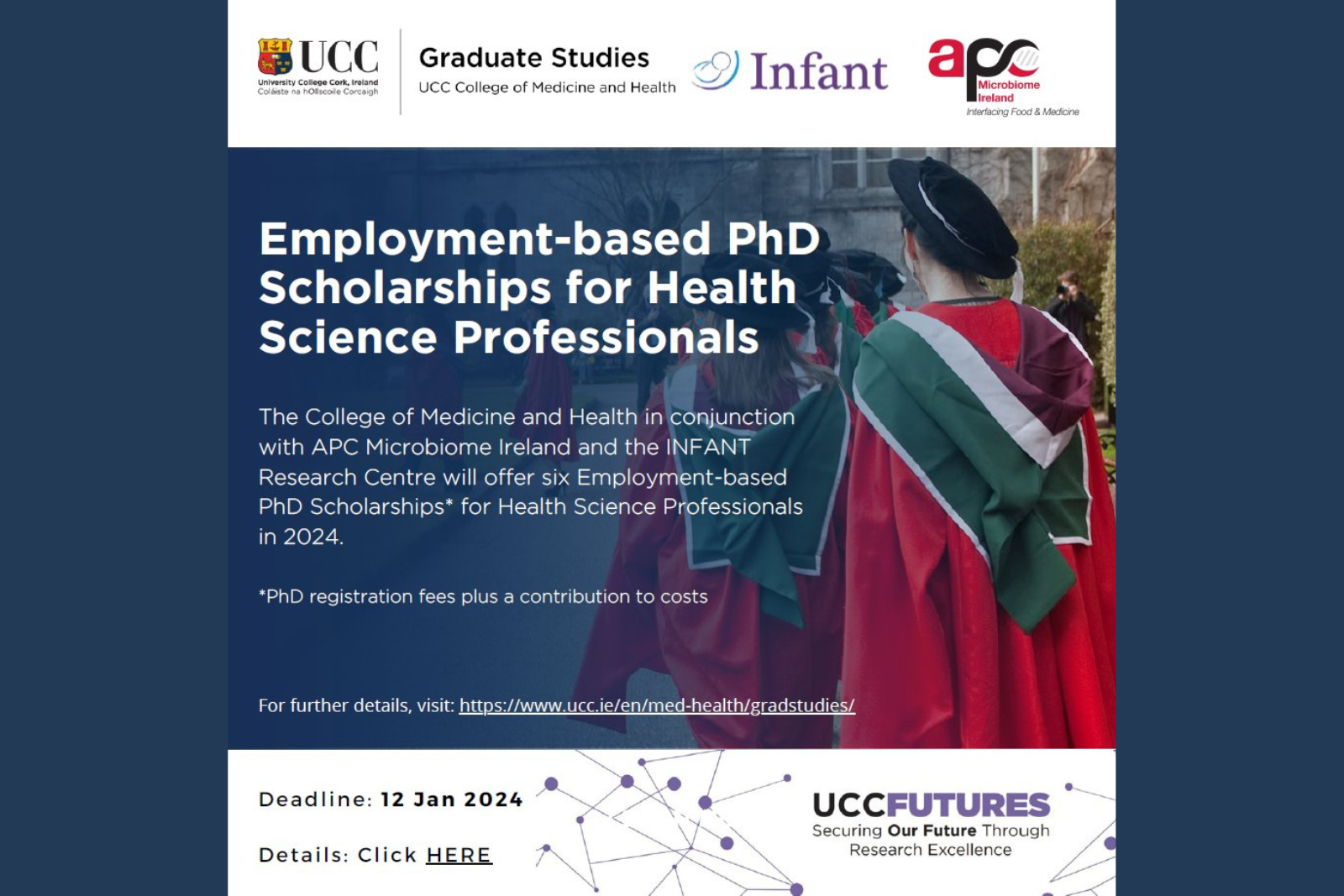
Employment-based PhD Scholarships

By |2023-11-17T11:44:40+00:00November 17th, 2023|

The College of Medicine and Health in conjunction with APC Microbiome Ireland and the INFANT Research Centre will offer six Employment-based PhD Scholarships* for Health Science Professionals in 2024.

*PhD registration fees plus a contribution to costs.

Scholarships under this scheme will be offered in 2024 by the College of Medicine and Health (CoMH), APC Microbiome Ireland, INFANT Research Centre and the Discipline of Medical Imaging and Radiation Therapy at University College Cork (UCC).

Deadline: 12 Jan 2024

In line with UCC’s Strategic Plan 2023-2028, and the Missions of Graduate Studies in CoMH, the remit of the Employment-based PhD Scholarships Programme for Health Science Professionals is to enhance and sustain excellence in graduate education in healthcare and health sciences, to deepen collaboration between researchers, clinicians, and industry partners, to increase PhD enrolment numbers and to develop pathways to widen access to programmes.

Projects will align with the United Nations Sustainable Development Goals, and will be anchored in or across one of the four primary UCC Futures research themes in CoMH: Food Microbiome and Heath, Children, Ageing and Brain Science, Medicines. The Scholarship Programme is open to those who are in full-time or part-time employment, who are excited by research and have a strong desire to enhance health research.

Six scholarships will be offered on a competitive basis.

  • Scholarships will fund annual PhD registration fees PLUS €5,000 per annum if full time or €2,500 per annum if part time for associated research costs, over a maximum of 4 years (full-time) or 6 years (part-time).
  • Three scholarships are sponsored by the College of Medicine and Health
  • One scholarship is sponsored by the APC Microbiome Ireland
  • One scholarship is sponsored by the INFANT Research Centre
  • One scholarship is sponsored by the Discipline of Medical Imaging and Radiation Therapy
  • The PhD candidate will remain a salaried employee and will concurrently register as a PhD student at UCC for the duration of the PhD project1.

Full details including eligibility, selection, how to apply, key dates and contact information are available in Guidelines – Employment-based PhD Scholarships 2024.

Please apply for this scholarship by completing the following application form.

Application Form Employment based PhD 2024


Key Dates for 2024

  • Deadline for Applications to

gradschoolmh@ucc.ie 

12th January 2024


  • Call Outcome
Mid-February 2024
  • Scholarship Start date
April 2024 or July 2024

General enquiries about the scholarships may be directed to Professor Yvonne Nolan, Vice Dean of Graduate Studies, College of Medicine and Health, at gradschoolmh@ucc.ie

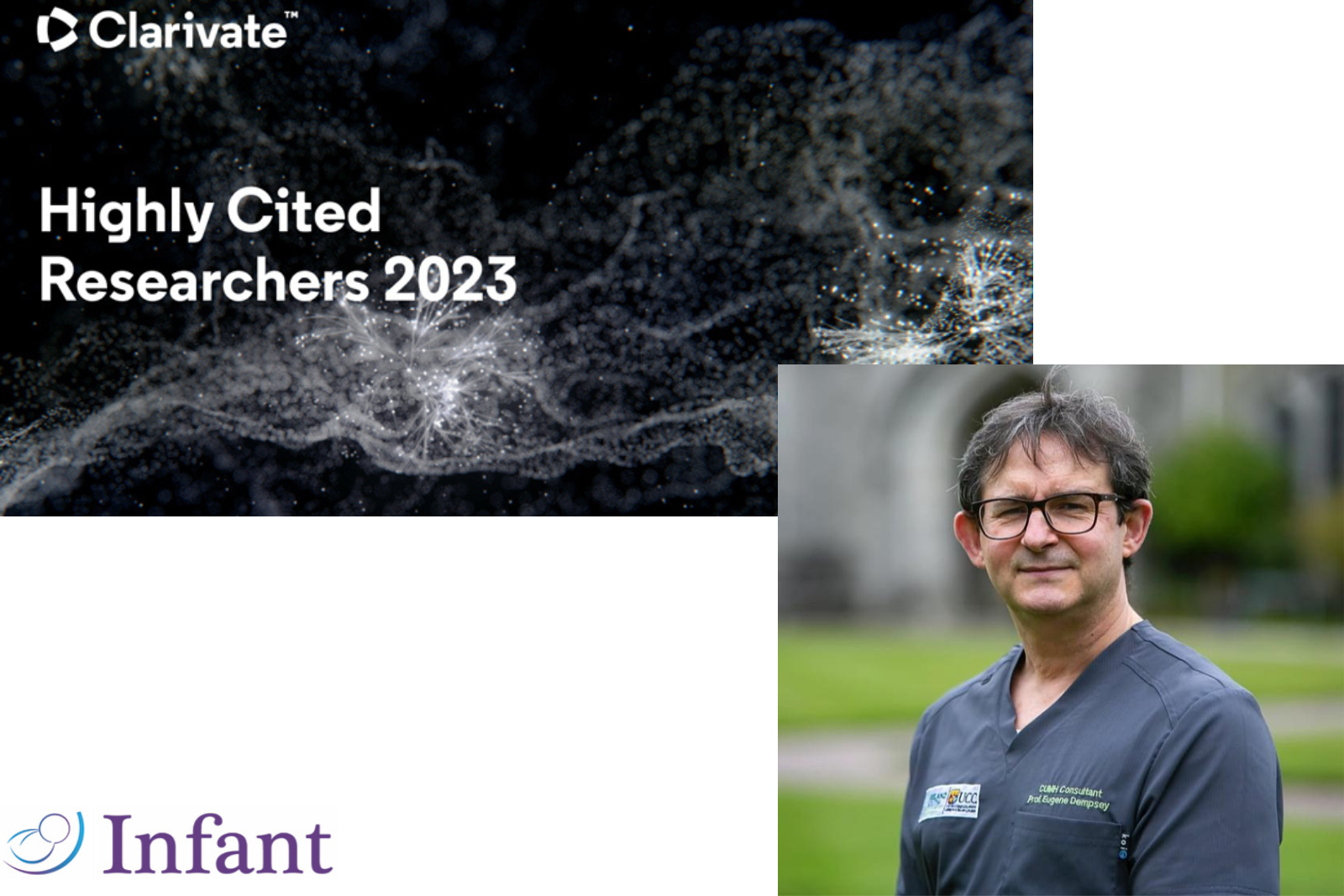
Prof Dempsey featured in the Highly Cited Researchers 2023 list from Clarivate

By |2023-11-15T09:53:47+00:00November 15th, 2023|

UCC researchers make global list of high cited elite science list

13 University College Cork (UCC) researchers are featured today in the Highly Cited Researchers 2023 list from Clarivate, including Prof Eugene Dempsey, Horgan Chair in Neonatology, INFANT Centre,  UCC.

The annual list features the researchers in the top 1% of the Web of Science citation index and recognises pioneers in their field whose citation records position them in the very highest strata of research influence and impact.

238 researchers globally have been named in two fields, including UCC’s Professor Paul Ross, Professor John Cryan and Professor Timothy Dinan from APC Microbiome Ireland, a Science Foundation Ireland (SFI) Research Centre based in University College Cork.

The global list features 7,125 researchers from 67 countries and regions this year – 3,793 in specific fields and 3,332 for cross-field impact. UCC researchers were recognised as global leaders in fields such as food, health, medicine, neonatology, neuroscience, psychiatry and psychology.

Full Name Category
Professor Paul Ross Agricultural Science, and Microbiology
Professor Eugene Dempsey Cross-Field
Professor Eamonn Quigley Cross-Field
Professor Paul Cotter Cross-Field
Professor Anthony Ryan Cross-Field
Professor Fergus Shanahan Cross-Field
Professor Colin Hill Microbiology
Professor Paul O’Toole Microbiology
Professor Douwe van Sinderen Microbiology
Professor Jens Walter Microbiology
Professor Gerard Clarke Neuroscience and Behaviour
Professor John Cryan Neuroscience and Behaviour, and Psychiatry and Psychology
Professor Timothy Dinan Neuroscience and Behaviour, and Psychiatry and Psychology


David Pendlebury, Head of Research Analysis at the Institute for Scientific Information at Clarivate said: “The Highly Cited Researchers list identifies and celebrates exceptional individual researchers at University College Cork whose significant and broad influence in their fields translates to impact in their research community and innovations that make the world healthier, more sustainable and more secure. Their contributions resonate far beyond their individual achievements, strengthening the foundation of excellence and innovation in research.”

UCC President Professor John O’Halloran said: “Congratulations to the 13 researchers of excellence who have today been listed among the world’s most influential researchers. This latest recognition is an endorsement of the exceptional quality of research at UCC and the contribution that these colleagues are making to the generation of new knowledge. This underpins UCC’s distinctive research reputation, strengthening both research and academic excellence, as we advance our UCC Futures thematic areas, and we can move forward with confidence knowing that we have excellent researchers pursuing excellence in research.”

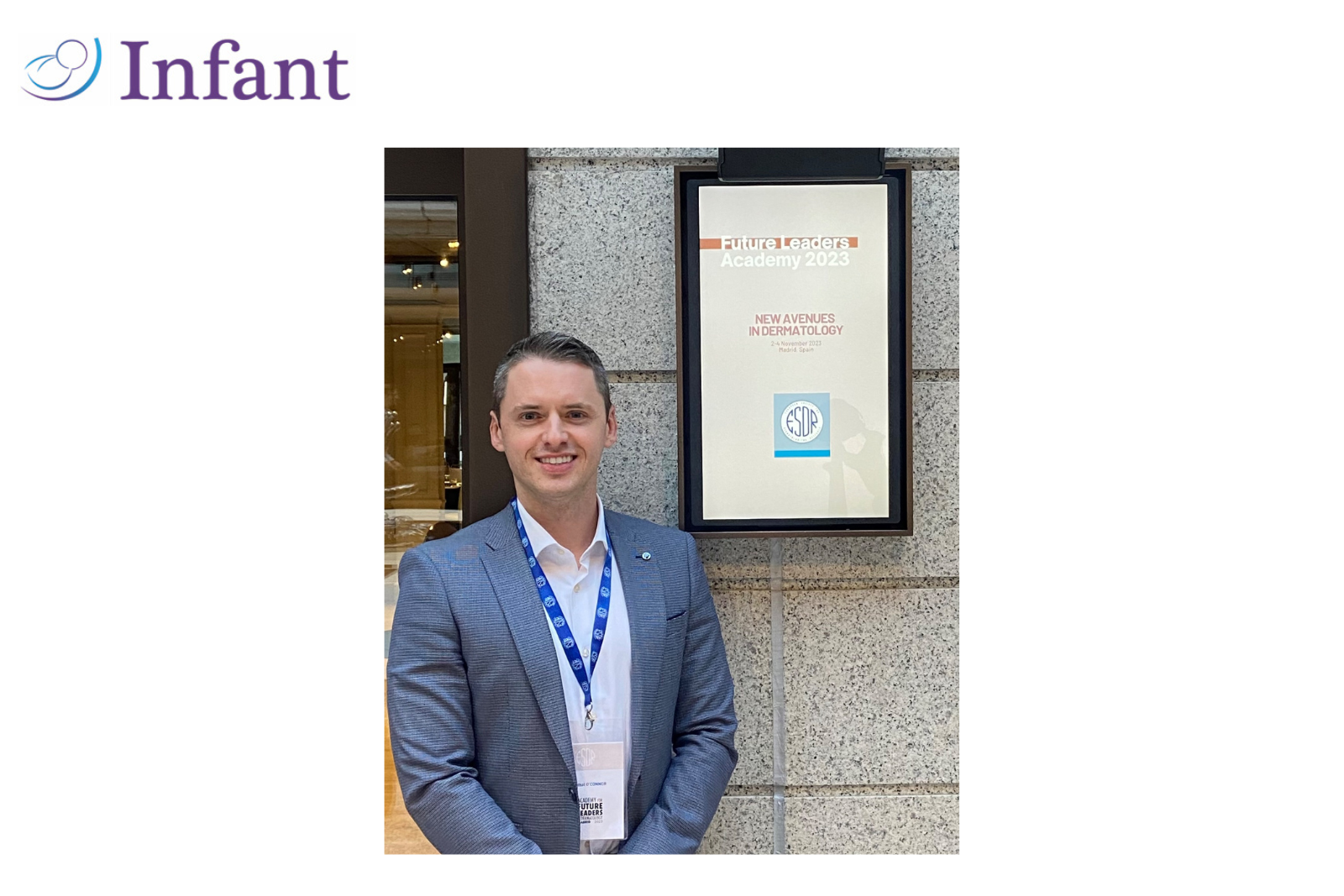
Dr Cathal O’Connor Awarded European Leader Prize in Madrid

By |2023-11-15T09:32:49+00:00November 15th, 2023|

Dr Cathal O’Connor, INFANT PhD student and specialist registrar in dermatology at the South Infirmary Victoria University Hospital, was presented with the Future Leader Award of the European Society for Dermatological Research at the recent academy in Madrid, Spain.

Dr O’Connor presented findings from his PhD study – the ‘assessing sleep in infants with atopic dermatitis’ (SPINDLE) study which was performed in the INFANT research centre in University College Cork.  Dr O’Connor performed detailed research on sleep and neurophysiology in young babies with severe eczema. He said ‘our novel findings will be used to increase awareness of the neurological complications of early-onset eczema and the impact on families of babies with eczema’.

The ESDR Future Leaders Academy brings together highly gifted young scientists and renowned senior scientists from dermatological departments all over Europe and beyond for a three day meeting. The goal of this initiative is to encourage excellent young dermatologists to further pursue their academic careers through guidance and mentoring of established scientists in the field.

Dr O’Connor is currently completing his dual specialist training in both dermatology and paediatrics in Cork, before taking up a post as senior clinical fellow in a leading European paediatric dermatology centre. His PhD degree with University College Cork was undertaken as part of the prestigious Irish Clinical and Academic Training programme.

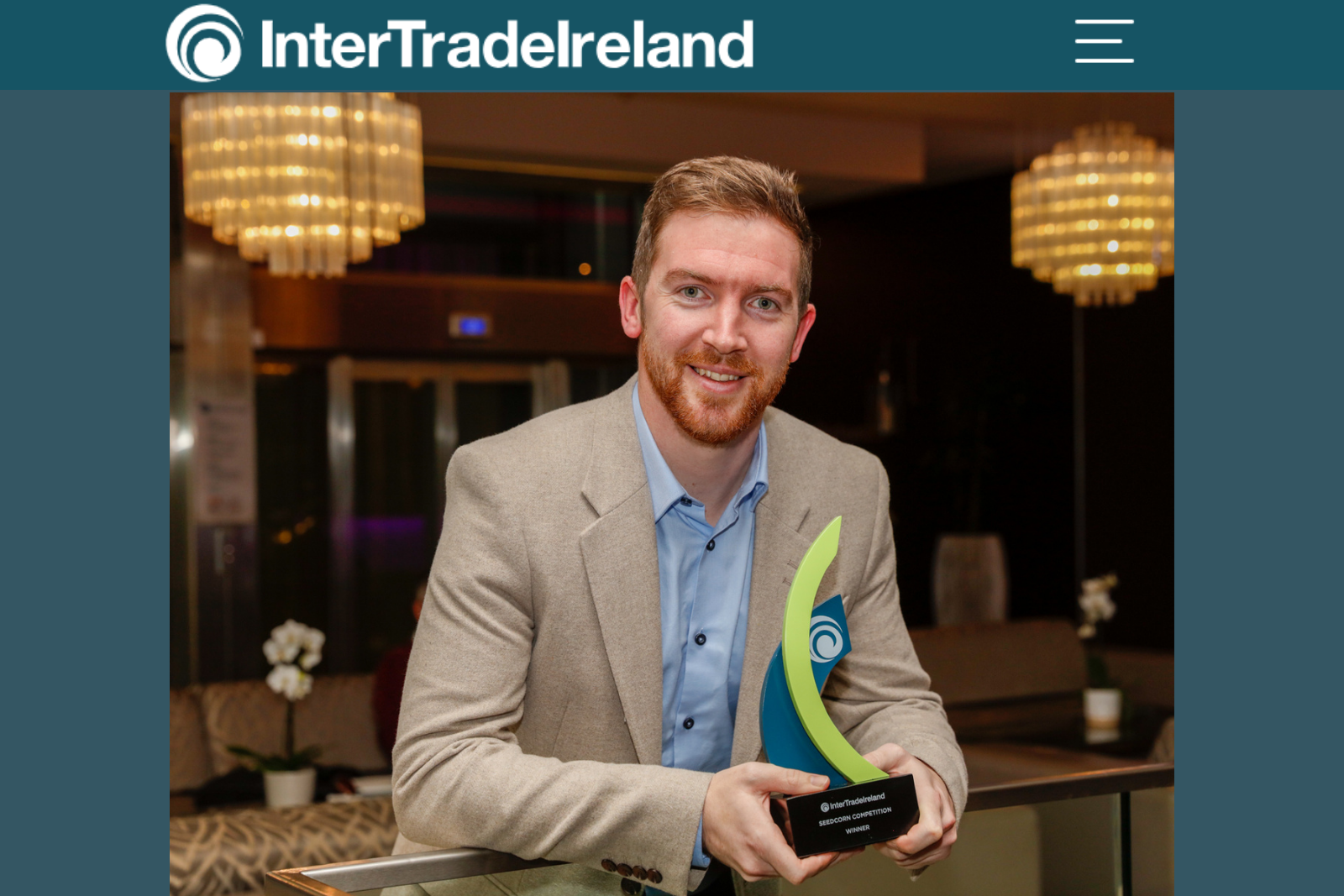
INFANT Lead Investigator Wins InterTradeIreland Award

By |2023-10-20T15:33:57+01:00October 20th, 2023|

Dr. Mark O’Sullivan, INFANT Lead Investigator and co-founder of NeuroBell, was awarded the “Best Early Stage” Munster regional trophy at the InterTradeIreland Seedcorn Investor Readiness Munster regional final. The winners were awarded €20,000 and will advance to the All-Island final in Dublin on the 9th of November. The InterTradeIreland Seedcorn Investor Readiness Competition is the largest business competition of its kind on the island of Ireland, Seedcorn has an overall prize fund of €300,000. NeuroBell has developed a novel medical device for early detection and monitoring of seizures in newborn infants. Dr. Mark O’Sullivan, Chief Executive of NeuroBell said:

“It is absolutely fantastic to win this award and it will greatly help us in progressing our plans for the business. The prize money will assist our research and development work to make our product globally scalable. As we are in the process of raising Seed Round investment with a view to launching in the US and across Europe, the competition has provided a great opportunity to refine and get feedback on our business plan.”

The leaders of the six innovative start-up and early-stage companies from across Munster took part in a competitive final on 17th October at the Strand Hotel, Limerick. As part of the process, finalists presented their investment proposal to a panel of judges that included active investors.

The winning entrants successfully demonstrated to the panel of judges why they believe their businesses are investor ready. The regional winners in Munster will have the opportunity to compete for the overall €100,000 prize at the final. Shane O’Hanlon, Funding for Growth Manager at InterTradeIreland said:

This year’s Munster regional final was a very competitive process across the ‘Best New Start’ and ‘Best Early Stage’ categories. Both categories had three very innovative and ambitious entrants that showcased their business plans in a professional and engaging manner. Year-on-year the InterTradeIreland Seedcorn competition attracts start-up and early-stage companies that are entrepreneurial in their approach. Mavarick and Neurobell, impressed the judges with their vision and future business plans. On behalf of all of us at InterTradeIreland, I wish both companies the best of luck at the All-Island final on the 9th of November.

For start-ups and early-stage businesses, the InterTradeIreland Seedcorn Investor-Readiness Competition provides a platform to demonstrate why these companies believe they are ‘investor ready’ and open to a funding injection. As part of the Munster regional final, companies pitched their business plan to a panel of industry judges that included Alison Currie (InterTradeIreland), Andrew O’Neill (ACT Venture Capital), Brendan Boland (Loci Orthopaedics) and Gavin Pitcher (CKS Finance). The process mirrored a real-life investment process, and each finalist has received expert feedback on its business plan and pitch, as well as increased exposure to investors.

For the third consecutive year, an additional €20,000 prize will be awarded for best investment proposal from a company operating in the low carbon/green sector.

For all the latest information on Seedcorn visit: www.intertradeireland.com/seedcorn

Source: Mavarick and Neurobell Announced as Winners of InterTradeIreland’s Seedcorn Munster Final| InterTradeIreland

Launch of Ireland’s National Preterm SPN Study

By |2023-10-20T14:21:23+01:00October 20th, 2023|

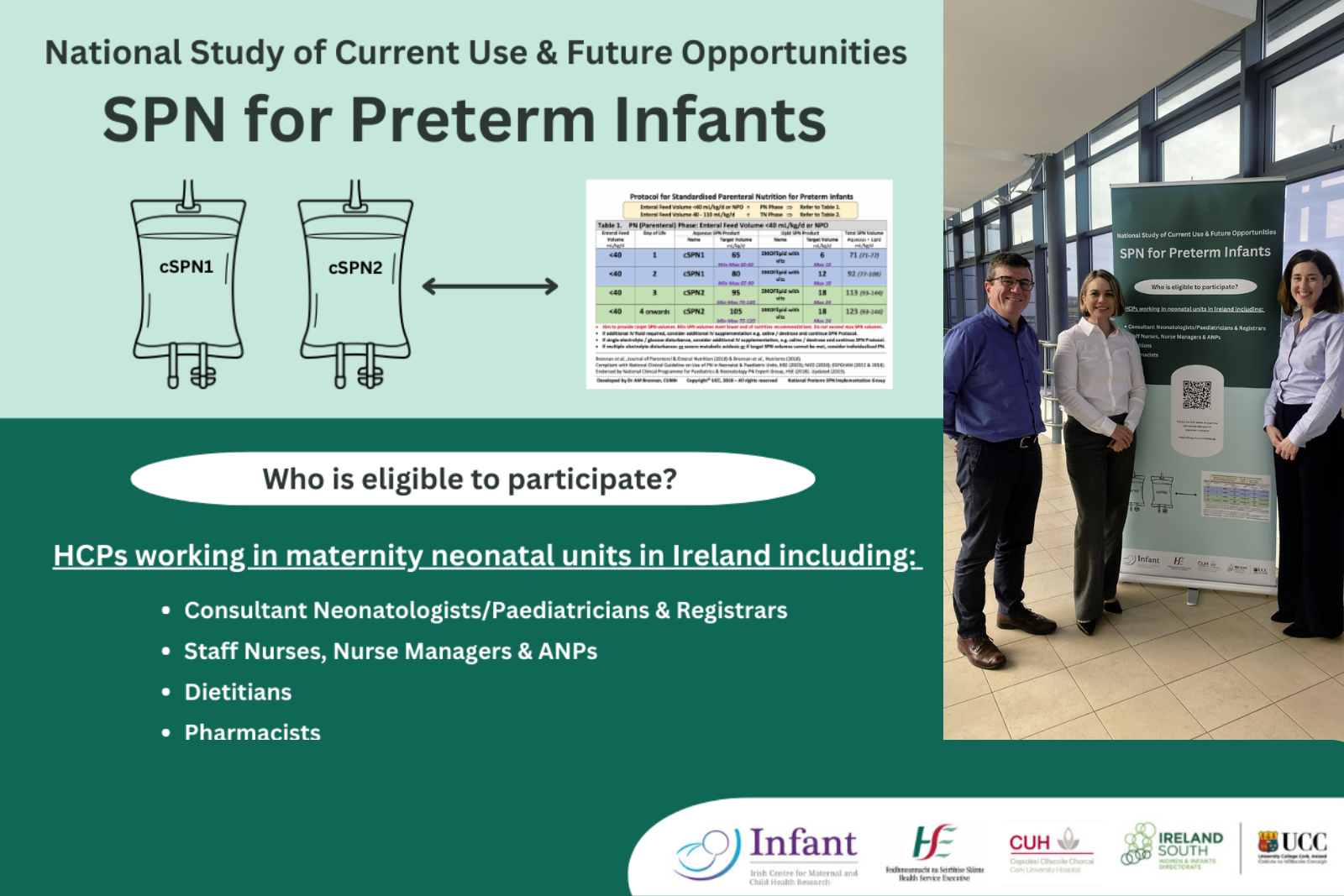
The National Standardised Parenteral Nutrition (SPN) Study was launched on Friday 6th October at the RCPI Faculty of Paediatrics Autumn Conference. 

  • What is the National SPN Study? 

Irish neonatal units have recently implemented a new National Model of Care for Preterm Standardised Parenteral Nutrition (SPN). This is a two-part nutrition system including SPN products and an accompanying protocol. This transdisciplinary study including national survey and interviews will evaluate the current use and future opportunities of the new Model of Care, to continue to improve the nutrition and outcomes of preterm infants in our care.

This study is endorsed by the Health Service Executive National Parenteral Nutrition Expert Group.

  • Who is it for? 

Healthcare Professionals who work with preterm SPN in maternity neonatal units in Ireland. This includes Consultant Neonatologists, Paediatricians and Registrars, Staff Nurses, Nurse Managers and Advanced Nursed Practitioners, Dietitians and Pharmacists.

  • Who’s involved – research team 

This study is being conducted by a transdisciplinary team including Professor Eugene Dempsey,  Consultant Neonatologist & Horgan Chair & INFANT PI, Dr Ann-Marie Brennan, Clinical Specialist Neonatal Dietician, Dr Brendan Murphy, Consultant Neonatologist, Sarah Fenton, Neonatal Pharmacist, Professor Ciara Heavin, Professor of Information Systems, Dr Aileen Murphy, Senior Health Economist, Dr Aoife Fleming, Senior Pharmacy Lecturer.

  • How to find out more info?

Please contact your local neonatal dietitian if you like to get involved and complete the online anonymous survey. If you would like more information about the study, please contact Sarah Fenton sarah.fenton@ucc.ie or Dr. Ann-Marie Brennan ann-marie.brennan@ucc.ie

  • Quotes of support

Dr Anne Doolan (Consultant Neonatologist, Coombe Hospital): ‘Irish research has produced the SPN protocol. It adheres to ESPHGAN guidelines, has provided consistency and directly improved care of tiny babies in Ireland. This study is essential to provide data on how clinicians are using the protocol.’

Roberta McCarty (Dietitian Manager, Neonatology, The National Maternity Hospital): ‘This study will provide the first national data on how clinicians are using the SPN protocol for babies born preterm, which is so important to support our efforts to improve patient care.’ 

INFANT Appoints new Principal Investigator

By |2023-10-19T09:35:09+01:00October 19th, 2023|

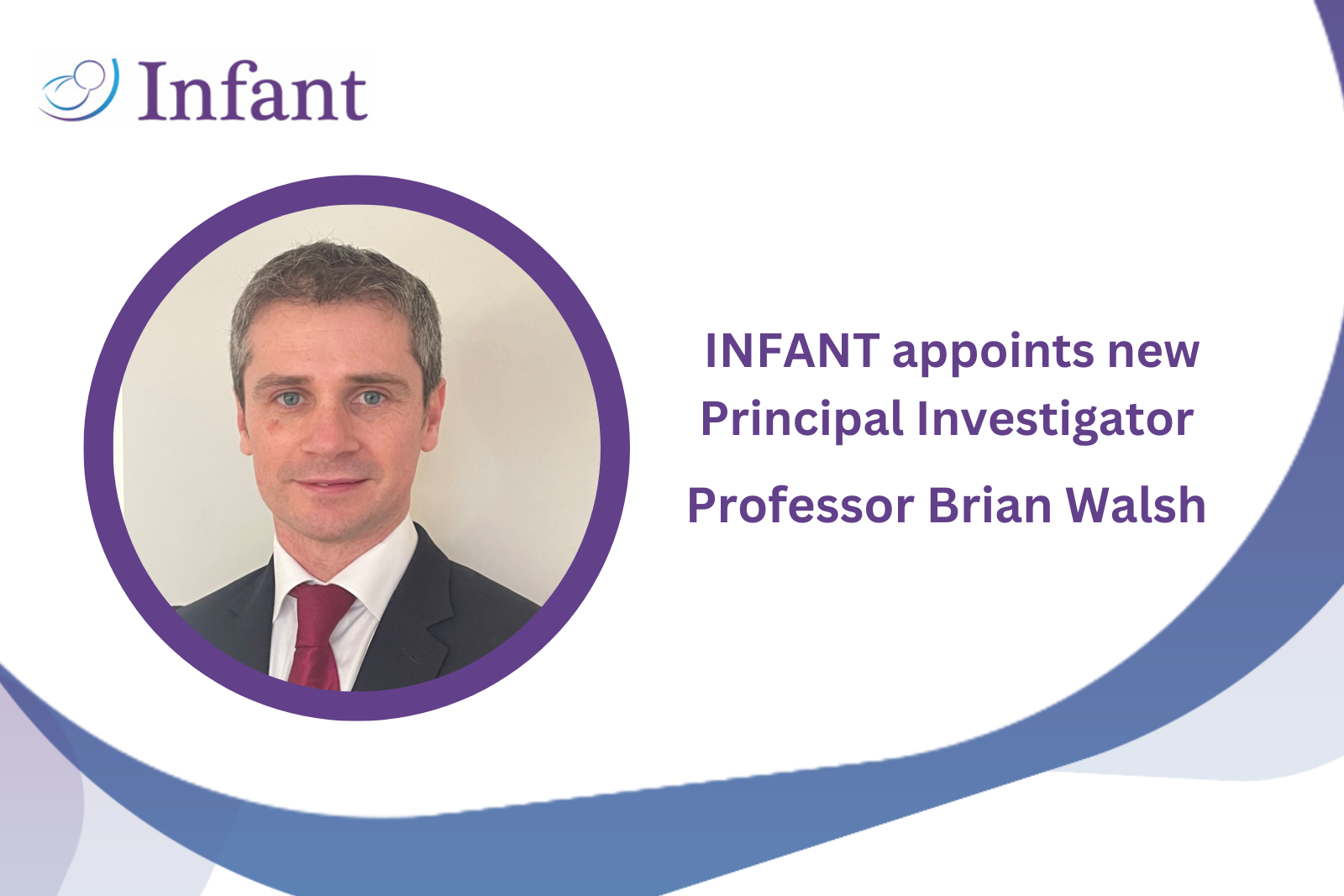
INFANT Research Centre are delighted to announce the appointment of Professor Brian Walsh to INFANT Principal Investigator. Prof Walsh is a Consultant Neonatologist in Cork University Maternity Hospital, Lead Investigator at INFANT and Associate Professor in Neonatology, Department of Paediatrics & Child Health, UCC.

Brian’s research focuses on newborns at high risk of cerebral injury. In particular, he has studied different methods for the early identification of brain injury, and in optimizing neuro-protection strategies, to hopefully improve their outcomes.

INFANT Director, Prof Geraldine Boylan welcomes the appointment “I am delighted to welcome Brian to the leadership team of INFANT, recognising his exceptional expertise and outstanding contributions to neonatal brain research. Brian’s leadership will further strengthen our position to be at the international forefront of innovative and impactful research in maternal and child health”

Prof Walsh graduated from Trinity College Dublin in 2004. He was awarded a Molecular Medicine Ireland Clinician Scientist Fellowship in 2009, and studied the ability for early blood biological markers to determine the severity of Hypoxic Ischaemic Encephalopathy in newborns. He was awarded his PhD for this work by UCC in 2014. From 2013 to 2017, he completed his neonatal training in Boston, working first as a Fellow, and then Chief Fellow, on the Harvard Neonatal Perinatal Fellowship Program. Following the fellowship, he became an Attending Neonatologist in the Brigham and Women’s Hospital in Boston, with an academic appointment to Harvard Medical School, before returning to Cork.

Brian joined INFANT as a Lead Investigator in 2021 and continues to work on furthering the ability to accurately identify newborns at high risk of brain injury, and to improve their outcomes.

He is currently leading the Early Detection of Cerebral Palsy(CP) in Ireland project. This is a collaborative multi-site project currently being conducted across all tertiary neonatal units in Ireland, with plans for further expansion. The project is using implementation science methods to introduce a standardised evidence-based approach to the assessment of children who are born at increased risk of CP. The aim of the project is to reduce the age at which CP is diagnosed among these children. Brian is also the Site lead on the international multi-centre Coolprime study. This is a comparative effectiveness trial aimed at providing evidence on the impact and safety of therapeutic hypothermia among newborns with mild encephalopathy.

Prof Walsh is looking forward to his new role, ‘The INFANT centre has a tremendous track record in advancing neonatal and paediatric research, leading to real world benefits for children. I’m very excited to be taking on a new role as Principal Investigator in INFANT and helping to further advance this important work.’

INFANT PI, Professor Deirdre Murray announced as Chair in Early Brain Injury and Cerebral Palsy

By |2023-10-05T16:23:47+01:00October 6th, 2023|

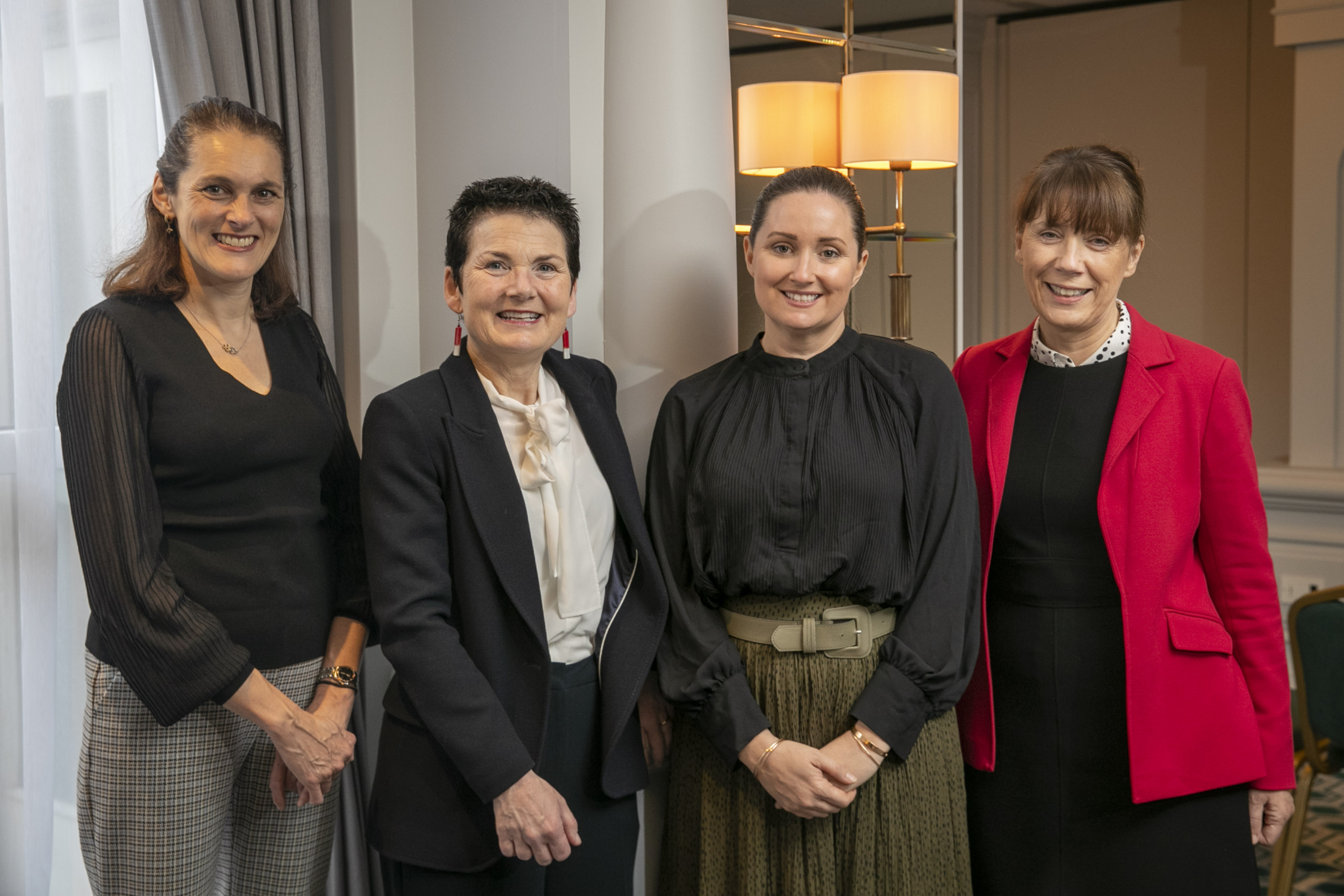
Friday, 6 October 2023:  Today on World Cerebral Palsy Day, University College Cork (UCC) has announced the appointment of Professor Deirdre Murray as the new Chair in Early Brain Injury and Cerebral Palsy, as part of a new programme of excellence to revolutionise the delivery of cerebral palsy care in Ireland.

In May, the Cerebral Palsy Foundation (CPF) announced that UCC as one of three new clinical and research hubs to help establish Ireland as an international leader in Cerebral Palsy (CP) care and research.

As part of the programme, CPF is investing €1.6 million to advance research in early brain injury and cerebral palsy at the Irish Centre for Maternal and Child Health Research (INFANT), UCC.

A UCC alumnus, Professor Murray graduated from UCC in 1995 before completing paediatric training in Paediatric Intensive Care Medicine in Bristol Royal Hospital for Sick Children, and later working as a Paediatric Intensive care Fellow in the Royal Children’s Hospital, Melbourne. In 2012 she was awarded a prestigious Health Research Board Clinician Scientist Award for the BiHiVE study, an ongoing project focusing on the discovery and validation of biomarkers in neonatal brain injury.

A Consultant Paediatrician, Paediatric Research Lead at INFANT and Professor of Paediatrics, in UCC’s Department of Paediatrics and Child Health, Deirdre’s research is focused on early brain injury and the development of new ways to predict and assess neurocognitive outcome in children.

Rachel Byrne, Executive Director of the Cerebral Palsy Foundation, said: “We established the CP Programme of Excellence to vastly improve the care provided to people with cerebral palsy in Ireland; from childhood right through to adulthood. We know that the correct interventions at an early age can have a huge impact on the lifespan of people living with cerebral palsy. Professor Murray will lead incredibly important research on early brain injury that will inform how we treat and support children with cerebral palsy and ensure they have the best possible outcomes.”

Professor Geraldine Boylan, Director of INFANT, said: “Congratulations to Professor Deirdre Murray on her well-deserved appointment as Chair in Early Brain Injury and Cerebral Palsy at UCC.  Professor Murray’s expertise in this important leadership role will allow us to focus our early brain injury research on early detection and interventions for cerebral palsy.   We are immensely grateful to the Cerebral Palsy Foundation for this strategic funding which also highlights our growing partnership and joint commitment to effect positive change for people with cerebral palsy.”

Professor Deirdre Murray said: “I am very honoured to assume the role of Chair in Early Brain Injury and Cerebral Palsy. This signifies an important step forward and I am committed to leading our research efforts at INFANT in partnership with the Cerebral Palsy Foundation, to make Ireland a leading country for research into early brain injury and more importantly to improve health outcomes for children with cerebral palsy and their families.”

Currently the most common lifelong physical disability acquired during childhood, cerebral palsy is diagnosed in approximately 150 children each year in Ireland. Early diagnosis in babies can lead to much better outcomes. The Cerebral Palsy Foundation’s partnership with UCC will enable researchers at INFANT to generate critical knowledge that will transform outcomes for children with Cerebral Palsy and their families.

Professor John F. Cryan, UCC Vice-President for Research and Innovation said: “Congratulations to Professor Deirdre Murray on her appointment as the new Chair in Early Brain Injury and Cerebral Palsy, and sincere thanks to the Cerebral Palsy Foundation for their continued partnership with UCC. In the coming months, we will launch UCC Futures – Children and UCC Futures – Ageing and Brain Science, and Professor Murray’s research expertise in early brain injury and cerebral palsy will be very important in these two areas of research prioritisation at UCC.”

Professor Helen Whelton, Head of College of Medicine and Health, UCC said: “Congratulations to Professor Deirdre Murray and INFANT Research Centre, UCC for the excellent work being done by our clinicians and researchers to help revolutionise cerebral palsy care in Ireland which will improve health outcomes and so change the trajectory of people’s lives.”

The creation of this new Chair at UCC in Early Brain Injury and Cerebral Palsy will build on an existing collaboration between the Cerebral Palsy Foundation and the INFANT Centre on the ‘Early Detection and Intervention for Cerebral Palsy in Ireland’ study. This is a national, multi-centre cohort study led by INFANT and coordinated by In4kids, the HRB Irish Network for Children’s Clinical Trials.

Go to Top