INFANT Designed Brain Injury Detection Device Secures Enterprise Ireland funding

By |2022-02-23T12:23:35+00:00February 23rd, 2022|

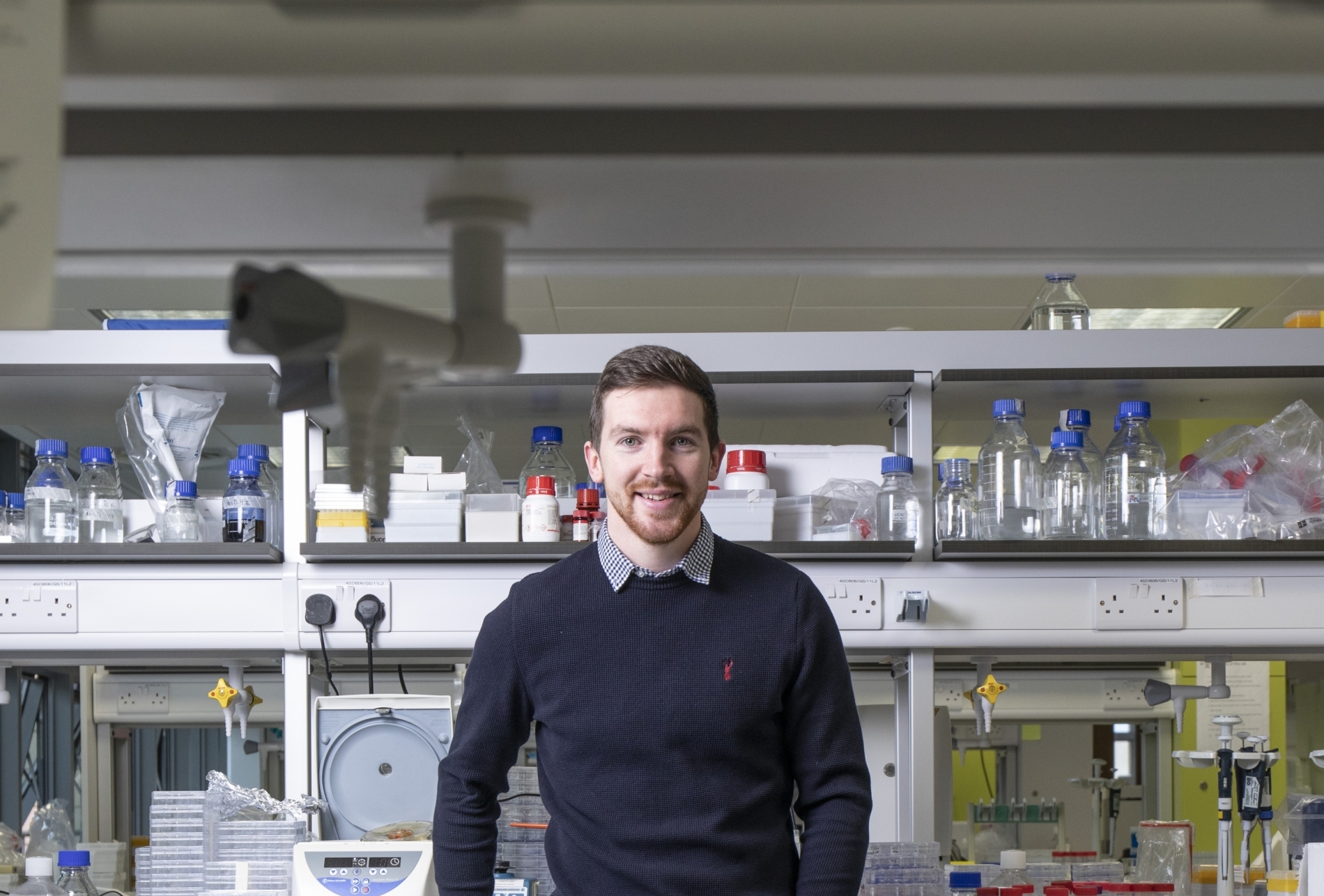
A research team led by University College Cork’s (UCC) Dr Mark O’Sullivan in the INFANT Research Centre has been awarded funding by Enterprise Ireland to commercialise a medical device that could transform how clinicians are able to detect newborn brain injuries.

Presently, brain injuries in newborns account for 23% of all infant deaths and over one million cases of permanent disability each year. Seizures are often the most common diagnostic indication of brain injury. However, accurate diagnosis requires complex equipment and expertise which is not readily available.

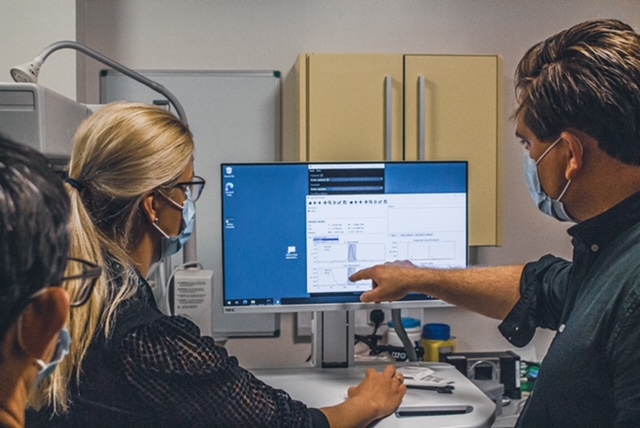
The pocket-sized device, which is being developed by the Neurobell team at UCC’s INFANT Research Centre, will allow clinicians to rapidly diagnose potential brain injuries in newborns without requiring the specialised medical expertise needed to configure and manage complex EEG machines.

Dr O’Sullivan, a lead investigator with INFANT, believes that the novel device could potentially be deployed across all hospital settings, ensuring that clinicians could make rapid decisions using its AI-based decision support.

Although EEG is the gold standard for neurological monitoring, they are large complex machines that require specialised personnel to configure the equipment and interpret the hours of resulting EEG information.

This often restricts the use of EEG monitoring to tertiary hospitals, and even in such locations, the expertise is not readily available for EEG to be used routinely without significant delays.

We are building a portable and wireless device that can both record the EEG and provide AI-based detection of seizures.

This will provide clinicians with real time alerts and data, allowing them to quickly diagnose and treat potential brain injuries.

Currently at the prototype stage, the Enterprise Ireland Commercialisation Fund, which is co-funded by the European Regional Development Fund (ERDF), will allow the Neurobell project team to execute on their plans to finalise the design of the medical device this year and to complete a clinical investigation in 2023. The 2 years of funding will be used to hire key engineering, clinical, and commercial personnel and to engage with industry partners. Following the Enterprise Ireland Commercialisation funding, the team plan to establish a spin-out company to bring their novel technology to market.

The device builds on the AI-based research, recently recognised at the AI Awards Ireland, conducted at the INFANT Research Centre and combines multi-disciplinary expertise across medicine, computer science, and engineering.

Once complete, the device could result in positive health outcomes for a significant number of babies born in hospitals that don’t have access to EEG machines and expertise.

The cot side technology that we’re building is designed to allow for the neurological monitoring of newborns, across all hospital settings, helping those in need to be diagnosed and treated in a timely manner.

By developing a portable monitor with on-board decision support, we’re aiming to increase the number of hospitals capable of providing EEG monitoring for high-risk newborns.

The Enterprise Ireland funding underscores INFANT’s ambition to constantly strive and innovate in maternal and child healthcare, an area where there is huge potential and great clinical need according to INFANT Director, Prof Geraldine Boylan.

This technology will be disruptive and provide access for many more hospitals to brain monitoring, without the need for expert training or costly equipment. The potential for translation to low resource settings, where the burden of brain injury is highest is ground-breaking.

Since the inception of the Neurobell project, Dr. O’Sullivan has been supported by UCC Innovation through the GatewayUCC Sprint Accelerator programme and the IGNITE Business Innovation Centre.

INFANT Researchers Contribute to International Newborn Brain Conference

By |2022-02-15T09:50:35+00:00February 15th, 2022|

Professor Geraldine Boylan and Professor Deirdre Murray, alongside Ph.D candidates Minoo Ashoori and Dr Aisling Garvey, presented INFANT’s cutting edge research in areas such as neonatal sleep and neonatal encephalopathy at the International Newborn Brain Conference.

The annual International Newborn Brain Conference sees a host of acclaimed researchers from leading North American and European institutions explore new ways of understanding, monitoring, protecting and treating the newborn brain.

Now in its 13th year, the conference provides continuing medical education to multidisciplinary professionals working to improve the neurological and developmental health outcomes of premature and high-risk newborns.

The prestigious conference took place between February 9-12 and saw both Professor Boylan and Professor Murray included among the list of globally renowned invited speakers.

Both Professor Boylan and Professor Murray were also members of the organising committee for the conference, they moderated panels and presentations, took part in debates and presented papers at what was a hugely engaging and incredibly successful conference.

Learn more about the International Newborn Brain Conference.

INFANT Seminar Series: Dr Kirsten Dowling to Discuss Predictive Biomarkers for Autism Spectrum Disorder: A Metabolomics Profiling Study in the Cork BASELINE Birth Cohort

By |2022-02-09T15:45:36+00:00February 9th, 2022|

Autism Spectrum Disorder (ASD) is a neurological, developmental disorder that affects communication and behaviour. Currently, there is a lack of understanding about the aetiology of ASD and children are not diagnosed reliably until they are at least 3 to 4 years of age. Henceforth, there is an urgent need for the identification of diagnostic biomarkers for the prediction of ASD. 

Metabolomic profiling was undertaken on cord blood plasma from ASD cases vs gender matched controls from the Cork BASELINE Birth Cohort using Liquid chromatography-tandem mass spectrometry.

Clinical data (maternal and child BMI, birth weight, gestational age, health and lifestyle etc.) were combined with metabolite peaks to explore machine learning (ML) algorithms: t-test, partial least squares-determinant analysis (PLS-DA) and random forest (RF).

We profiled 2612 compounds and 18 clinical variables to identify the top predictive metabolite and clinical features for the development of ASD.  RF feature selection resulted in the highest performing 20 metabolite subset, and pathway analysis revealed significant alterations in 5 metabolic pathways.

Dr Kirsten Dowling will deliver her presentation on Friday, February 11 at 12 pm.

INFANT PhD Profile: Dr Emily O’Connor’s Work to Standardise The Way Reviews of Perinatal Deaths Occur

By |2022-02-09T14:42:18+00:00February 9th, 2022|

Dr Emily O’Connor is pursuing a PhD in the area of perinatal medicine with INFANT and NPEC at UCC. Her background includes previous work as a Specialist Registrar in obstetrics and gynaecology with the Royal College of Physicians in Ireland (RCPI).  

Emily is extremely passionate about improving our maternity and perinatal services as well as improving the experience of parents who use those services.  

Emily’s planned thesis is titled: Structured Evaluation and Implementation of a National Perinatal Mortality Review Tool for Ireland.  Her research is funded by Féileacáin, the Stillbirth and Neonatal Death Association of Ireland.  

Perinatal deaths encompass babies who die before they are born (stillbirth), during labour or delivery (intrapartum death) or after birth (neonatal death). The Irish perinatal mortality rate has remained stable over the last ten years but has not decreased over this period.  

Emily’s work aims to standardise the way reviews of perinatal deaths occur by developing and implementing a national perinatal mortality audit tool for all perinatal deaths occurring in every maternity unit across Ireland.   

A major focus of this work is the involvement of bereaved parents in the review process. The aim of this research is to offer a more inclusive, transparent process for parents who have experienced the loss of their baby.  

Emily is conducting this research with the Pregnancy Loss Research Group based at INFANT and the NPEC. Her supervisors are Professor Keelin O’Donoghue (INFANT), Professor Richard Greene (NPEC) and Dr Sara Leitao (NPEC).  


INFANT Researchers Assess Novel Optical System to Monitor Lung Function in Babies

By |2022-01-20T10:55:09+00:00January 19th, 2022|

Researchers at University College Cork’s INFANT Centre recently commenced a study of a new non-invasive optical device that may provide real-time information on the lung function of newborn babies.

By using light-emitting technology, this novel system incorporates sensors placed on a baby’s chest to detect oxygen levels in different regions of the baby’s lungs.

‘This system has the potential to significantly alter the way we monitor babies in the neonatal intensive care unit, especially preterm infants and term babies on mechanical ventilation’, according to Professor Eugene Dempsey, the Horgan Chair in Neonatology at UCC, Clinical Lead for Neonatal Research and Principal Investigator with the INFANT Research Centre. ‘Not only can we potentially monitor them more closely in real-time, but we can reduce X-ray exposure and limit blood tests being performed’ he added.

One month old, Elodie Fitton, was the first baby to take part in the study after her parents, Cora Shorten and Kieran Fitton, were approached to take part in the project called NIOMI (Non-Invasive lung Oxygen Monitoring of Infants).

‘We agreed to have Elodie take part as the first baby in this study. We believe as parents this study could help many of those sick and vulnerable babies in a situation where they need more care and monitoring’.

‘As this was a non-invasive study it made sense for Elodie and us to be able to give help by letting them monitor her for 30 minutes using light sensors. It’s great to see this research take place in our hospitals and Colleges to give the medical professionals the information they may need to treat these young infants’.

The technology called GASMAS or Gas in Scattering Media Absorption Spectroscopy, is based on diode laser measurements of oxygen content inside the lungs of babies. This study, which will be the first of its kind, is based on a sophisticated measurement scheme to enable measurements despite the high scattering of light in tissue.

In collaboration with the Biophotonics team at IPIC – the SFI Research Centre for Photonics hosted at Tyndall National Institute, and GPX Medical in Sweden, the INFANT Research Centre recently took delivery of the NEOnatal Lung Analyzer (NEOLA) and have trained staff on how to use it in a hospital setting.

Commenting on the technology, Professor Geraldine Boylan, Director of the INFANT Research Centre and Professor of Neonatal Physiology at UCC, said that “the NEOLA research system is an exciting development with the potential to have a huge impact on how preterm infants are managed in the neonatal intensive care unit in the future.  We have an excellent clinical team at INFANT who embrace innovation and we are delighted to work with Tyndall National Institute and GPX Medical on this breakthrough technology”.

SFI Professor Stefan Andersson-Engels, Head of Biophotonics at Tyndall National Institute and Professor of Physics at UCC, explains “this novel technology is central to our research within the Biophotonics team at IPIC and is now entering the clinical study phase. We are very excited to collaborate in this tri-helix study with clinicians, industry and academia to assess the potential and further advance this technology. It is an excellent example of how multi-disciplinary research supported by Science Foundation Ireland can lead to ground-breaking Medtech innovations that can deliver real societal and economic impact”.

Parents of healthy newborn babies at CUMH will be invited to get involved in the research project called NIOMI (Non-Invasive lung Oxygen Monitoring of Infants). The research study aims to get more insights into this particular technology which has promising potential to benefit sick babies in the future.

Clinical Research Fellow, Jurate Panaviene, INFANT Research Centre

Phone: +353 85 132 4758

Email: jurate.panaviene@ucc.ie

Pregnancy Loss Research Group Secures IRC funding to Enhance the Translation of Pregnancy Loss Research into Policy and Practice

By |2022-01-17T10:32:03+00:00January 17th, 2022|

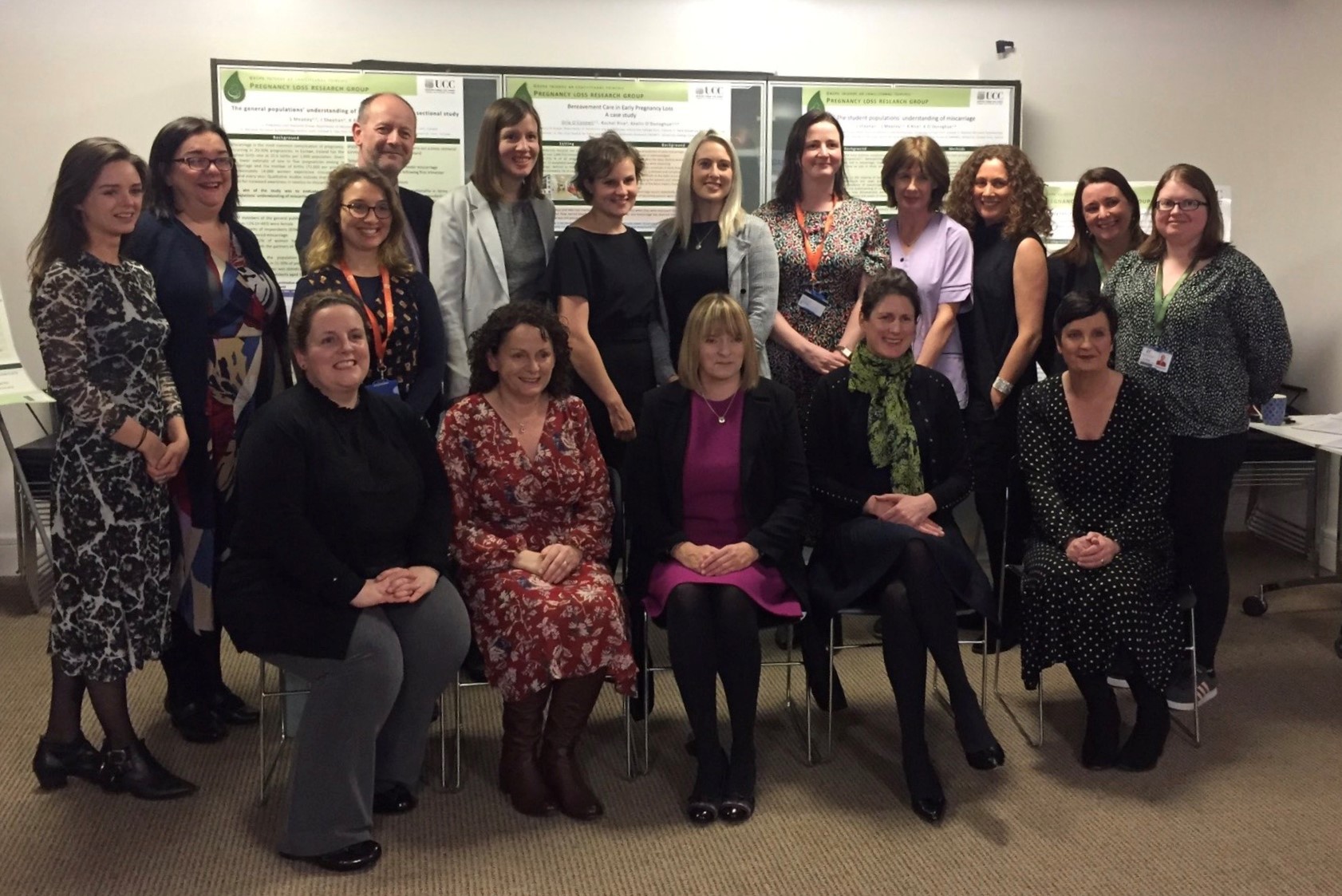
Professor Keelin O’Donoghue, Lead of the Pregnancy Loss Research Group, together with the Irish Hospice Foundation as civic society partner, has been awarded an Irish Research Council New Foundations Award 2021 to enhance the translation of pregnancy loss research into policy and practice through a project titled PLATFORM: Pregnancy Loss knowledge trAnslaTion FOR iMpact.

The project will bring researchers, key civil society partners and other knowledge users – including parent advocates – together to identify barriers and facilitators to knowledge translation, and develop activities and outputs in an effort to address the decades-long lack of progress in implementing change at policy and practice levels. PLATFORM will contribute to enhancing Irish public and policymaker awareness of pregnancy loss, provision of more effective services/supports within the health care system, community sector, and beyond, and influencing policymaking and healthcare funding. The project was developed in part following input from parent advocates on public and patient involvement group for an ongoing research project (RE:CURRENT); they voiced the need for parents to hear about pregnancy loss research that is being undertaken, as often they feel that it is a neglected area.

Announcing the New Foundations 2021 recipients, Director of the Irish Research Council, Peter Brown, said: “In addition to the 55 projects announced today that will collaborate with civic society partners, we are also delighted to renew our ongoing partnerships with government departments and agencies. This form of collaboration provides excellent opportunities for researchers to contribute to evidence-based policymaking, resulting in better outcomes for society and citizens in the face of many national and global challenges”.

The project is funded under Strand 1a: Enhancing Civic Society within a national context, which supports small, discrete collaborative projects between researchers and civic society groups in the community and voluntary sector.

Professor O’ Donoghue is a Consultant Obstetrician and Maternal-Fetal Medicine Sub-Specialist at Cork University Maternity Hospital and is actively engaged in impactful research, teaching and clinical practice. She leads the multi-disciplinary Pregnancy Loss Research Group, which comprises over 30 members, at all career stages.

The Irish Hospice Foundation, the national charity that addresses dying, death and bereavement in Ireland, by promoting awareness and developing programmes in education, research and bereavement services.

The Pregnancy Loss Research Group and the Irish Hospice Foundation have collaborated on several improvement projects to-date, including the implementation of the National Standards for Bereavement Care Following Pregnancy Loss and Perinatal Death. One of the implementation activities involved the development of a national website (www.pregnancyandinfantloss.ie), a repository of information for bereaved parents and healthcare staff about pregnancy and infant loss. They have also worked together on national education programmes for hospital staff.

Follow updates on Twitter (@PregnancyLossIE #PLRG_PLATFORM ) and the PLRG and INFANT websites.

INFANT Seminar Series: Dr Colin Hawkes to Discuss His Research Into Diabetes

By |2022-01-13T10:15:42+00:00January 13th, 2022|

Our INFANT seminars will resume on Friday, January 28th at 12pm. We are delighted to welcome Dr Colin Hawkes, paediatric endocrinologist as our first speaker of the new year.

 Dr. Hawkes will present  Clinical & Academic Synergies in Type 1 Diabetes.

He will discuss a selection of his past and ongoing diabetes research at the Children’s Hospital of Philadelphia and Cork University Hospital, as well as future opportunities.

 We hope you can all join us for what we are sure will be a fantastic talk!

PhD Profile: Cathal Dorgan’s Fascinating Project That Connects Maths and Neuroscience

By |2021-12-16T15:15:08+00:00December 16th, 2021|

An emerging expert in the field of non-linear dynamics, Cathal Dorgan joined INFANT as a PhD researcher in October, bringing with him cutting edge knowledge and ideas.

An ambitious researcher, Cathal aspired to enrol in a postgraduate programme that offered him the opportunity to delve deeper into areas that specifically interested him after completing a Bachelor of Science at University College Cork.

As part of my final year project, I focussed on nonlinear dynamics. It was a field that I became increasingly interested in as I progressed through my undergraduate degree.

So, when I saw how nonlinear dynamics were at the core of the project INFANT were recruiting PhD students for, I jumped at the chance to apply for it.

Thankfully, I was successful in my application and received the opportunity to begin working at INFANT in October.

Studying under the supervision of Professor Sebastian Wieczorek, Cathal will be working on an SFI Frontiers for the Future project that is developing decision support tools for newborn brain protection at INFANT.

Specifically, Cathal will be applying mathematical techniques, models and theories so that the project team can accurately depict the behaviour of the neonatal brain.

Using various mathematical techniques like tipping point theory, transitions and bifurcation theory, we hope to model instabilities in the neonatal brain.

At the moment, I’m learning more about the mathematical theories that we’re planning to employ and the neurosciences that are at the heart of the project.

Ultimately, we want to identify abnormalities so that we can create a system that can predict seizures.

Curious by nature, Cathal is embracing the challenge of learning about neurosciences and breaking into an unfamiliar discipline.

Helped by the team of researchers that Professor Liam Marnane and Dr Gordon Lightbody have assembled to undertake the project, Cathal is already picking up on the nuances and intricacies associated with neurosciences.

Even though I’m only two months into the project, I’m already seeing how neuroscience and maths can interact and overlap.

There are five PhD students working on the project and we’re all working toward a solution from different angles. It’s hugely collaborative and really fascinating.

The multidisciplinary insights that Cathal is already gaining from the project are broadening his horizons and inspiring him to look at the possibility of working in a career that straddles industry and academia after he graduates.

PhD Profile: Georgios Papanikolaou Explains How He’s leveraging Mathematical Systems to Identify Seizures in Infants

By |2021-12-09T16:10:59+00:00December 9th, 2021|

A PhD researcher with an eye for identifying the synergies that connect industry and academia, Georgios Papanikolaou comes to INFANT to work on an SFI Frontiers for the Future project to develop new AI models to predict seizures in the neonatal brain.

Working under the supervision of Professor Geraldine Boylan, Professor Liam Marnane and Professor Sebastian Wieczorek, Georgios is looking to combine mathematical systems, such as machine learning, system and control theory and tipping point theory, with real seizure data to develop models to foresee and identify the onset of seizures and develop strategies to reduce them in premature babies.

We already have programmes that can detect seizures, but what we want to do is to build a model that can predict them.

We want to identify specific readings from EEG and ECG signals so that we’re able to recognise the hallmarks of a seizure so that we can create an algorithm that can accurately identify and predict them.

Our first step is to precisely map a seizure and create a model that can identify one, then we’ll start working backwards to try and identify key indicators.

If we can do that, then we can start building a machine learning model.

Georgios will lean on his experience of applying mathematical theory across diverse industries during the project.

After graduating from Aristotle University of Thessaloniki with an MSc in Theoretical Computer Science and System and Control Theory, Georgios worked as a researcher with United Technologies Research Centre in Cork.

There, he worked on a project linked to the aerospace industry, focussing primarily on requirement formalisation so that data from key processes could be tested and maintained.

The programme that Georgios and his colleagues developed earned them a publication titled “ReForm: A Tool for Rapid Requirements Formalization”.

I’m really interested in applying knowledge across multiple industries and disciplines.

That’s what really excited me about this project. I understood how the knowledge that I had developed at United Technologies Research Centre could be applied in INFANT.

You can see how mathematical theories can be applied across multiple fields. Watching these ideas flow from one industry to the next is fascinating and the results only add to our knowledge.

In this sense, Georgios will not just contribute knowledge to INFANT, he also brings a passion for developing tangible solutions to research problems, enabling him to overcome any problems or challenges that he may encounter.

INFANT Seminar Series: Dr Andrea Bowe and Dr Roberto Chioma To Present Their Research Plans

By |2021-12-06T10:39:55+00:00December 6th, 2021|

The final INFANT seminar series before Christmas will take place this Friday at 12 noon. Two of our new research fellows will present their research plans.

Dr. Andrea Bowe, an ICAT fellow will be discussing her PhD ‘Predicting Cognitive Outcomes In Childhood – Exploring the Role for Machine Learning’.

Dr. Roberto Chioma, a visiting Italian clinical fellow, will be discussing the early echocardiographic assessment of transitional hemodynamics.

We hope as many of you can attend and welcome our new INFANT members.

Go to Top