PhD Profile: Georgios Papanikolaou Explains How He’s leveraging Mathematical Systems to Identify Seizures in Infants

By |2021-12-09T16:10:59+00:00December 9th, 2021|

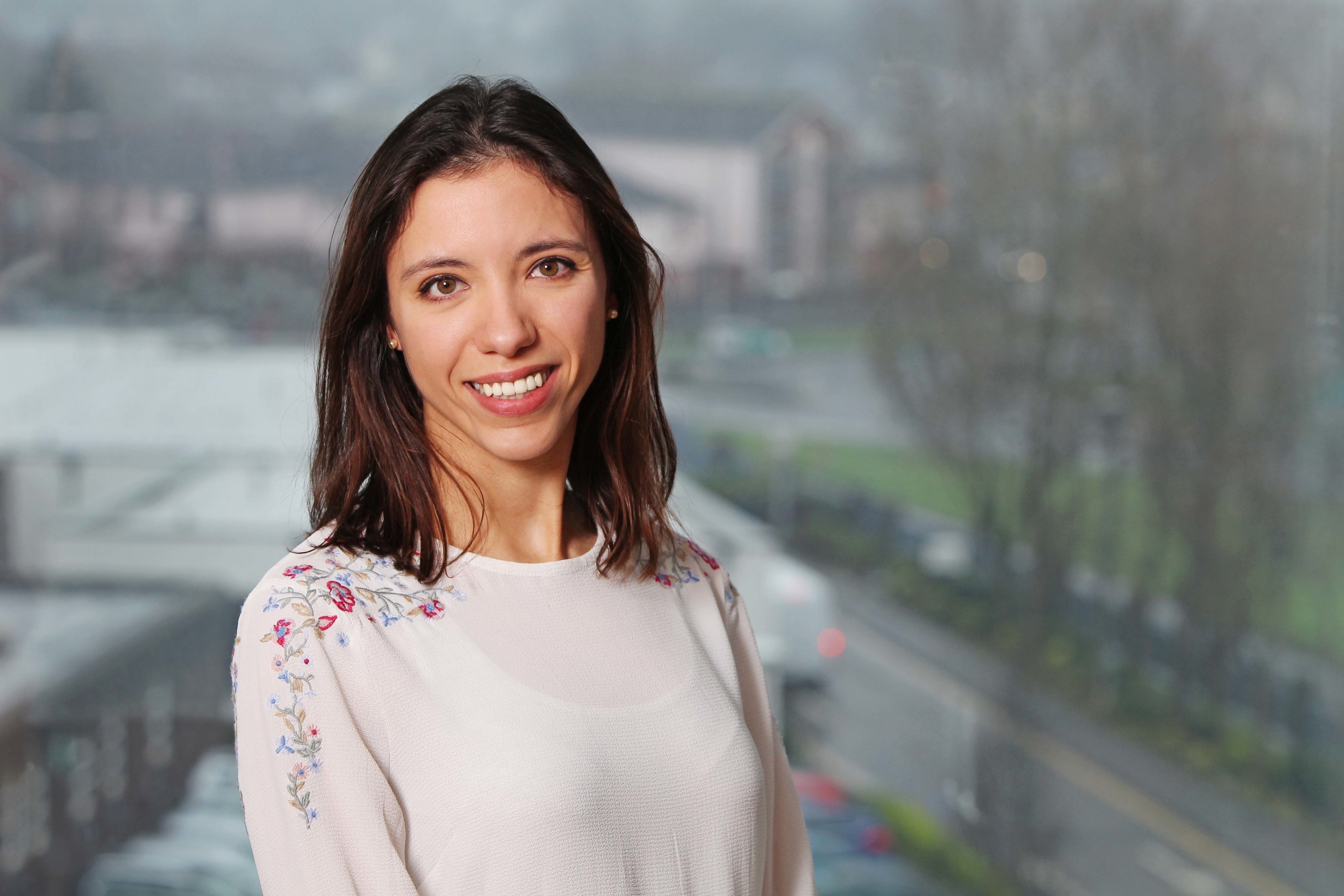
A PhD researcher with an eye for identifying the synergies that connect industry and academia, Georgios Papanikolaou comes to INFANT to work on an SFI Frontiers for the Future project to develop new AI models to predict seizures in the neonatal brain.

Working under the supervision of Professor Geraldine Boylan, Professor Liam Marnane and Professor Sebastian Wieczorek, Georgios is looking to combine mathematical systems, such as machine learning, system and control theory and tipping point theory, with real seizure data to develop models to foresee and identify the onset of seizures and develop strategies to reduce them in premature babies.

We already have programmes that can detect seizures, but what we want to do is to build a model that can predict them.

We want to identify specific readings from EEG and ECG signals so that we’re able to recognise the hallmarks of a seizure so that we can create an algorithm that can accurately identify and predict them.

Our first step is to precisely map a seizure and create a model that can identify one, then we’ll start working backwards to try and identify key indicators.

If we can do that, then we can start building a machine learning model.

Georgios will lean on his experience of applying mathematical theory across diverse industries during the project.

After graduating from Aristotle University of Thessaloniki with an MSc in Theoretical Computer Science and System and Control Theory, Georgios worked as a researcher with United Technologies Research Centre in Cork.

There, he worked on a project linked to the aerospace industry, focussing primarily on requirement formalisation so that data from key processes could be tested and maintained.

The programme that Georgios and his colleagues developed earned them a publication titled “ReForm: A Tool for Rapid Requirements Formalization”.

I’m really interested in applying knowledge across multiple industries and disciplines.

That’s what really excited me about this project. I understood how the knowledge that I had developed at United Technologies Research Centre could be applied in INFANT.

You can see how mathematical theories can be applied across multiple fields. Watching these ideas flow from one industry to the next is fascinating and the results only add to our knowledge.

In this sense, Georgios will not just contribute knowledge to INFANT, he also brings a passion for developing tangible solutions to research problems, enabling him to overcome any problems or challenges that he may encounter.

INFANT Seminar Series: Dr Andrea Bowe and Dr Roberto Chioma To Present Their Research Plans

By |2021-12-06T10:39:55+00:00December 6th, 2021|

The final INFANT seminar series before Christmas will take place this Friday at 12 noon. Two of our new research fellows will present their research plans.

Dr. Andrea Bowe, an ICAT fellow will be discussing her PhD ‘Predicting Cognitive Outcomes In Childhood – Exploring the Role for Machine Learning’.

Dr. Roberto Chioma, a visiting Italian clinical fellow, will be discussing the early echocardiographic assessment of transitional hemodynamics.

We hope as many of you can attend and welcome our new INFANT members.

PhD Profile: Shuwen Yu Describes How Automation Can Help Predict Seizures in the Neonatal Brain

By |2021-12-02T14:56:29+00:00December 6th, 2021|

A graduate of the MEngSc in Electrical and Electronic Engineering at University College Cork, Shuwen Yu joins the INFANT Research Centre to begin working on a PhD programme under the supervision of Professor Geraldine Boylan, Professor Liam Marnane and Dr Gordon Lightbody.

A stellar student at the North China Institute of Aerospace Engineering, where Shuwen received numerous awards and scholarships, including the China Space Foundation Scholarship, a National Scholarship of China and a China Aerospace Science and Technology Corporation Scholarship on his way to graduating with a Bachelor of Engineering in 2019.

One year later, Shuwen came to study at UCC, where he developed advanced skills in the field of automation and honed his knowledge of robotics.

In 2020 I came to Cork to study under Professor Liam Marnane and Dr Gordon Lightbody.

It was at UCC where I really learned a lot about Python and started to think about doing a PhD.

When I learned about the opportunity to study machine learning under Professor Marnane and Dr Lightbody at INFANT, my mind was made up.

Shuwen enrolled in the PhD programme in October and has begun working on the project to develop machine learning tools for clinical support in the protection of the neonatal brain.

The four-year project is part of a wider and more ambitious endeavour being undertaken by Professor Marnane and Dr Lightbody, who, alongside Professor Geraldine Boylan, are aiming to develop AI models that will help the early detection of neurological complications in infants and provide systems to allow for the effective monitoring of the efficacy of therapeutic interventions.

Specifically, Shuwen will be examining dynamic modelling techniques to help with the development of machine learning tools for clinical support in the protection of the neonatal brain.

Having just started the PhD programme in October, Shuwen is in the process of surveying data that he hopes will eventually help him to design a system that will result in better clinical outcomes for pre-term babies.

INFANT PI and Pregnancy Loss Research Group Lead, Professor Keelin O’Donoghue, wins Irish Research Council Research Ally Prize

By |2021-12-03T14:14:41+00:00December 3rd, 2021|

Professor Keelin O’Donoghue, has been awarded a Research Ally Prize as part of the Irish Research Council Researcher of the Year 2021 awards for the positive impact that she has made as a mentor.

Announcing this year’s winners, Director of the Irish Research Council, Peter Brown, said: “I would like to congratulate the awardees on their awards. The standard of nominations this year was extremely high, and each of the winners should be immensely proud of their achievements. It is great to see this year’s winners representing a diverse range of research interests, which reflects the creativity and dynamism of the research community here in Ireland.”

Professor O’ Donoghue is a Consultant Obstetrician and Maternal-Fetal Medicine Sub-Specialist at Cork University Maternity Hospital and is actively engaged in impactful research, teaching and clinical practice. She leads the multi-disciplinary Pregnancy Loss Research Group, which comprises over 30 members, at all career stages. She has extensive supervisory/mentorship experience, with numerous researchers having completed/ongoing studies with her support, under a variety of programmes: PhD, Masters by research, MSc Public Health, MD, MSc Obstetrics & Gynaecology, Diploma Obstetrics & Gynaecology, and postdoctoral.

Professor O’Donoghue is one of ten 10 UCC winners of the Irish Research Council Research Ally Prizes. The Research Ally Prizes celebrate the role of supervisors, mentors, and research officers in supporting and sustaining the Irish research community, and how they help to foster a positive academic culture based on equality, inclusivity, and respect.

INFANT PhD Researcher, Soraia Ventura, to Speak at Escola Superior de Saúde – Porto

By |2021-11-29T13:04:48+00:00November 29th, 2021|

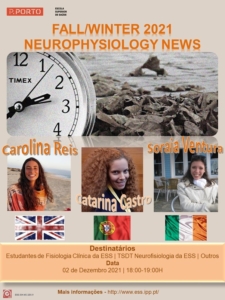
INFANT PhD researcher, Soraia Ventura, will speak at an event aimed at students of clinical physiology and neurophysiology at the Escola Superior de Saúde in Porto, on Thursday 2 December.

Soraia will be speaking about her academic career to date, what it means to be a researcher and the INFANT Research Centre.

The event is the first of a series of seminars organised by Professor Diana Tavares, coordinator of the undergraduate degree in Clinical Physiology and coordinator of the Neurophysiology department at the School of Health at the Escola Superior de Saúde.

The overall objective of the series is to demystify and open perspectives on research to health students. The event will also see Soraia return to her alma mater, where she completed a B.Sc (Hons) Neurophysiology in 2011.

Soraia joined INFANT in 2017 after working in the Clinical Neurophysiology Department at Cork University Hospital as a Clinical Physiologist in Neurophysiology.

Her PhD project, titled Electroencephalographic Study of Sleep Architecture in Infants at Four Months, aims to understand infant Neurodevelopment through sleep markers and falls within the scope of INFANT’s BabySMART study.

Other speakers at the event include:

Dr. Carolina Reis, researcher at University of Oxford.

Catarina Castro, PhD candidate at Faculty of Medicine at the University of Porto.

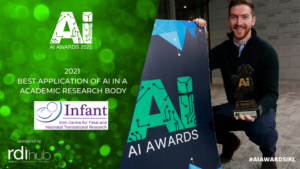
INFANT Research Centre wins “Best application of AI in an Academic Research Body” in the National AI Awards 2021

By |2021-11-29T13:06:12+00:00November 26th, 2021|

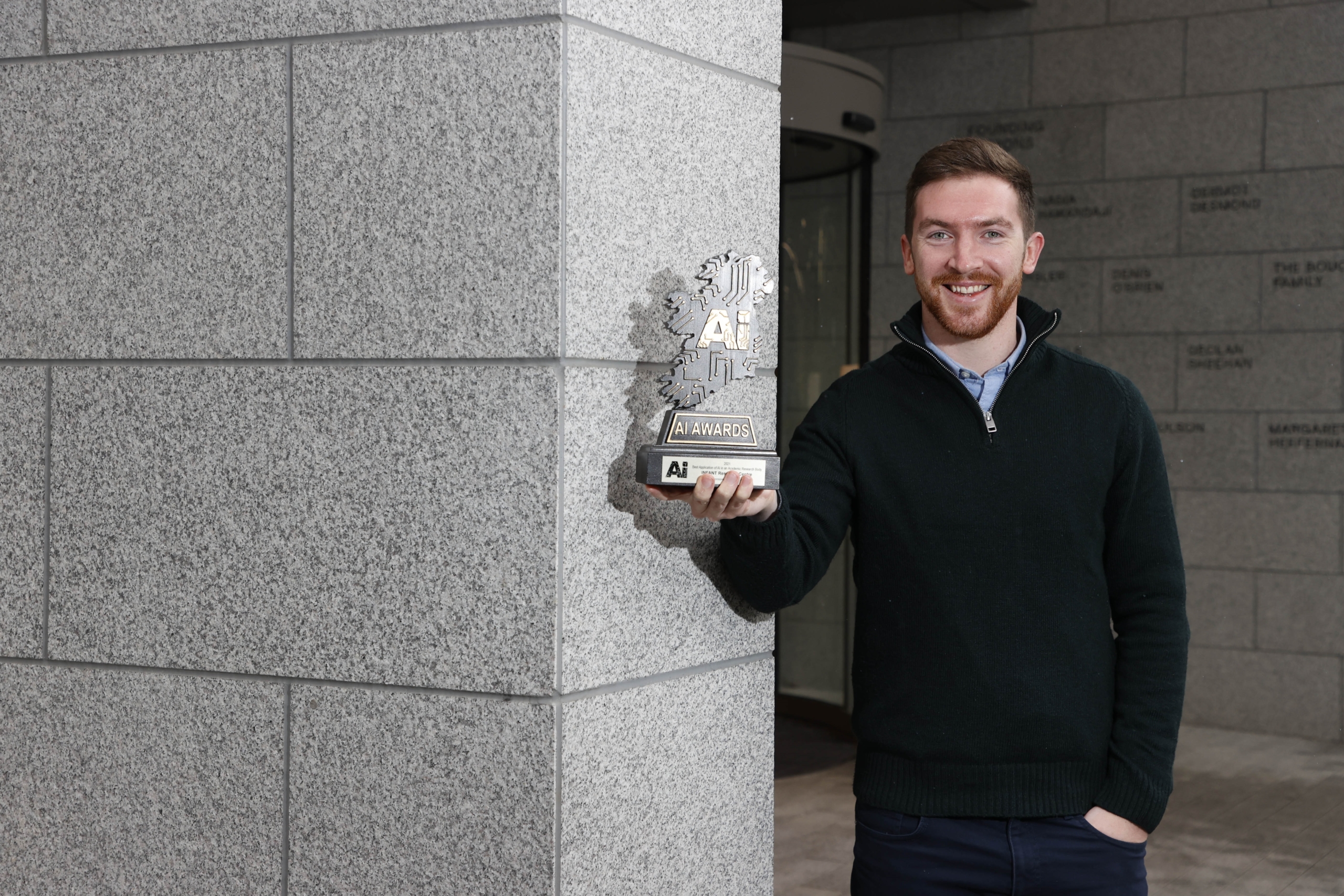
The INFANT Research Centre at University College Cork has won the prestigious “Best application of AI in an Academic Research Body” award at this year’s National AI Awards.

The AI Awards, hosted by AI Ireland and main sponsor Microsoft, are devoted to promoting AI in Ireland, with this year’s “Best application of AI in an Academic Research Body” sponsored by the RDI Hub.

The INFANT Research Centre secured a nomination based on its cutting-edge research and pioneering breakthroughs in using AI technology to detect neurological problems in newborn infants.

Recent advances on the Neurobell project, led by Dr. Mark O’Sullivan, are focused on bringing this disruptive technology toward everyday clinical use.

The project is developing an end‑to-end diagnostics solution, which integrates portable and wireless monitoring with on-board AI, to ensure that it can be rolled out across multiple hospital settings.

EEG monitoring is the gold standard for neurological monitoring, however, it requires specialised expertise to both set up the monitoring systems and to interpret the EEG traces.

According to Dr. O’Sullivan, “by developing a portable monitor with on-board decision support, we’re aiming to increase the number of hospitals capable of providing EEG monitoring for high-risk newborns.

“The cot side technology that we’re building is designed to allow for the neurological monitoring of newborns, across all hospital settings, helping those in need to be diagnosed and treated in a timely manner.

“Given that brain injuries in newborns account for 23% of all infant deaths and over 1 million cases of permanent disability globally each year, the timely and accurate diagnosis of potential issues are essential to provide treatment and help improve patient outcomes.”

The UCC based research centre has now won the award for three consecutive years, demonstrating INFANT’s appetite to constantly innovate and advance this state-of-the-art field.

The award also shines a spotlight on the innovative research being conducted at UCC and reinforces INFANT’s position as leader at the cutting edge of AI.

According to INFANT Director, Prof Geraldine Boylan, “this award highlights how INFANT is constantly striving to innovate in maternal and child healthcare, an area where there is huge potential and great clinical need. The multidisciplinary team approach championed by INFANT has been a key enabler to successful application of our AI solutions. We are very grateful to AI Ireland for this strong endorsement of our work and to Microsoft and EDI Hub for their sponsorship.”

The research being undertaken at the INFANT Research Centre leverages the power of AI and inter-disciplinary research, combining engineering, computer science and clinical expertise to develop a solution that meets the clinical need for a robust neonatal brain monitoring system.

INFANT Welcomes Three New Principal Investigators

By |2021-11-19T14:58:15+00:00November 19th, 2021|

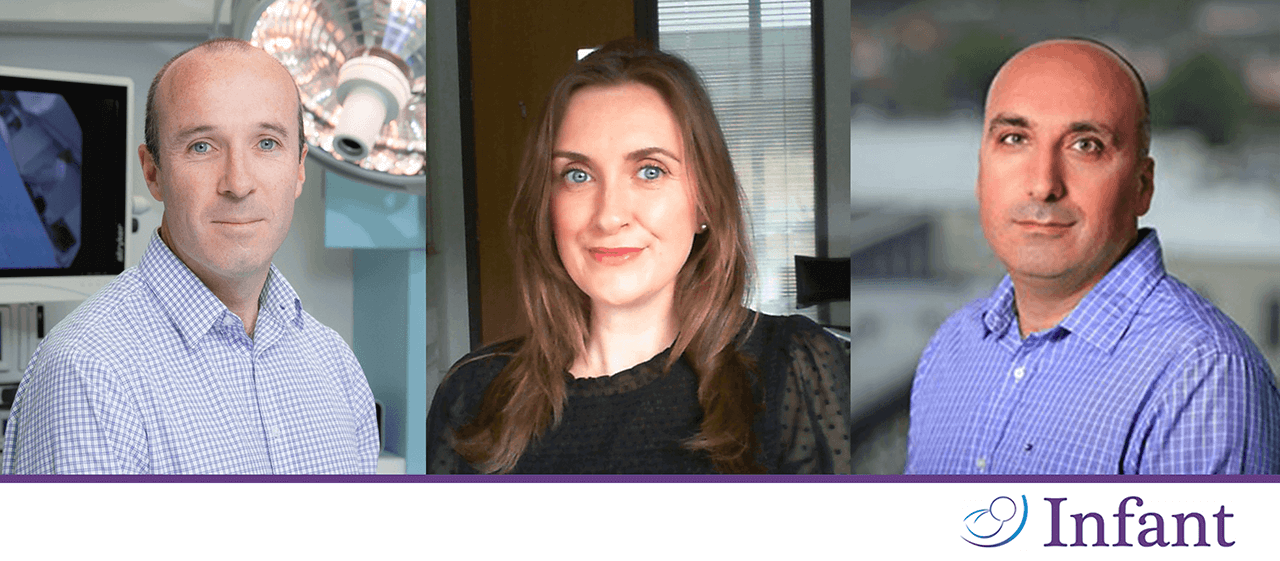
Three outstanding UCC researchers have joined the INFANT Principal Investigator team.

Dr Jane English, Lecturer in Anatomy and Neuroscience, brings invaluable expertise to INFANT in the application of proteomics, metabolomics and bioinformatics to improve our understanding of the molecular pathways implicated in maternal and child health and disease.

Dr Ali Khashan, Senior Lecturer in Epidemiology at the School of Public Health, brings 15 years research experience in Perinatal and Psychiatric Epidemiology and considerable expertise in interrogation of complex and large population-based datasets and advanced statistical methods.

Dr Fergus McCarthy, Consultant Obstetrician and Gynaecologist at Cork University Maternity Hospital and Senior Lecturer in Obstetrics and Gynaecology brings his expertise to further strengthen INFANT’s research in fetal and maternal health, especially in improving pregnancy outcomes and women’s experiences during pregnancy.

 “I am absolutely delighted to welcome our three new Principal Investigators to INFANT. They represent excellent additions to, and a significant expansion of, our Principal Investigator team and further strengthen the centre’s research leadership”

Prof Geraldine Boylan, Director INFANT

INFANT Seminar Series: Jerry Deasy and Jackie O’Leary to Focus on IT and Data Access

By |2021-11-25T10:57:54+00:00November 17th, 2021|

Our next INFANT seminar will take place at 12pm on Friday, November 26th, with a focus on IT and data access.

Jerry Deasy will provide a summary of IT facilities available to INFANT researchers, data management and security.

Jackie O’Leary will discuss the new data request and approval process being rolled out in INFANT. Anyone who wishes to get access to data from any of the INFANT studies or any data that is stored securely by INFANT must follow this process which will be become effective on 26 NOV 2021.

PI Profile: Dr Jane English’s Research Into Biomarkers to Support the Early Diagnosis of Autism

By |2021-11-12T12:08:44+00:00November 12th, 2021|

With the support of the Health Research Board, INFANT’s Dr Jane English (Lecturer in the Department of Anatomy and Neuroscience, UCC) is leading a transformative study that could identify biomarkers to predict the onset of severe childhood autism.

The study, which has the potential to be extremely significant, could see the development of a screening system that looks for small molecules in blood (e.g. proteins or metabolites) that indicate the risk of severe autism in children.

If successful, Dr English’s study could enable clinicians to make an early diagnosis and begin the process of putting in place supports that she hopes will lead to a significant improvement in health outcomes and enhance the quality of life of children with severe autism, and their families.

This project has the potential to transform the care of children with severe autism.

On average, one in every 58 children are diagnosed with autism, and diagnosis tends to take place in kids aged between four and eight years old, which means that they are missing out on important supports and interventions in early childhood.

If we can develop a test that allows clinicians to screen newborns, we could identify at risk children and begin the process of providing support and preparing pathways that will help children with autism and their families.

By examining cord blood samples taken from newborns, who were later diagnosed with severe autism, Dr English hopes to create a test that could be administered in a similar way to the heel prick test, which screens for rare newborn metabolic conditions.

To create such a test, Dr English and her team of expert researchers are analysing cord blood samples from The Aarhus Birth Cohort, the Danish National Birth Cohort, and the Cork Baseline Birth Cohort, and without these data rich cohorts this research would not be possible.

Using mass spectrometry, we are measuring proteins and metabolites in children with severe autism and comparing them to levels in neurotypical children.

We are using machine learning algorithms to  interpret these blood based measurements to identify a molecular signature, like a fingerprint that can indicate which children are most at risk and would benefit from early intervention.

This is an international collaborative study with expertise from a multidisciplinary team that includes researchers Professors Bodil Hammer Beck and Tine Henriksen from Aarhus University, Professor Louise Gallagher from Trinity College Dublin, along with Professor Deirdre Murray and Dr Ali Khashan from University College Cork.

Together, they hope to build on the insights Dr English developed during her time at the Royal College of Surgeons in Ireland (RCSI), where she worked on a project that identified the molecular signature in age 11 children that later developed psychotic disorder.

Dr English aims to build on the methodologies that she developed during her time at the RCSI, to allow for the early diagnosis of severe autism, which could in turn set in train a process whereby early intervention and support can be offered to children in their families.

INFANT Leads European Study on Neonatal Seizure Management

By |2021-11-12T16:03:12+00:00November 12th, 2021|

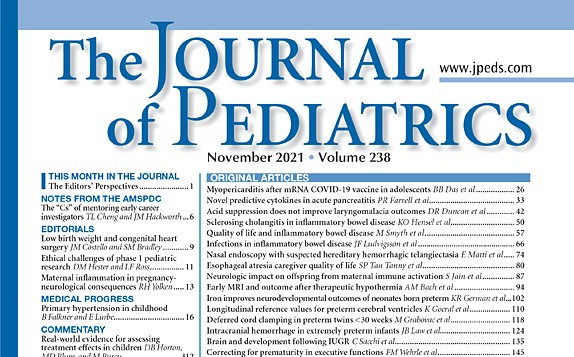
A new paper from INFANT has just been published in The Journal of Pediatrics, titled, Neonatal Seizure Management – Is the Timing of Treatment Critical? INFANT Centre research fellow Dr Andreea Pavel is the first author on the paper.

The open access paper, which is the latest from the ANSeR study team led by INFANT Director Prof Geraldine Boylan. The team found that the treatment of neonatal seizures may be time-critical.

472 newborns were recruited across eight neonatal intensive care units in Ireland (Cork University Maternity Hospital & Rotunda Hospital), London (University College London Hospital, Great Ormond Street Hospital, Royal London Hospital, Homerton University Hospital), the Netherlands (University Medical Centre, Utrecht), and Sweden (Karolinska University Hospital).

The study assessed the impact of the timing of seizure treatment on subsequent seizure burden and described overall seizure management in a large neonatal cohort.

The research team found a significantly lower seizure burden and less seizures in infants treated within 1 hour of  seizure onset.

To find out more, read the paper here.

Go to Top